 Save
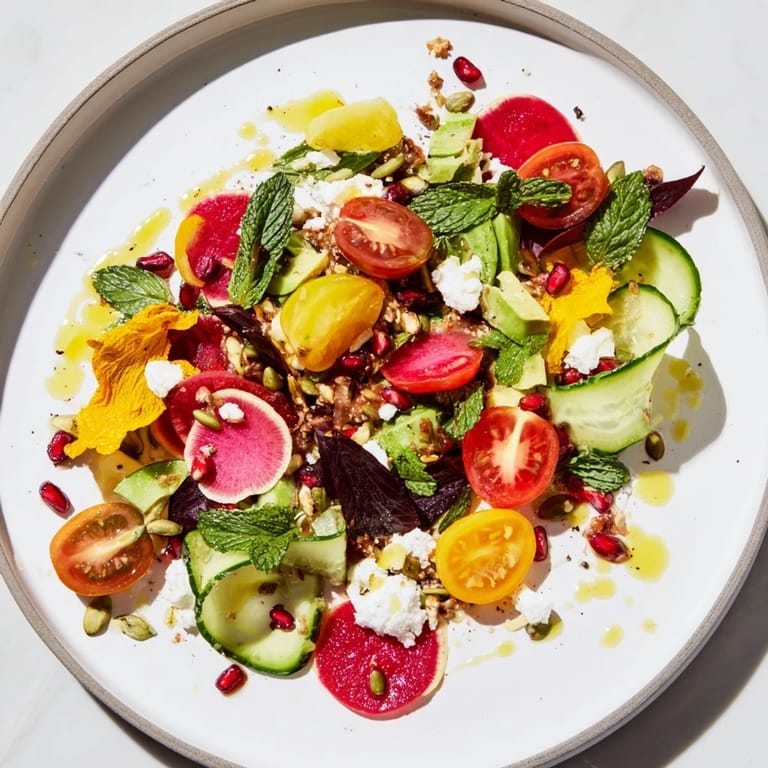
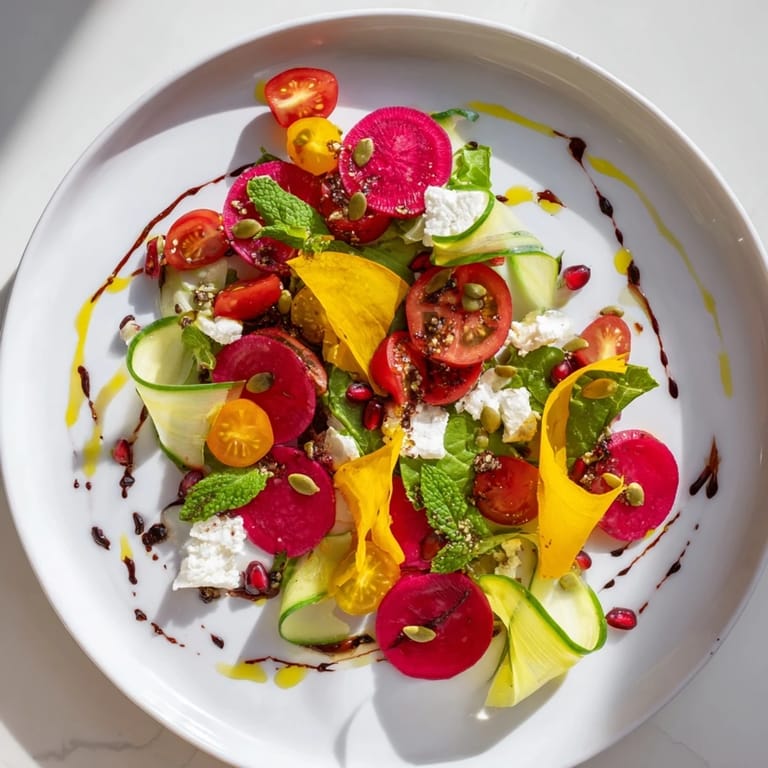
Save I'll never forget the afternoon I stood in front of a massive Jackson Pollock painting at a gallery, completely mesmerized by the controlled chaos of color and motion. That evening, I rushed home with this wild idea: what if I could recreate that same energy on a plate? I started pulling vegetables from my crisper drawer, arranging them with the same fearless abandon I'd witnessed on canvas. The result was this Abstract Expressionist Splash—a salad that breaks every rule about neat presentation and somehow becomes more beautiful because of it. Now, every time I make it, I'm transported back to that gallery moment, and I realize that some of the best creations come from letting go of perfection.
I served this at a dinner party last summer when my artist friend came to visit, and watching her face light up as she walked into the kitchen was everything. She spent a full minute just staring at the plate before she touched it, and then she laughed—really laughed—and said it was the first time food had ever made her feel like she was looking at art. That moment crystallized why I keep coming back to this salad: it's not just nourishment, it's an experience that invites people to slow down and really see what's on their plate.
Ingredients
- Cherry tomatoes, red and yellow, halved (1 cup): These little jewels are your primary color story—use a mix of red and yellow varieties because the contrast is what makes this dish sing visually. I learned the hard way that room-temperature tomatoes taste infinitely better than cold ones pulled straight from the fridge.
- Golden beet, peeled and shaved (1 small): The beet brings earthy sweetness and a gorgeous golden hue that feels luxurious. A mandoline makes this job effortless, but a vegetable peeler works beautifully too if you take your time.
- Cucumber, sliced into ribbons (1 small): Ribbons create visual drama and a silky texture that contrasts with the crunch. Slice them lengthwise with a peeler or mandoline for that authentic artistic effect.
- Red radishes, thinly sliced (1/2 cup): These provide peppery bite and shocking pink color. The thinner you slice them, the more delicate and refined the presentation becomes.
- Watermelon, cut into irregular cubes (1 cup): This unexpected ingredient brings juicy sweetness and a pop of fuchsia that feels absolutely daring. The irregular shapes matter—they feel more intentional and less cookie-cutter.
- Ripe avocado, cubed (1): Creamy richness that anchors all the bright, crunchy elements. Add this just before serving so it doesn't brown or lose its silky texture.
- Mixed baby greens with arugula, spinach, and frisée (1 cup): This trio provides different textures and a peppery undertone that ties everything together. They're your canvas, so choose greens you actually enjoy eating.
- Fresh mint leaves, torn (2 tbsp): Mint brings cooling freshness and an herbaceous elegance. Tear rather than chop to preserve the delicate oils and keep the presentation feathery.
- Toasted pumpkin seeds (1/4 cup): Nutty crunch that feels substantial and intentional scattered across the composition. Toasting them yourself intensifies the flavor dramatically.
- Pomegranate seeds (1/4 cup): Jewel-like garnish that adds textural surprise and tart brightness. They feel like little flavor bombs distributed across the plate.
- Crumbled feta cheese (1/4 cup): Tangy, salty contrast that brings sophistication and a creamy element. The irregular crumbles feel more artistic than neat cubes.
- Extra-virgin olive oil (3 tbsp): Quality matters here since it's tasted directly. Use oil you genuinely love because it's the foundation of your dressing.
- White balsamic vinegar (1 tbsp): This keeps the appearance light and pristine while delivering sweet-tart brightness. Don't substitute with dark balsamic or you'll muddy those beautiful colors.
- Honey (1 tsp): A whisper of natural sweetness that balances the vinegar and brings all the flavors into harmony.
- Dijon mustard (1/2 tsp): An emulsifier and flavor enhancer that ties everything together with subtle sophistication.
- Salt and freshly ground black pepper, to taste: Season generously because bright, fresh ingredients need seasoning to truly sing.
Tired of Takeout? 🥡
Get 10 meals you can make faster than delivery arrives. Seriously.
One email. No spam. Unsubscribe anytime.
Instructions
- Prep your canvas:
- Wash and dry all your vegetables thoroughly—moisture is the enemy of both flavor and presentation. Arrange each prepped ingredient in its own small bowl. This isn't extra work; it's where the magic begins. I like to organize them by color so I can see my palette laid out before I start composing.
- Build your base:
- Scatter your mixed greens and torn mint loosely across a large platter or shallow bowl, creating uneven clumps rather than an even layer. Think of this moment like sketching the underpainting—don't overthink it, just create texture and space for what comes next.
- Begin the artistic splash:
- Now comes the thrilling part. Take each component and splash, scatter, and scatter it across the greens with intentional irregularity. Arrange tomatoes in one area, let beet shavings overlap with cucumber ribbons in another, scatter radishes, then add your watermelon cubes. This isn't cooking; it's creating. Let colors bleed into each other, let some ingredients pile up while others float solo. There's no wrong way to do this—that's the entire point.
- Layer your textures:
- Distribute your pumpkin seeds, pomegranate seeds, and crumbled feta in an intentionally scattered pattern. Let some cluster together, let others stand alone. This is where the salad moves from looking artistic to feeling indulgent.
- Compose your dressing:
- In a small bowl, whisk together your olive oil, white balsamic vinegar, honey, and Dijon mustard with a pinch of salt and pepper. Watch as the dressing transforms into something creamy and emulsified. Taste it and adjust—this dressing should make you want to drink it straight from the bowl.
- Apply the final brushstrokes:
- Drizzle your dressing across the salad in dramatic zigzags and splatters, mimicking the gestural freedom of brushstrokes. Don't be timid here; the dressing is your signature move. Let it pool in some spots, streak across others, creating visual movement and depth.
- Present and enjoy:
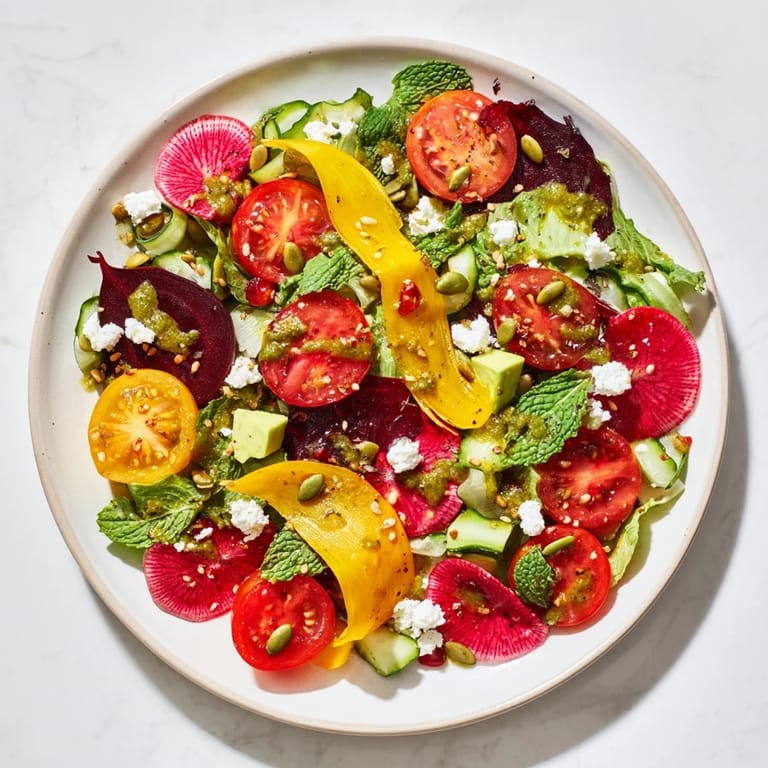
- Bring the platter to the table and let everyone admire it for a moment before diving in. There's something sacred about that pause before eating, when everyone can see exactly what you've created. Then toss it all together, and watch as the wild arrangement becomes an even more delicious chaos of flavors and textures.
 Save
Save My sister brought her kids over one afternoon, and I served this salad on a big platter in the middle of the table. My six-year-old nephew stared at it and whispered, 'Is this food or art?' Before I could answer, he started arranging the vegetables on his plate like he was in an art class, treating each piece with reverence. That's when I understood: this salad isn't just about eating well; it's about inviting people to engage with their food in a way that honors both nourishment and beauty.
The Philosophy Behind the Chaos
When I first made this salad, I was coming off a period of trying to control everything in my cooking. Neat rows, perfect portions, everything in its place. And then I stood in front of that Pollock painting and realized that sometimes the most beautiful things come from letting go of perfection. This salad taught me that culinary art doesn't have to look organized to be composed. Every ingredient has a purpose, even when they're arranged wildly. The colors matter, the textures matter, but the arrangement is about freedom and expression, not rules. Now, every time I make it, I remember that this approach—honoring ingredients while embracing unpredictability—extends beyond the plate into how I approach cooking altogether.
Variations That Feel Like New Creations
The beauty of this framework is that it's infinitely adaptable depending on what's in season or what's in your crisper. In winter, I roast purple sweet potatoes and add them for deeper color and earthiness. In summer, I've added edible flowers—violas and nasturtiums—that feel absolutely decadent. I once swapped the feta for crumbled goat cheese and added fresh berries instead of watermelon, and it became something entirely new while maintaining the same artistic spirit. The dressing is also your playground: add a touch of lime juice for brightness, swap in red wine vinegar for deeper complexity, or drizzle with a tahini-based dressing for creaminess. The point is that this salad gives you permission to play, to experiment, to fail beautifully.
Making It Work For Everyone at Your Table
I've learned that this salad speaks to different people for different reasons. Vegetarians love the abundance and protein from seeds and cheese. Health-conscious eaters appreciate the micronutrient density and whole, unprocessed ingredients. Artists love the visual composition. Kids love the permission to build their own arrangements on their plates. For dairy-free guests, swap the feta for vegan cheese and nobody will miss it because the other flavors are so vibrant and complete. This salad doesn't exclude; it includes. That's part of why I keep making it.
- Trust the integrity of your ingredients—this salad only works if everything tastes good on its own
- Season your components individually if needed, rather than relying entirely on the dressing for flavor
- Don't be afraid to add or remove ingredients based on what excites you and what's available
 Save
Save This salad has become my love letter to the idea that food can be nourishment and art simultaneously. Every time I make it, I'm reminded that the best cooking comes from joy, not perfection.
Recipe Guide
- → What makes this salad visually unique?
The salad layers bright ingredients in an irregular, artistic pattern mimicking abstract expressionist splashes, blending colors and textures dynamically.
- → Can I substitute the feta cheese?
Yes, vegan cheese or dairy-free alternatives work well to maintain creamy texture while keeping it suitable for dairy-free diets.
- → How is the dressing prepared?
The dressing combines olive oil, white balsamic vinegar, honey, Dijon mustard, salt, and pepper, whisked into an emulsified vinaigrette.
- → Are there any allergen considerations?
This salad contains dairy from feta and pumpkin seeds which may be processed with nuts; check packaging for potential allergens.
- → What is the best way to serve this salad?
Serve immediately with dressing drizzled in zigzags to preserve the vibrant, wild appearance before mixing to enjoy.