 Save
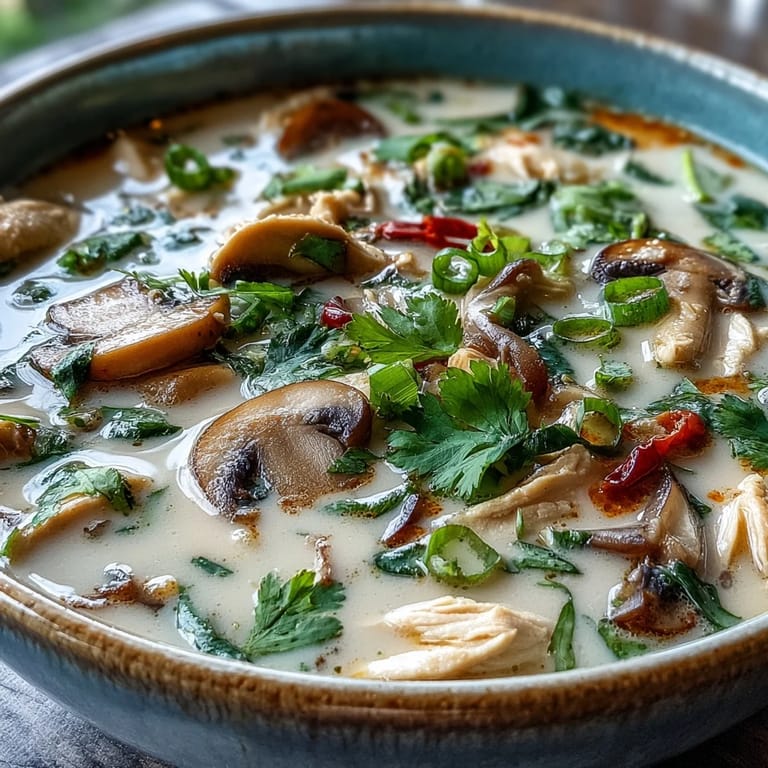
Save My first bowl of Tom Kha Gai arrived on a humid Bangkok evening, steam rising from a ceramic cup in a tiny shophouse kitchen where the owner barely spoke English. She watched me take that first spoonful—the coconut milk coating my tongue, the lime cutting through, the ghost of lemongrass lingering like a secret. Years later, I recreate that exact feeling at home, though I've learned it's less about chasing perfection and more about understanding why each ingredient sings.
I made this for my partner on a random Tuesday when we were both exhausted, and watching them close their eyes on the first sip reminded me why I love cooking. That soup became our ritual whenever life felt hectic—a 40-minute escape that costs less than delivery and tastes infinitely better. It's become the dish I make when I want to say 'I'm thinking of you' without saying a word.
Ingredients
- Chicken broth (3 cups): Use homemade if you have it—the foundation matters more than most realize, as store-bought varies wildly in salt and depth.
- Lemongrass (1 stalk): Trim off the papery outer layers and smash the pale center with the side of your knife to release oils that perfume the entire pot.
- Fresh galangal (4 slices): It's spicier and more medicinal than ginger, so don't swap casually—but if galangal isn't available, ginger works in a pinch.
- Makrut lime leaves (4 leaves): These are the soul of authentic Tom Kha; their floral bitterness is irreplaceable, so hunt for them at Asian markets.
- Thai bird's eye chilies (3): Lightly crush them to release heat without breaking into the broth; add more if you like fire, or use just one if you're cautious.
- Boneless skinless chicken thighs (1 lb): Dark meat stays tender and forgiving, slicing thinly so it cooks through in minutes.
- Coconut milk (14 oz): Full-fat, unsweetened is non-negotiable—the watered-down versions sabotage the creamy luxury that makes this soup worth making.
- Fresh mushrooms (5 oz): Straw mushrooms are traditional and delicate; cremini or button work too and absorb the broth beautifully.
- Shallot (1 medium): Slice thin so they soften into the broth without overpowering; their subtle sweetness balances the heat and acidity.
- Fish sauce (2 tbsp): It smells funky in the bottle but transforms into umami depth in the pot—trust the process.
- Lime juice (1 tbsp): Fresh squeezed, always; bottled juice tastes flat and misses the brightness this soup demands.
- Palm sugar (1 tsp): Brown sugar works, but palm sugar has a caramel note that rounds the edges beautifully.
- Fresh cilantro and green onions: These are the final flourish—don't skip them, as they lift the whole bowl with freshness.
Tired of Takeout? 🥡
Get 10 meals you can make faster than delivery arrives. Seriously.
One email. No spam. Unsubscribe anytime.
Instructions
- Awaken the broth:
- Pour chicken broth into a medium pot and bring to a gentle simmer. Add the smashed lemongrass, galangal slices, torn lime leaves, and crushed chilies, then let them infuse together for 5–7 minutes until the kitchen fills with that unmistakable aromatic hum.
- Cook the chicken through:
- Slide the thinly sliced chicken and shallot into the simmering broth, stirring occasionally. Watch for the chicken to turn from pink to opaque, which takes only 3–4 minutes—don't walk away.
- Marry the cream:
- Add mushroom slices and pour in the coconut milk, stirring gently so everything melds. Bring it back to a gentle simmer, keeping the heat moderate so the soup stays creamy rather than breaking.
- Season to balance:
- Add fish sauce, palm sugar, and lime juice, then taste and adjust—this is where intuition matters. Some broths are saltier, some limes more acidic, so keep tweaking until salty, sour, and sweet dance together.
- Finish and serve:
- Remove from heat and consider straining out the tough aromatics (lemongrass, galangal, lime leaves) if you prefer a cleaner bowl, though many cooks leave them in. Ladle into bowls and crown with fresh cilantro and green onions, serving lime wedges on the side for anyone who wants more brightness.
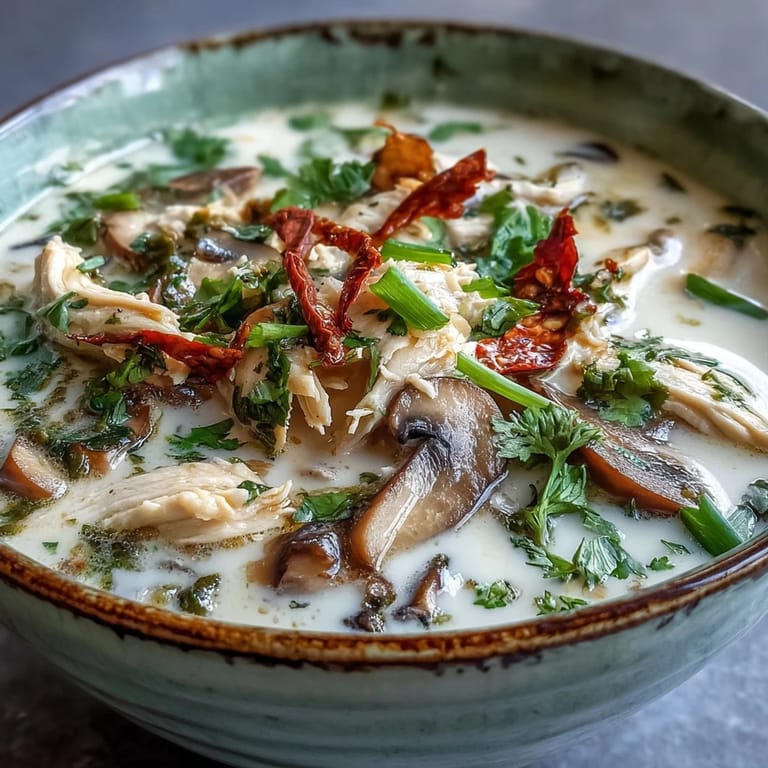 Save
Save I once served this to my Thai colleague at work, terrified she'd find it inauthentic, but she took a second spoonful and smiled—that small nod meant more than a standing ovation. It reminded me that cooking isn't about perfection; it's about care and paying attention to the small moments where flavors align.
Why Galangal Matters
Galangal is often dismissed as 'just like ginger,' but it carries a peppery, almost piney heat that ginger simply doesn't have. The first time I swapped it out, the soup tasted flat and one-dimensional, like I'd missed a crucial note in a song. Now I make a small effort to find it because that singular ingredient transforms a good soup into something that tastes authentically Thai.
The Art of Balancing Flavors
Thai cooking teaches you that no single flavor should dominate; instead, you're orchestrating a conversation between salty (fish sauce), sour (lime), sweet (palm sugar), and spicy (chilies). I learned this by overseasoning early on, then tasting the chaos and backing off. Now I season gradually, tasting between additions, treating it like tuning an instrument rather than following a prescription.
Serving Suggestions and Variations
This soup is stunning on its own, but I've found it transforms into something even more satisfying when served over steamed jasmine rice, which absorbs the aromatic broth. You can also stretch it by adding extra vegetables like bell peppers or bamboo shoots, or go vegetarian by swapping chicken for silken tofu and fish sauce for soy sauce. The soup's forgiving nature means you can adapt it to what you have without losing its soul.
- Serve over jasmine rice for a heartier meal that feels more complete.
- Add extra vegetables like bell peppers or snap peas if you want more texture and bulk.
- Make it vegetarian by using tofu and vegetable broth, substituting soy sauce for fish sauce.
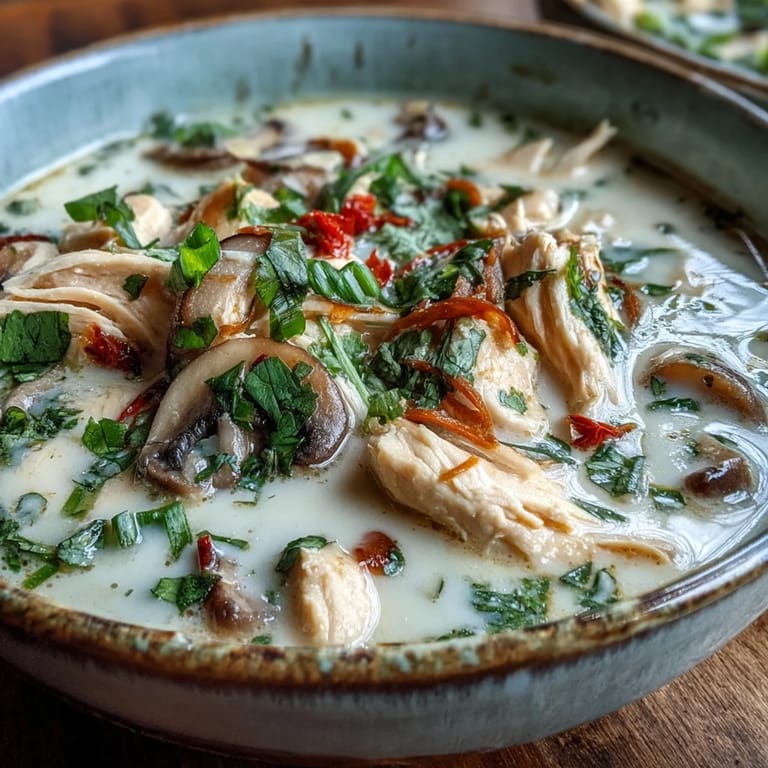 Save
Save Tom Kha Gai is the soup that taught me cooking doesn't need to be complicated to be meaningful. Make it once and it becomes part of your rhythm, the dish you turn to when you want to create something beautiful in under an hour.
Recipe Guide
- → What does Tom Kha Gai mean?
Tom Kha translates to "boiled galangal soup" while Gai means "chicken" in Thai. The name highlights the essential aromatic galangal root that defines this dish's distinctive citrusy-pine flavor profile.
- → Can I substitute galangal with ginger?
While fresh ginger makes an acceptable substitute if galangal is unavailable, the flavor will differ noticeably. Galangal has a unique piney, citrusy taste that's essential to authentic Tom Kha Gai. Check Asian markets or buy online for the best results.
- → How spicy should Tom Kha Gai be?
Traditionally, Tom Kha Gai is mildly spicy with just enough heat to balance the rich coconut milk. Three Thai bird chilies provide gentle warmth without overwhelming. Adjust by reducing chilies for milder flavor or increasing for more heat.
- → What's the best coconut milk to use?
Use full-fat, unsweetened coconut milk canned (not carton) for the creamiest texture and richest flavor. Shake the can before opening, and avoid low-fat versions which can make the soup thin and watery.
- → Can I make Tom Kha Gai vegetarian?
Simply swap chicken broth for vegetable broth, replace sliced chicken with firm tofu cubes, and use soy sauce or tamari instead of fish sauce. The aromatic base and creamy coconut milk remain unchanged, delivering equally delicious results.
- → How do I store and reheat leftovers?
Keep refrigerated in airtight containers for up to 3 days. Reheat gently over low-medium heat, stirring occasionally. Avoid boiling vigorously as coconut milk can separate. If separation occurs, whisk while reheating to recombine.