 Save
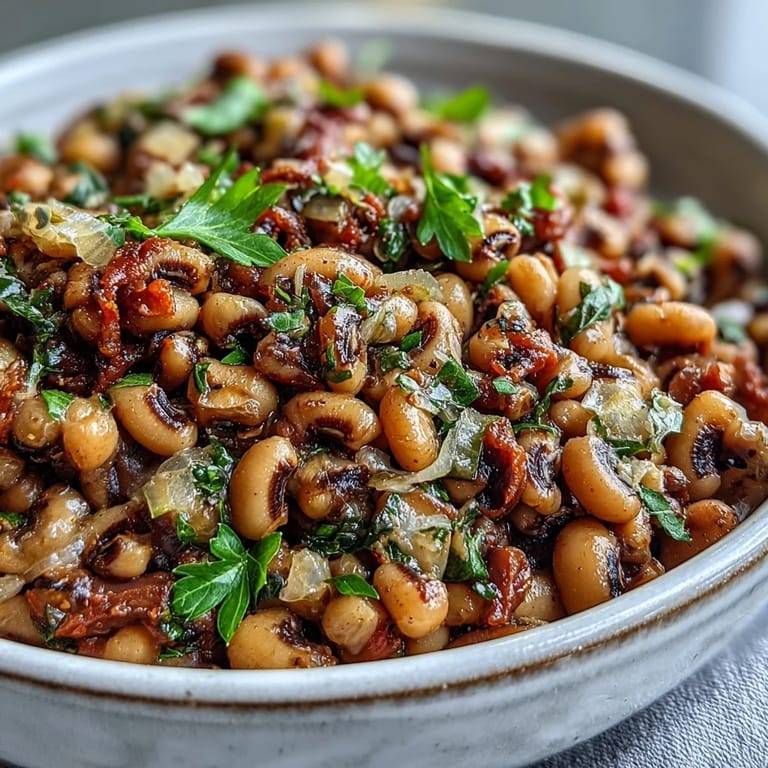
Save There's something about a weeknight when everything feels rushed, and you need something that tastes like care but doesn't demand hours in the kitchen. My neighbor stopped by one Tuesday evening with a bag of frozen black-eyed peas and the offhand comment that she'd learned to make them in under thirty minutes—no soaking, no fuss. I was skeptical at first, honestly, but watching that humble pot come together with just onion, garlic, and broth changed how I think about quick side dishes. Now it's become my quiet weapon for turning ordinary dinners into something that feels intentional.
I made this for a potluck last spring where I arrived late and slightly frazzled, only to find the table already crowded with heavier dishes. These black-eyed peas sat quietly in their serving bowl, but somehow everyone kept coming back—scooping them over rice, pairing them with cornbread, asking what made them taste so good despite their simplicity. That's when I realized it wasn't about complexity; it was about letting each ingredient do its small, honest job.
Ingredients
- Frozen black-eyed peas (2 cups): Frozen actually works better than canned here because they hold their shape through cooking and taste fresher; if you use canned, drain and rinse them well to remove excess sodium.
- Olive oil (1 tablespoon): This is your foundation for building flavor, so don't skip it even though the amount seems small.
- Small onion, finely chopped: Cutting it small means it softens quickly and distributes evenly throughout every spoonful.
- Garlic cloves, minced (2): Thirty seconds in hot oil is all you need—any longer and it turns bitter instead of sweet.
- Vegetable or chicken broth (1 ½ cups): Use whatever you have on hand; the broth carries all the seasoning, so good quality makes a difference.
- Smoked paprika (½ teaspoon): This is the secret ingredient that makes people ask what's different; it adds warmth without heat.
- Dried thyme (½ teaspoon): Thyme ties everything together in a way that feels Southern without being heavy.
- Black pepper and salt (¼ teaspoon and ½ teaspoon): Taste as you go because broths vary in saltiness, and you want to adjust at the end anyway.
- Bay leaf (1): This stays in the whole time for subtle flavor, then gets discarded before serving.
- Diced tomatoes, optional (½ cup): Fresh tomatoes brighten things up; canned work fine if that's what you have.
- Cayenne pepper, optional (¼ teaspoon): Add this only if you want a gentle warmth that builds slowly.
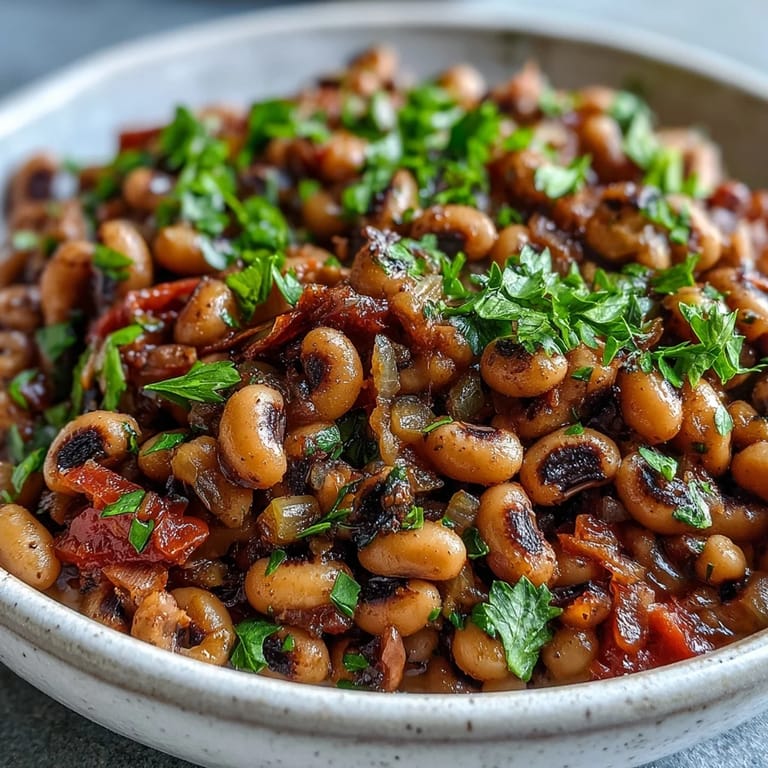
- Fresh parsley for garnish (2 tablespoons): A small handful of green at the end makes the whole dish look alive.
Tired of Takeout? 🥡
Get 10 meals you can make faster than delivery arrives. Seriously.
One email. No spam. Unsubscribe anytime.
Instructions
- Warm your base:
- Heat the olive oil over medium heat until it shimmers slightly, then add your chopped onion. You'll hear it sizzle immediately—that's the signal you're in the right temperature zone. Stir occasionally for three to four minutes until the onion softens and turns translucent at the edges.
- Build the aromatics:
- Add your minced garlic and stir constantly for about thirty seconds; you want to smell that rich, toasted garlic aroma but not let it burn. The moment it smells perfect, move on.
- Bring it together:
- Pour in your black-eyed peas, broth, and all the seasonings at once. If you're using tomatoes, add them now too, stirring everything so the spices coat the peas evenly.
- Let it simmer:
- Bring the whole pot to a gentle simmer—not a rolling boil, just steady bubbles—and cover it. This is when you can step away for a few minutes; stir occasionally so nothing sticks to the bottom, and after fifteen to eighteen minutes, the peas should be tender and the liquid should taste like something you made on purpose.
- Final adjustments:
- Fish out the bay leaf with a spoon and taste a bite. If it needs more salt or pepper, now's your moment to fix it.
- Finish with grace:
- Sprinkle fresh parsley over the top just before serving if you want that fresh, green note that makes people notice.
 Save
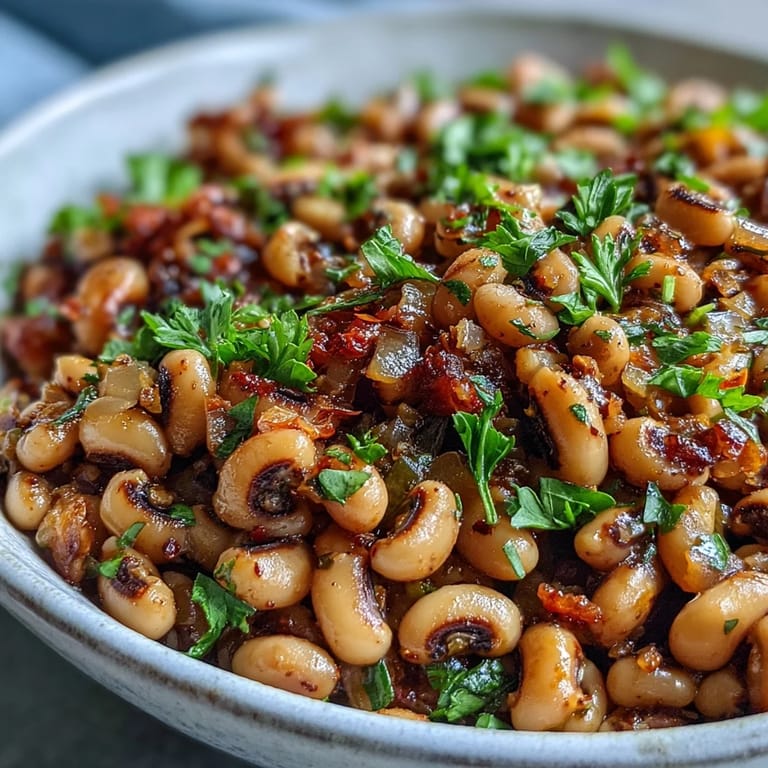
Save There was a moment during a Sunday dinner with my family when my mom took a bite and quietly asked if I'd changed something. I hadn't—it was just this recipe, treated with a little attention. That small recognition meant more than it probably should have, but it reminded me that even the simplest dishes deserve your focus for twenty-five minutes.
Why Frozen Peas Beat Dried Every Time
I grew up watching my grandmother soak dried peas overnight, a ritual that made sense in her kitchen but doesn't fit modern life. Frozen black-eyed peas skip all that ceremony while delivering better texture because they're picked at peak ripeness and frozen immediately. They cook faster, taste fresher, and honestly, they're more forgiving if you accidentally overcook them by a few minutes.
Making It Your Own
This recipe is a skeleton that welcomes additions without complaint. I've stirred in diced ham, added a whole diced bell pepper with the onion, and once even threw in a small can of diced jalapeños for a coworker who loves heat. The base stays sturdy no matter what you add because the smoked paprika and thyme are strong enough to play well with almost anything you bring to the table.
Serving and Storage
These peas taste even better the next day when flavors have settled, making them perfect for meal prep or bringing to work in a container. They keep in the refrigerator for four days and reheat beautifully on the stove with a splash of water if they seem dry. Serve them warm over rice, alongside cornbread, or even cold as a salad if you're feeling experimental.
- Store leftovers in an airtight container and they'll taste good for days.
- Reheat gently on the stove rather than microwave to keep the texture right.
- If they thicken too much in the fridge, just add a bit of warm broth when reheating.
 Save
Save This recipe became a favorite because it asks so little but delivers so much, proving that sometimes the best dishes are the ones that fit into real life without complaint. Make it once, and it'll become part of your regular rotation before you realize it.
Recipe Guide
- → Do I need to soak frozen black-eyed peas before cooking?
No soaking required! Frozen black-eyed peas are already blanched and cook quickly. Canned varieties work equally well—just drain and rinse before adding to the pot.
- → Can I make this dish spicy?
Absolutely. Add ¼ teaspoon cayenne pepper along with the other seasonings, or include diced jalapeño when sautéing the onions for extra heat.
- → What makes the flavor Southern-style?
The combination of smoked paprika, dried thyme, and bay leaf creates that classic Southern depth. Sautéing onions and garlic in olive oil first builds a flavorful base.
- → How do I store leftovers?
Cool completely and refrigerate in an airtight container for up to 4 days. Reheat gently on the stove, adding a splash of broth or water if needed.
- → Can I use dried black-eyed peas instead?
Yes, but you'll need to soak them overnight and cook for 45–60 minutes until tender. Adjust liquid accordingly as dried peas absorb more broth during cooking.
- → What proteins pair well with this dish?
Fried chicken, grilled pork chops, or baked ham complement the flavors beautifully. For vegetarian meals, serve alongside cornbread and collard greens.