 Save
Save My buddy texted me last minute asking if I could throw together something for the playoff game, and I realized I had exactly twenty minutes to work magic. That's when it hit me—forget the elaborate appetizers, just build a board so good that people forget about the actual snacks in their laps and focus on what matters: the food in front of them. I'd done this once before at a tailgate, arranging everything haphazardly, and somehow it became the most requested thing I've made. This time, I'd do it right, with intention and layers of flavor that make every bite feel intentional.
I'll never forget when my sister's partner—who usually dismisses anything I make as "just okay"—came back for thirds of this board and actually asked how I "made the cheese taste better." The secret was nothing fancy, just thoughtful placement so the sharp cheddar sat next to the honey mustard instead of getting lost in the chaos. That moment taught me that snack boards aren't about complexity; they're about creating little flavor combinations that surprise people when they randomly discover them.
Ingredients
- Soft pretzel bites (store-bought or homemade): These are your MVP—they're warm, pillowy, and hold dips beautifully without falling apart like regular crackers.
- Hard pretzel rods: The crunchy contrast that keeps people coming back; they're sturdy enough to scoop thick dips without snapping.
- Mini pretzel twists: These fill visual gaps and give guests options—some people prefer the twist shape for dunking.
- Beer cheese dip: Rich and tangy, this pairs perfectly with soft pretzels and makes people think you spent way more time than you did.
- Honey mustard dip: The sweet-savory bridge that works with almost everything on the board, especially hard pretzels.
- Classic yellow mustard: Don't skip the straightforward stuff—sometimes people want uncomplicated flavor.
- Ranch dressing: The crowd-pleaser that quiets anyone who's nervous about trying something new.
- Sharp cheddar cheese, cubed: Aged cheese has personality; it tastes like something instead of just tasting like cheese.
- Pepper jack cheese, cubed: The slight heat gives the board complexity and keeps the flavor journey interesting.
- Sliced salami: Salty and savory, it anchors the board with protein and sits in the sweet spot between salty and fatty.
- Baby carrots: They bring fresh crunch and bright color; arrange them to break up dense sections of the board.
- Celery sticks: The neutral canvas that lets other flavors shine, plus they're refreshing between rich bites.
- Cherry tomatoes: Pops of color that feel intentional, not like you're just filling space.
- Sliced pickles: The acid cuts through heavy cheese and dips, resetting the palate naturally.
- Salted peanuts in shells: Crunch, protein, and something for people to do with their hands while watching the game.
- Popcorn: Light filler that prevents the board from feeling too dense, plus it's nostalgic.
- Green olives: Briny and bold, they're the secret flavor that makes people say, "Wait, what is that?"
Tired of Takeout? 🥡
Get 10 meals you can make faster than delivery arrives. Seriously.
One email. No spam. Unsubscribe anytime.
Instructions
- Start with the pretzels as your anchor:
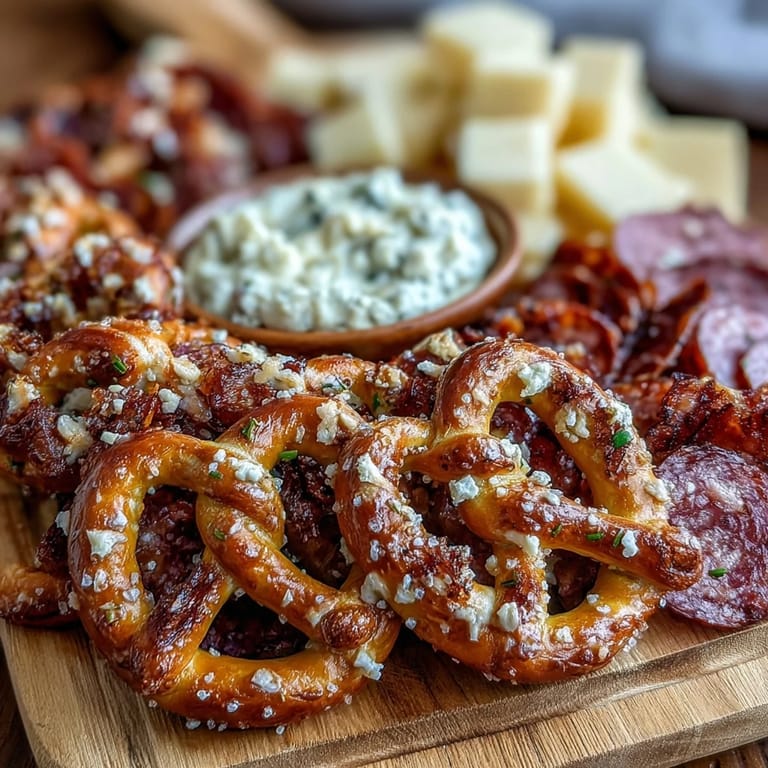
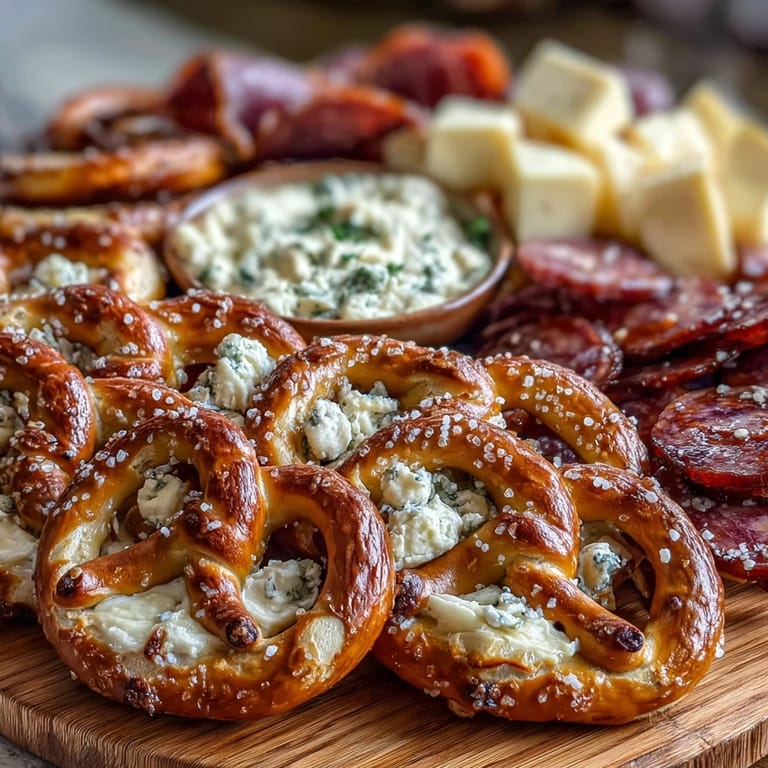
- Arrange soft bites, hard rods, and twists in separate clusters across your board so they're visually distinct and easy to grab. Think of them as the foundation that everything else builds around.
- Position the dips strategically:
- Place each dip in a small bowl and scatter them around the board so nobody has to reach across the whole thing to find the beer cheese. I usually put the bolder dips (beer cheese, honey mustard) closer to soft pretzels and ranch near the veggies.
- Layer in the cheeses and meats:
- Cube your cheeses and slice your salami, then arrange them in small piles that sit between pretzel clusters. This creates natural flavor combinations—cheddar next to beer cheese, pepper jack near the pickles.
- Fill gaps with fresh vegetables:
- Scatter carrots, celery, tomatoes, and pickles around the board, using them to fill dead space and add color contrast. The freshness balances the salty, savory elements.
- Top with crunchy extras:
- Sprinkle peanuts, popcorn, and olives in small clusters across the board, treating them like garnishes that add visual interest and textural surprise.
- Serve with intention:
- Don't overthink it—set the board down, let people explore, and watch them discover flavor combinations you didn't even plan.
 Save
Save Last season, I brought this board to a watch party where everyone was glued to their phones during halftime, and suddenly this snack board became the actual event. People stopped checking scores to debate whether the pickles or the olives worked better with the pepper jack, and somehow that small, silly conversation made the whole game feel more connected. It reminded me that food is just an excuse to pause and actually be present together.
The Art of Board Assembly
Building a snack board is less recipe and more like conducting an orchestra—every element needs its moment without drowning out the others. When I first made this, I threw everything on randomly and it felt chaotic; the second time, I mapped out zones like I was creating a flavor map. Soft pretzels in one quadrant with beer cheese nearby, fresh vegetables in another section to create balance, and the salty crunchy stuff tucked into corners as surprises. The board stops feeling like a pile of stuff and starts feeling like an experience when you think about how people will navigate it.
Why Dips Are the Secret Weapon
A pretzel without a dip is just bread and salt, but a pretzel dunked in beer cheese becomes a whole moment. I used to think the dips were supporting players, but they're actually the stars—they're what makes someone reach for a third pretzel instead of stopping at two. The ranch works for people nervous about the beer cheese's funk, the honey mustard bridges sweet and savory for those riding the fence, and the yellow mustard is there for the purists who just want classic, uncomplicated flavor. Having multiple dips means nobody feels left out, and everyone feels like the board was built specifically with them in mind.
Building Your Perfect Board
The magic isn't in following my exact arrangement—it's in understanding the principles so you can build it your way. Some people are mustard people, some are ranch; some want all the vegetables, some just want the cheese and meat. Once you realize that this is fundamentally about giving people options and letting them create their own perfect bite, you stop stressing about whether the popcorn is in the right spot.
- Cold ingredients (cheese, pickles, vegetables) can be prepped the night before, but leave pretzel assembly for the last moment so they're fresh and warm.
- Use a wooden board or platter large enough that there's actual space between items—crowding makes everything feel overwhelming instead of inviting.
- Remember that height variation matters, so stack some items on small risers or fold napkins underneath to create visual interest instead of laying everything flat.
 Save
Save This board has become my reliable move for any gathering because it works—it's impossible to mess up, people always have a good time, and somehow it feels both effortless and intentional. That's the kind of food magic worth holding onto.
Recipe Guide
- → What dips pair best with soft pretzels?
Beer cheese dip complements soft pretzels beautifully, offering a creamy and savory contrast to their salty flavor.
- → Can this board be adapted for a vegan diet?
Yes, plant-based cheese dips can replace traditional ones, and vegetable-based snacks enhance the board without animal products.
- → How should the snack board be arranged for best presentation?
Arrange pretzels in clusters, place dips evenly around, and fill gaps with cheeses, meats, fresh vegetables, and crunchy extras for visual appeal.
- → What fresh vegetables work well on this board?
Baby carrots, celery sticks, cherry tomatoes, and pickles add freshness, color, and a crunchy contrast to the richer items.
- → Are there any common allergens to note?
This board contains gluten, dairy, peanuts, and mustard, so checking ingredients is important for allergen awareness.