 Save
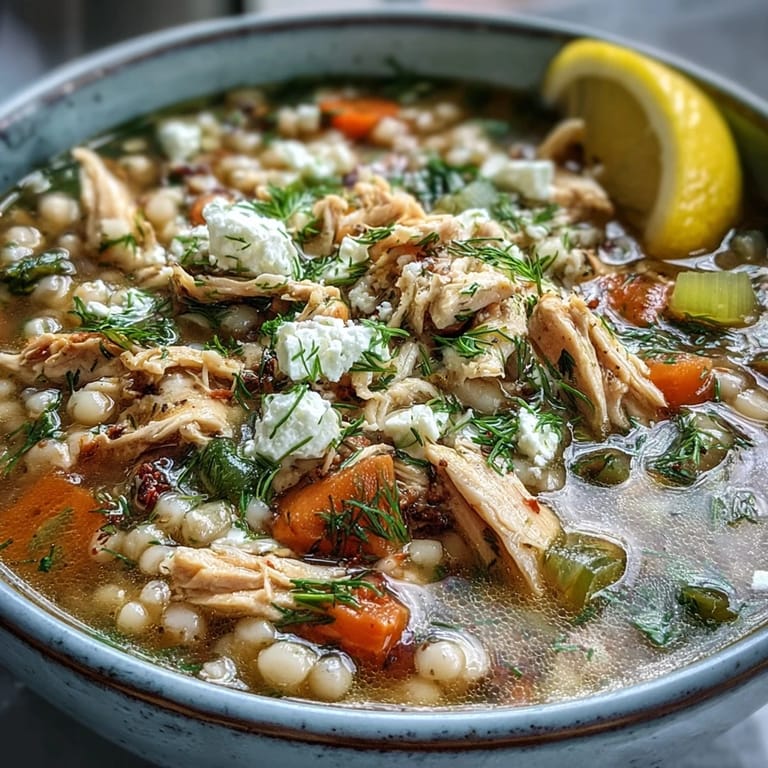
Save There's something about the smell of softening onions and carrots that signals comfort is on its way. I discovered this Greek chicken and couscous soup on a chilly afternoon when I was craving something that felt both nourishing and bright, and it's since become the dish I make when I want the kitchen to feel warm without spending hours at the stove. The combination of tender chicken, lemon, and creamy feta transforms a simple broth into something that tastes like you've been tending to it all day. My friends now request it by name, which still surprises me because it comes together in less than an hour.
I made this for my neighbor one winter evening when she'd just moved in with boxes still stacked in her living room. She didn't have her kitchen properly set up yet, so I brought over a pot of this soup, and watching her face light up while eating it straight from a mug—standing in her unfurnished kitchen under a bare bulb—reminded me why simple food matters so much. Sometimes the best meals aren't the complicated ones, they're the ones that show up exactly when needed.
Ingredients
- Boneless, skinless chicken breasts (400 g): These cook quickly and shred cleanly, though you can swap in thighs if you want richer, more forgiving meat that stays tender even if you lose track of time.
- Low-sodium chicken broth (1.2 liters): The foundation of everything, so taste it before you buy—some brands are saltier than others, and you want room to season as you go.
- Bay leaf: This small leaf does quiet, essential work, adding depth that most people can't identify but absolutely notice when it's missing.
- Yellow onion, carrots, and celery: The holy trinity that builds flavor as they soften, creating an aromatic base that makes your kitchen smell like home cooking.
- Garlic cloves (3, minced): Wait until the vegetables have softened before adding it, or it'll burn and turn bitter—this is a lesson that cost me one pot of soup but taught me forever.
- Extra virgin olive oil (2 tablespoons): Use the good stuff you actually enjoy tasting, because it's one of only a few fats doing the work here.
- Pearl couscous (150 g): These tiny pasta balls swell gently in the broth and give the soup real substance without heaviness.
- Lemon zest and juice: The zest goes in early to infuse the broth, while the juice arrives at the end for brightness—this two-step approach is what makes the flavor sing.
- Dried oregano and black pepper: Keep both measured and ready because you'll add them at the same moment, and it's easier to do it all at once.
- Feta cheese (80 g, crumbled): The final flourish that transforms the soup, adding salt, tang, and creaminess without any cream whatsoever.
- Fresh dill and lemon wedges: Both finish the dish, one mixed in for gentle herbal warmth and one served on the side so everyone can tune the brightness to their taste.
Tired of Takeout? 🥡
Get 10 meals you can make faster than delivery arrives. Seriously.
One email. No spam. Unsubscribe anytime.
Instructions
- Heat oil and soften the vegetables:
- Pour olive oil into a large pot over medium heat, then add onion, carrots, and celery. You're listening for a gentle sizzle and watching the vegetables go from firm to yielding—this takes about five minutes, and it's the moment when your kitchen starts smelling like the beginning of something good.
- Add garlic and toast it gently:
- Stir in minced garlic and cook for just one minute until it becomes fragrant but nowhere near brown. If you can see color, you've gone too far and the whole pot will taste sharp instead of sweet.
- Build the broth:
- Pour in chicken broth, add the bay leaf, and bring everything to a gentle simmer—not a rolling boil, which will toughen the chicken that's about to go in. You want small bubbles rising lazily to the surface.
- Poach the chicken:
- Nestle chicken breasts into the simmering broth and let them cook for twelve to fifteen minutes until they're white all the way through when you cut into the thickest part. This gentle cooking keeps them tender and juicy rather than dry and stringy.
- Shred and return the chicken:
- Remove the cooked chicken to a cutting board, discard the bay leaf, and use two forks to pull the chicken into bite-sized pieces. Return them to the pot, where they'll have a chance to absorb more broth flavor as the soup finishes cooking.
- Add couscous and seasonings:
- Stir in pearl couscous, oregano, lemon zest, and black pepper all together, then simmer for ten to twelve minutes until the couscous is tender and has absorbed the broth. The zest will have infused the liquid with brightness by now.
- Finish with lemon juice and salt:
- Squeeze in the lemon juice and taste the soup before you reach for the salt shaker—you might need only a pinch or none at all depending on your broth. This is the moment when a dull soup becomes something you want to eat again tomorrow.
- Serve and garnish:
- Ladle soup into bowls and top each one with crumbled feta and a sprinkle of fresh dill, then set lemon wedges on the side. Everyone at the table gets to decide how much brightness and tang they want, which somehow makes the meal feel more personal.
 Save
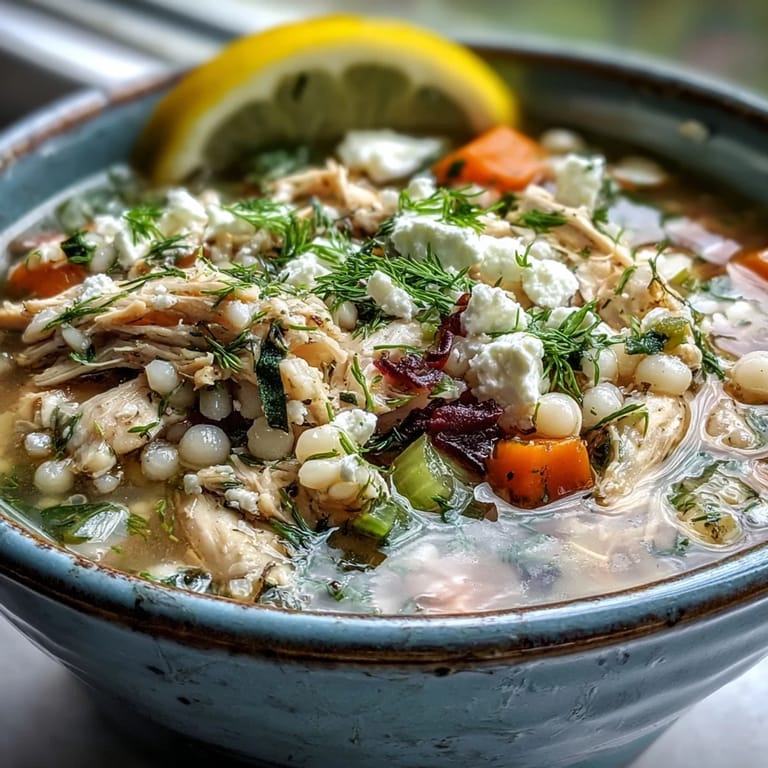
Save My eight-year-old nephew asked for a second bowl of this soup at dinner, then asked what made it taste like the beach, and I realized that's exactly what lemon and feta do together—they transport you somewhere warm and salty and good. Since then I've made it dozens of times, and that question reminds me that food's real job is to make people feel something beyond fullness.
Why Pearl Couscous Changes Everything
Regular couscous dissolves almost into the broth if you're not careful, but pearl couscous holds its shape and lets you actually taste the individual grains against your tongue. The first time I used it, I expected it to behave like rice, but it cooks faster and stays tender without becoming mushy, which is why it's worth seeking out in the pasta aisle. Once you've used it, you start finding reasons to put it in everything.
Building Flavor in Stages
This soup teaches you something important about how flavor actually works: you don't dump everything in and hope for the best. The vegetables go in first to build a savory foundation, garlic joins the party briefly to wake things up, the chicken poaches gently to stay tender while flavoring the broth, and then lemon joins at the very end to remind everything not to take itself too seriously. Watching it come together this way shows you why the order of operations matters, even in something as forgiving as soup.
The Magic of Fresh Herbs and Cheese
There's a moment right before you ladle soup into bowls when the pot looks good but not yet finished—it's missing something you can't quite name until you remember the feta and dill. These two finishing touches do something almost chemical: the cheese adds richness and salt, the herb adds freshness, and together they create a contrast that makes you want another spoonful. This is why some soups taste like restaurant food and others taste like a Wednesday night—it's all about how you finish the plate.
- Crumble the feta directly over hot soup so the residual heat softens it slightly and distributes the flavor.
- Add dill just before serving so its delicate flavor stays bright instead of cooking away into the background.
- Let people finish their own bowl with lemon wedges so they can control how much zing they want in each spoonful.
 Save
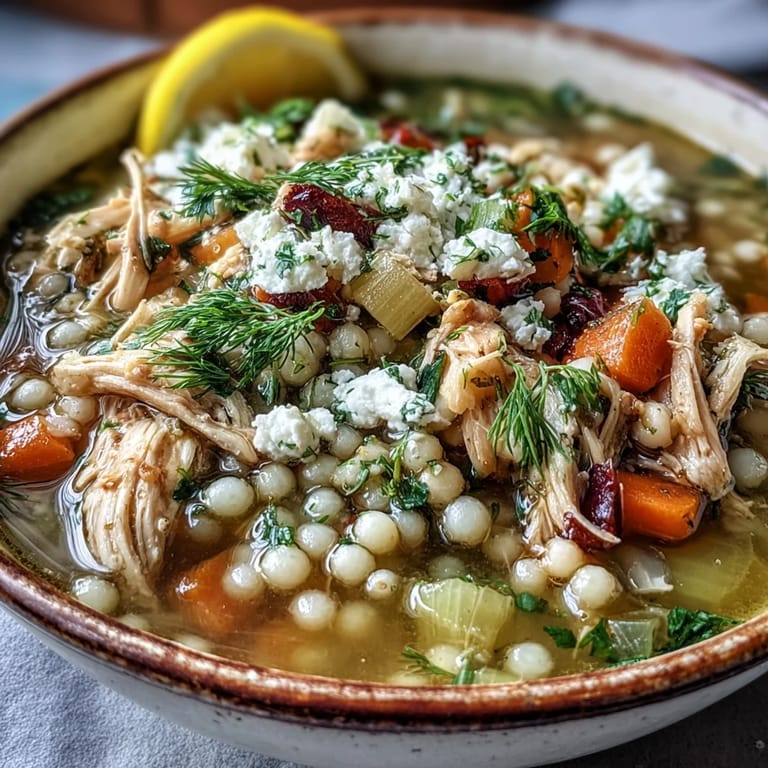
Save This soup has become the thing I make when I want to feel like I'm taking care of someone, including myself. It's fast enough for a weeknight but feels intentional enough for company.
Recipe Guide
- → What makes this soup Greek-inspired?
The combination of lemon, oregano, feta cheese, and fresh dill creates authentic Greek flavors reminiscent of traditional Mediterranean cuisine.
- → Can I make this soup ahead of time?
Yes, this soup stores well in the refrigerator for up to 3 days. The pearl couscous may absorb some liquid, so add extra broth when reheating.
- → What can I substitute for pearl couscous?
Orzo pasta, rice, or regular couscous work well as alternatives. Adjust cooking time according to the pasta or grain you choose.
- → Is this soup freezer-friendly?
You can freeze it for up to 2 months, though the texture of the couscous may soften slightly. Add fresh dill and feta after reheating for best results.
- → How do I prevent the chicken from drying out?
Simmering the chicken breasts gently in broth keeps them moist. Remove them as soon as cooked through before shredding to maintain tenderness.