 Save
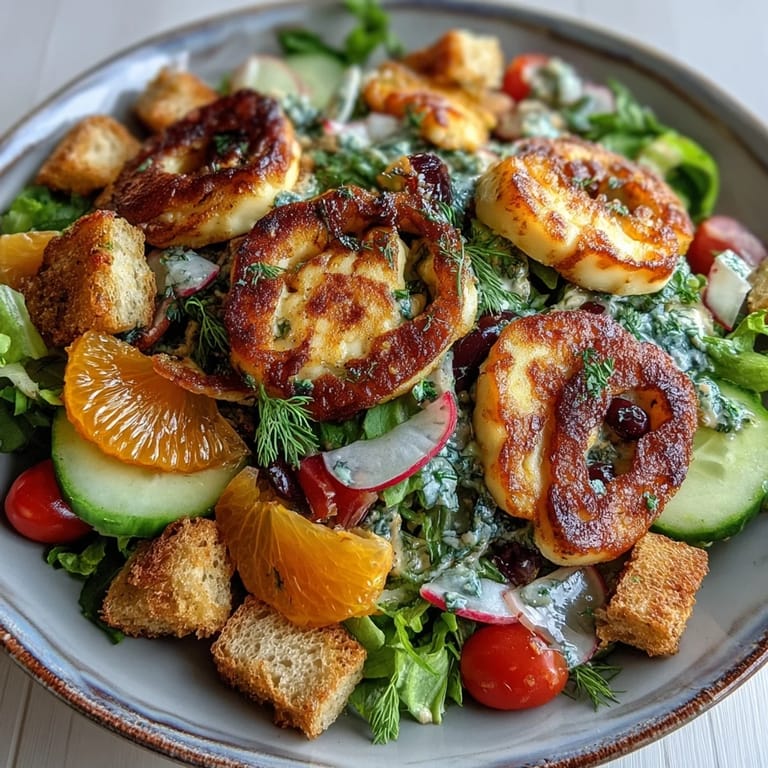
Save My neighbor brought a blood orange fattoush to a potluck last winter, and I watched it disappear before everything else on the table. The combination of warm, salty halloumi against those jewel-toned citrus slices felt like something clicked in my kitchen that day. I went home and tried to recreate it, tossing and adjusting until I found that perfect balance of crispy, tangy, and bright. Now it's become my go-to when I want something that feels special without the fuss.
I made this for my roommate on a Tuesday evening when she was feeling burnt out, and something shifted when she took that first bite. She closed her eyes for a second, then asked if I'd made it from scratch. That small moment reminded me why I love cooking things that layer flavors and textures—it's like giving someone permission to slow down.
Ingredients
- Halloumi cheese, sliced into quarter-inch rounds: This is the star because it has a high melting point, so it fries instead of melting into a puddle, and you get these golden, squeaky-edged pieces that contrast beautifully with everything else.
- Blood oranges, peeled and sliced into rounds: Their deep burgundy color and slightly different flavor profile from regular oranges give this salad an elegant, almost jeweled appearance that makes people pause before eating.
- Mixed salad greens (romaine, arugula, parsley, mint): The combination of tender and peppery keeps the salad interesting, while fresh herbs add brightness that sumac alone can't provide.
- Cucumber, sliced: It adds cool crunch and acts as a gentle counterpoint to the warm halloumi and acidic dressing.
- Cherry tomatoes, halved: Choose ones that are actually ripe and smell fragrant; watery tomatoes will make your salad soggy no matter what you do.
- Radishes, thinly sliced: These bring a peppery bite and stay crisp throughout, which keeps the whole dish feeling alive rather than wilted.
- Red onion, thinly sliced: Raw red onion can taste sharp, so if you find it overwhelming, soak the slices in cold water for five minutes beforehand to soften that bite.
- Sourdough bread, cut into cubes: Sourdough has enough tang and structure to hold up to the dressing better than soft bread, and it crisps beautifully without becoming hard.
- Extra virgin olive oil for dressing: Don't use your cooking oil here; this is where that fruity, peppery quality actually matters and changes the flavor of everything.
- Fresh lemon juice and red wine vinegar: Lemon alone would be too one-dimensional, while this combination creates a more layered tartness that plays well with the sumac.
- Ground sumac: This is non-negotiable if you want authentic flavor; it brings a lemony, floral note that you simply cannot replicate with more vinegar.
- Pomegranate molasses: A small spoonful adds depth and a subtle fruity sweetness that balances the sharpness of the vinegar.
Tired of Takeout? 🥡
Get 10 meals you can make faster than delivery arrives. Seriously.
One email. No spam. Unsubscribe anytime.
Instructions
- Toast your croutons until they're golden:
- Toss sourdough cubes with olive oil and sea salt, then spread them on a baking sheet and bake at 180°C for 8 to 10 minutes, stirring halfway through so they brown evenly. You'll know they're ready when they smell like toasted bread and feel completely crispy all the way through.
- Mix the dressing while everything else cooks:
- Whisk together the olive oil, lemon juice, red wine vinegar, sumac, and pomegranate molasses until the mixture emulsifies slightly and turns golden. This only takes a minute, and doing it early means you're not scrambling at the end.
- Fry the halloumi until the edges are caramelized:
- Heat a tablespoon of olive oil in a nonstick skillet over medium heat and add your halloumi slices, cooking for about 90 seconds per side until they develop those golden-brown edges. You'll hear a gentle sizzle and smell something almost buttery; that's exactly what you want.
- Assemble your salad base in a large bowl:
- Combine the greens, cucumber, cherry tomatoes, radishes, and red onion while everything is still at room temperature. This is the moment to taste a radish or tomato and make sure things taste balanced before you add anything warm.
- Bring it all together with warmth and texture:
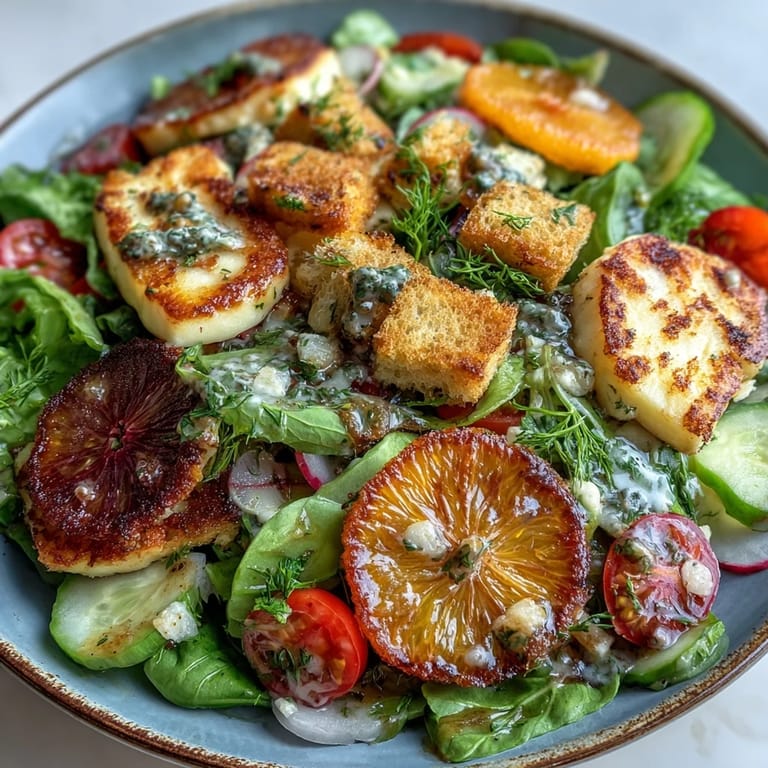
- Add the blood orange slices and warm halloumi pieces to your greens, then scatter the crispy croutons on top. Drizzle with dressing and toss gently just before serving so everything stays crisp.
 Save
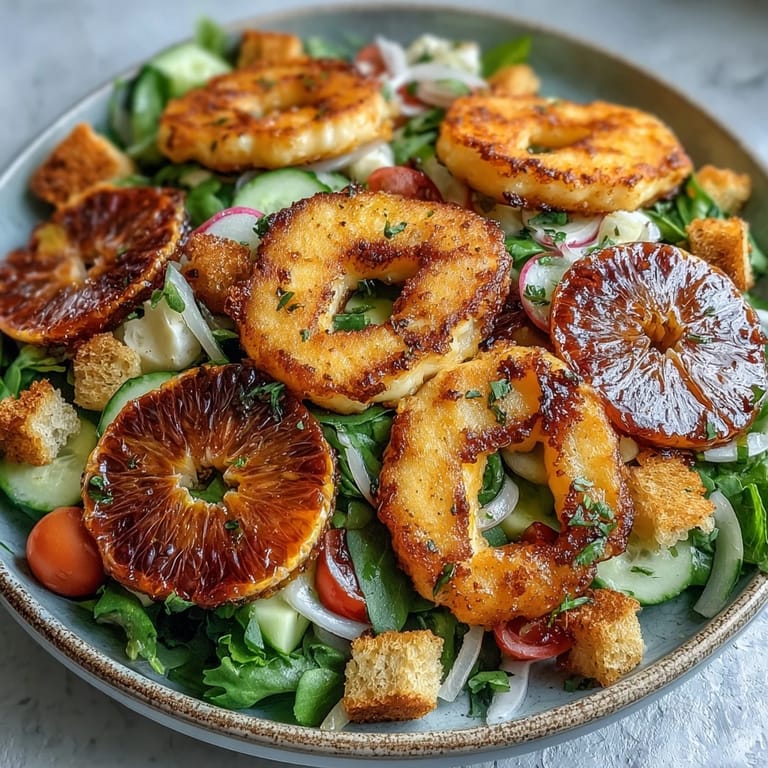
Save There's something almost meditative about arranging those blood orange slices on top of everything—the color is so deep and unusual that it feels less like salad and more like an edible still life. My sister told me once that this was the first salad she'd actually looked forward to eating, which says everything about what the right combination of flavors and textures can do.
The Halloumi Factor
Halloumi changed my entire relationship with warm salads because it's one of the few cheeses that actually improves when you cook it. I've made this mistake countless times with other dishes: adding regular cheese that just melts into a disappointing mess, but halloumi stays structured and takes on this slight squeak when you bite it, which sounds odd until you experience it. The key is not to overcook it—those 90 seconds per side are really important because any longer and it toughens up.
Why Blood Oranges Matter Here
I used to think blood oranges were just regular oranges that looked dramatic, but there's actually a difference in flavor that becomes obvious when they're raw in a salad. They're slightly less sweet and have this subtle berry undertone that regular oranges don't have, which plays beautifully against the sharp sumac dressing. If you find them and they smell fragrant, grab them because they show up for maybe three months out of the year, and this salad is one of the best ways to use them.
Building Layers of Flavor
The dressing is where this salad transforms from nice to remarkable, and it works because you're layering different types of tartness and umami rather than relying on one acid. The pomegranate molasses does something subtle—it adds a fruity sweetness that you don't consciously notice but would absolutely miss if it wasn't there. Think of it as seasoning your seasoning, which is what actually separates a good salad dressing from a memorable one.
- Taste your dressing before it hits the salad and adjust the sumac if it tastes flat, because sumac amounts can vary depending on how recently it was ground.
- If you're making this ahead, keep the dressing separate and only dress the salad right before serving or you'll end up with sad, soggy greens.
- Fresh herbs like mint and parsley in the salad base do more work than you'd think—they keep everything feeling bright and prevent the salad from tasting heavy.
 Save
Save This salad has become my answer when people ask what I'm making for dinner and I want something that feels both easy and impressive. It reminds me that the best meals aren't always the most complicated—they're just the ones where you've thought carefully about what each ingredient brings to the table.
Recipe Guide
- → What makes fattoush different from regular salads?
Fattoush is a Levantine salad distinguished by its use of crispy fried or toasted bread pieces. The sumac-spiced vinaigrette and fresh herbs give it a distinct tangy, bright flavor profile that sets it apart from other mixed green salads.
- → Can I prepare this ahead of time?
Prepare the dressing and croutons up to a day in advance. Store them separately at room temperature. Slice the vegetables and halloumi beforehand, but assemble and toss with dressing just before serving to maintain crisp textures.
- → What can I use instead of blood oranges?
Regular oranges, grapefruit, or even segmented tangerines work well. The goal is a sweet citrus element to balance the salty halloumi and tangy dressing. Choose whatever looks freshest at your market.
- → How do I prevent halloumi from sticking to the pan?
Use a good quality nonstick skillet and ensure it's properly heated before adding oil. Pat the halloumi slices dry before cooking, and don't move them too frequently—let them develop a golden crust before flipping.
- → Is this suitable for meal prep?
The components store well separately for 2-3 days. Keep croutons in an airtight container, vegetables in the fridge, and halloumi chilled. Bring to room temperature before assembling, and add dressing just before eating.
- → What pairs well with this fattoush?
Grilled chicken, lamb kebabs, or spiced chickpeas make excellent protein additions. It also complements other mezze dishes like hummus, baba ganoush, or tabbouleh for a complete Middle Eastern spread.