 Save
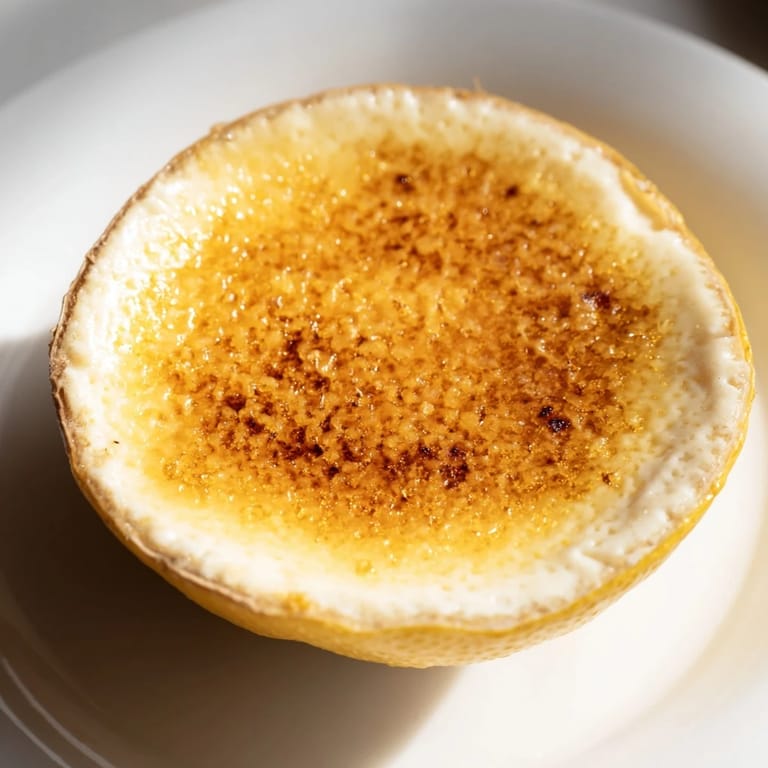
Save The first time I made a posset, I was standing in my kitchen on a grey afternoon, holding a blowtorch I'd borrowed from a friend and feeling utterly ridiculous. But then that sugar crackled and caramelized into amber, and suddenly I understood why this dessert has captivated people for centuries. There's something about serving cream in a hollowed lemon shell that feels like edible art, like you've somehow convinced elegance to fit in the palm of your hand. That day changed how I thought about simple desserts.
I made this for my sister's dinner party last spring, and I watched her face light up when she saw those golden brûlée tops glinting under the kitchen lights. One of her guests actually asked if I'd trained in pastry school, which I hadn't, but I kept that compliment close to my heart for weeks. That moment taught me that impressive food doesn't require complicated techniques, just a little theatre and genuine care.
Ingredients
- Double cream (500 ml): This is the soul of the posset—use proper heavy cream, not whipping cream, because the fat content is what creates that silky, almost velvety texture that coats your mouth so beautifully.
- Caster sugar (140 g plus 6–8 tsp): Caster sugar dissolves faster and more completely than granulated, which means no grittiness hiding in your cream.
- Lemon zest (2 lemons): Zest before you juice—I learned this the hard way after squeezing lemons first and having nothing left to zest.
- Freshly squeezed lemon juice (90 ml): Bottled juice will betray you here; the fresh acidity is what curdles the cream into that silky set, and bottled juice doesn't have the same punch.
- Large lemons (6 for shells): Choose firm ones without soft spots, and pick them slightly bigger than you think you'll need—the extra room makes filling easier.
Tired of Takeout? 🥡
Get 10 meals you can make faster than delivery arrives. Seriously.
One email. No spam. Unsubscribe anytime.
Instructions
- Hollow out your lemon shells:
- Slice six lemons lengthwise, then use a small spoon or melon baller to scoop out every bit of flesh and pith, working carefully so you don't puncture the skin. Trim a thin slice from the rounded bottom of each shell so they sit flat and stable on the plate—this detail matters more than you'd think.
- Heat the cream base:
- Combine cream, sugar, and zest in a saucepan and bring to a gentle boil, stirring until the sugar completely dissolves and the mixture turns a pale yellow from the zest. Let it simmer for exactly three minutes—no longer, or the cream can separate—then take it off the heat and let it cool slightly while you prepare to add the lemon juice.
- Add the lemon juice and let the magic happen:
- Pour the fresh lemon juice slowly into the warm cream and watch it thicken before your eyes—this is the acid doing its work, curdling the cream in the gentlest way possible. Strain the mixture through fine mesh to catch the zest bits, which will make the final texture impossibly smooth.
- Fill your vessels:
- While the posset is still warm, carefully pour it into each lemon shell, filling close to the rim but leaving just a tiny bit of breathing room. The warm mixture will settle beautifully into the shells if you work slowly and pour from a low height.
- Chill until set:
- Refrigerate for at least three hours—I usually do this overnight because the possets become even silkier after a full chill, and the lemon shells firm up nicely.
- Brûlée just before serving:
- Sprinkle about a teaspoon of caster sugar over each posset, keeping an even layer, then light your blowtorch and move it in slow circles until the sugar turns deep amber and caramelizes completely. Let it harden for two or three minutes before serving—the sugar will become genuinely brittle and shatter under your spoon.
 Save
Save My mother tasted this for the first time at my kitchen counter, and she went quiet for a moment—that particular kind of quiet that means something has genuinely surprised her in a good way. She asked me to make it again the next week, which felt like the highest compliment she could give.
The Lemon Shell Secret
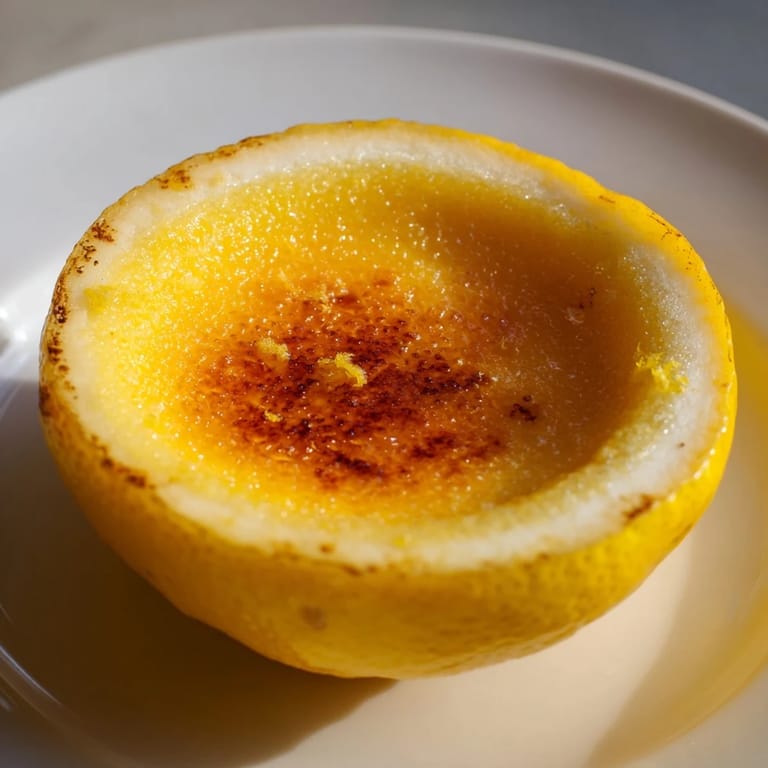
Using the lemon itself as a serving vessel is not just clever plating—it's actually genius design. The shell keeps the posset cold longer because ceramic or glass doesn't insulate the way lemon skin does, and psychologically, eating directly from a lemon shell feels luxurious in a way a regular bowl simply cannot match. I've noticed guests always pause before their first spoonful, wanting to commit the moment to memory.
Timing and Make-Ahead Strategy
This dessert is genuinely forgiving for entertaining because the hard part—making and chilling the posset—can happen a full day ahead. The only thing you cannot do in advance is the brûlée topping, which takes roughly three minutes per batch if you're working with six servings. I've learned to set up my blowtorch station right before guests arrive so I can finish the brûlée while they're finishing their main course, which means warm caramelized sugar landing at the exact moment they're ready to eat.
Flavor Variations Worth Trying
The base recipe is already perfect, but I've discovered that gentle additions transform it without overshadowing the lemon. A sprig of thyme simmered with the cream adds a quiet herbaceous note, while basil creates something almost floral and surprising. If you're feeling adventurous, a whisper of vanilla extract or even a scrape of cardamom pods can deepen the richness, though these should be subtle enough that people can't quite name what they're tasting.
- Infuse herbs during the simmering stage, then remove them before adding lemon juice so they don't taint the clarity of the finished posset.
- If you add any additional flavoring, reduce the lemon juice slightly so the brightness doesn't get crowded out by other notes.
- Always taste a tiny spoonful after straining to make sure the balance still feels right before pouring into the shells.
 Save
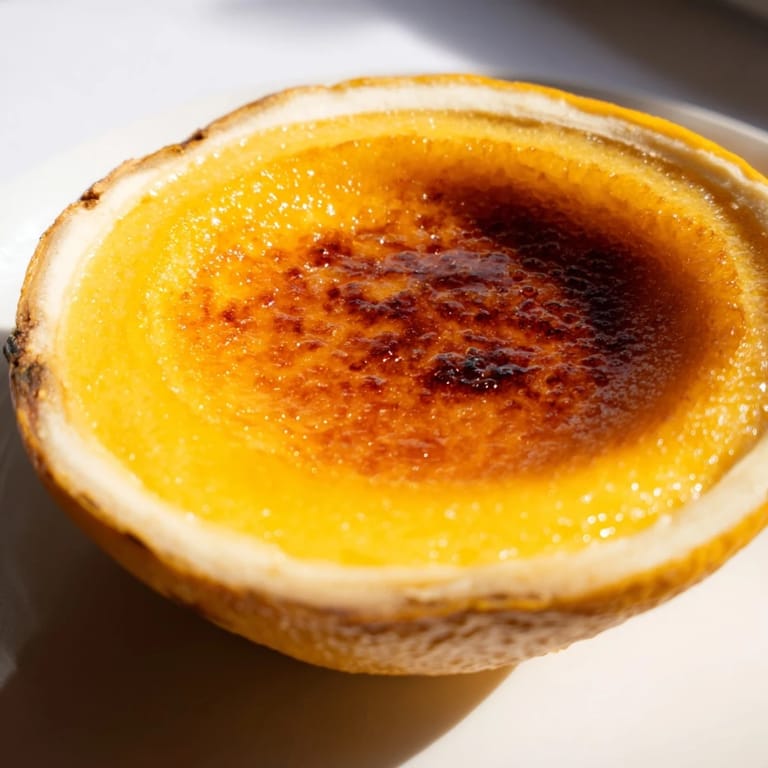
Save This dessert taught me that the most memorable food is often the simplest—it's just cream and lemon and sugar, but somehow it feels like an occasion every single time. Make it for people you want to impress, or make it just for yourself on a quiet evening.
Recipe Guide
- → What is the best way to prepare lemon shells?
Carefully halve large lemons lengthwise, juice and scoop out the flesh, keeping shells intact. Trim the base so they stand upright during chilling and serving.
- → How do I achieve a perfect caramelized sugar top?
Sprinkle caster sugar evenly over chilled lemon possets, then use a kitchen blowtorch or a hot grill/broiler to caramelize the sugar until crisp and golden brown.
- → Can herbs be added to enhance the flavor?
Yes, infusing the cream with thyme or basil during simmering adds subtle aromatic notes. Remove herbs before mixing in lemon juice for a smooth finish.
- → Is it necessary to strain the mixture before chilling?
Straining removes lemon zest and ensures a silky smooth texture for the posset, enhancing the overall mouthfeel.
- → How long should the posset chill before serving?
Chill in the refrigerator for at least 3 hours or until fully set to ensure the creamy custard holds its shape when served.