 Save
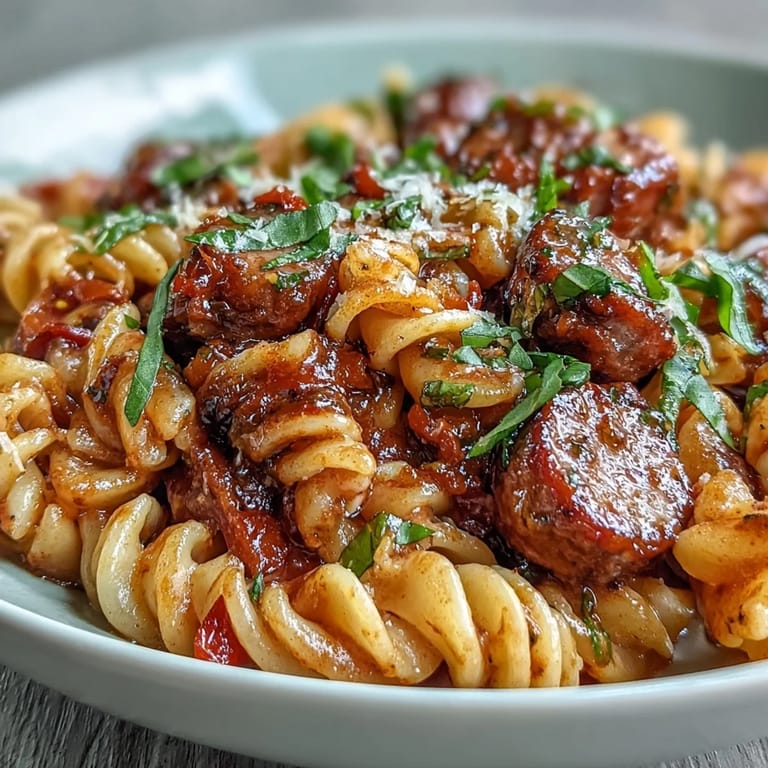
Save There's something wonderfully unpretentious about a one-pot pasta that doesn't apologize for its richness. I discovered this version on a Tuesday night when I had red wine left over from cooking the night before and a package of sausage that needed using up. The magic happens when you skip the usual steps of boiling pasta separately and instead let everything collapse into one pot, the pasta drinking up all those deep, wine-soaked flavors as it cooks. What started as a shortcut became something I now make intentionally, knowing the cleanup alone is reason enough to make it again.
I made this for my sister last month when she was stressed about a work presentation, and watching her go from barely hungry to asking for seconds told me everything I needed to know. She kept saying it tasted like something from a proper Italian kitchen, which made me laugh because I was wearing sweatpants and had sauce splattered on my sleeve. The smell alone—sausage browning, garlic hitting the pan, that moment when red wine hits the skillet and steams up—it turned her whole mood around.
Ingredients
- Italian sausage (300 g / 10 oz): The backbone of this dish—choose spicy if you like heat, mild if you want the wine and tomatoes to lead, and remove the casings so it breaks into small, sauce-clinging pieces.
- Yellow onion (1 medium): Chop it fine so it softens completely and becomes almost invisible in the sauce, adding sweetness without texture.
- Garlic (3 cloves): Mince it fresh, never use jarred here, because you need those sharp notes to cut through all the richness.
- Red bell pepper (1): Adds brightness and a gentle sweetness that balances the wine's tannins.
- Canned crushed tomatoes (400 g / 14 oz): Buy the best quality you can afford because this is your flavor foundation and there's nowhere to hide.
- Penne or rigatoni (300 g / 10 oz): The tube shapes catch the sauce better than long strands, but use what you have.
- Dry red wine (120 ml / ½ cup): Drink the rest of the bottle—use something you'd actually drink, not cooking wine from a jug.
- Low-sodium chicken broth (750 ml / 3 cups): This liquid becomes your sauce, so its flavor matters as much as any spice.
- Soy sauce (2 tbsp): The secret ingredient that nobody expects; it adds umami depth and a subtle saltiness that makes people ask what's different.
- Heavy cream (120 ml / ½ cup): Stir it in at the end to transform everything into silk.
- Dried oregano (1 tsp) and dried basil (½ tsp): Use dried herbs here, not fresh, because they'll distribute evenly and won't wilt into invisibility.
- Crushed red pepper flakes (¼ tsp, optional): Add if you want heat, skip if you're cooking for someone sensitive.
- Salt and black pepper: Taste as you go—the sausage and soy sauce already bring saltiness, so you might need less than you think.
- Grated Parmesan (30 g / ¼ cup) and fresh basil or parsley: These aren't just garnish, they're the final note that reminds you this came from somewhere wonderful.
Tired of Takeout? 🥡
Get 10 meals you can make faster than delivery arrives. Seriously.
One email. No spam. Unsubscribe anytime.
Instructions
- Brown the sausage first:
- Heat your pot or skillet over medium-high heat and add the sausage, breaking it into small pieces as it cooks for about three to four minutes. You want it deeply browned, not gray, because that color carries flavor.
- Soften the vegetables:
- Once the sausage is done, add the onion and bell pepper, letting them get tender and slightly caramelized for about three minutes, then stir in the garlic for just one more minute so it doesn't burn. The kitchen should smell almost too good to be true at this point.
- Deglaze with wine:
- Pour in the red wine and scrape the bottom of the pot with your spoon to loosen all those brown, flavorful bits stuck there. Let it bubble and reduce for two minutes so some of the alcohol cooks off and the wine becomes part of the sauce rather than something you taste too sharply.
- Add everything else:
- Stir in the tomatoes, soy sauce, oregano, basil, red pepper flakes if using, uncooked pasta, and broth all at once, mixing until the pasta is mostly submerged. Don't worry that it looks like too much liquid—the pasta will absorb it.
- Simmer until pasta is tender:
- Bring everything to a boil, then lower the heat to a gentle simmer, cover the pot, and cook for twelve to fourteen minutes while stirring every few minutes. When you taste the pasta and it's just tender, you're almost done.
- Finish with cream:
- Stir in the heavy cream and let everything bubble gently for two to three more minutes uncovered so the sauce becomes creamy and coats each piece of pasta. Taste it now and adjust the salt and pepper—sometimes you need more than you expect, sometimes the soy sauce is enough.
- Plate and garnish:
- Sprinkle each bowl with Parmesan and a handful of fresh herbs, and serve while everything is still steaming.
 Save
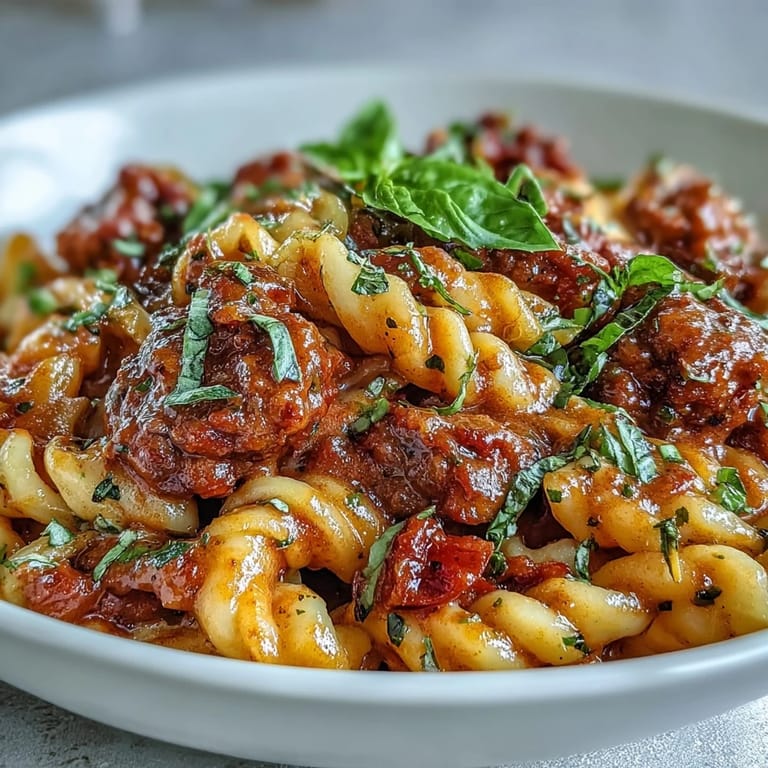
Save The first time someone told me this was their favorite weeknight dinner, it stuck with me because I'd almost convinced myself one-pot pastas were cheating. But there's nothing cheating about feeding people something that feels indulgent and comforting, especially when you're not exhausted afterward.
Why This Works as a One-Pot Meal
The single biggest thing that makes this work is that the pasta cooks directly in the sauce instead of in separate salted water. As the pasta releases its starch, it thickens the liquid into something silky, and simultaneously the pasta absorbs all the wine, broth, and sausage flavor in a way boiled pasta never could. The sausage fat coating everything means nothing sticks, and the cream at the end is less about adding richness and more about tempering the wine's edges.
How to Adjust This to Your Taste
If you find the sauce too acidic, add a pinch of sugar or skip it entirely and let the onion's natural sweetness come through. If it tastes too wine-forward, that usually means you need more salt, not less wine. I've made this with half-and-half instead of heavy cream when I wanted something lighter, and it works fine, though the sauce is thinner and less coating.
Storage and Serving Suggestions
Leftovers keep for three days in the fridge, and when you reheat them, add a splash of broth because the pasta will have absorbed even more liquid overnight. This pairs perfectly with a medium-bodied red wine like Chianti or Merlot, something with enough tannins to stand up to the richness but not so heavy it overwhelms the dish.
- Spinach or kale stirred in during the last three minutes adds color without changing the flavor.
- A squeeze of fresh lemon juice at the end brightens everything if it feels too heavy.
- Crusty bread is essential for soaking up any sauce left in the bowl.
 Save
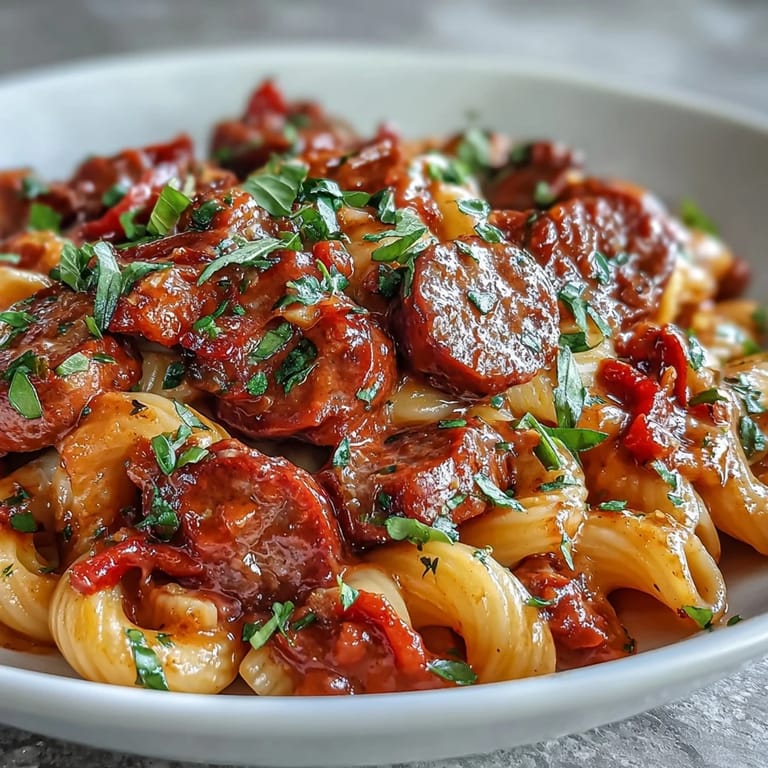
Save This recipe has earned its place in my regular rotation because it's been reliable in every season, every mood, and every time I've needed to feel like I made something worth eating. Make it once and you'll understand why.
Recipe Guide
- → Can I use different pasta shapes?
Yes, short sturdy pasta like penne, rigatoni, ziti, or gemelli works best as they hold the creamy sauce well and cook evenly in the liquid.
- → What type of red wine works best?
Dry medium-bodied wines like Chianti, Merlot, or Sangiovese add depth without overpowering. Avoid sweet wines as they'll affect the sauce balance.
- → Can I make this lighter?
Substitute half-and-half or whole milk for heavy cream. Turkey sausage or plant-based alternatives also reduce fat while maintaining flavor.
- → How do I store and reheat leftovers?
Refrigerate in an airtight container up to 3 days. Reheat gently with a splash of broth or cream to restore the sauce's consistency.
- → Why add soy sauce to pasta?
Soy sauce enhances umami and deepens savory flavors without tasting distinctly Asian. It balances the acidity of tomatoes and wine.
- → Can I add vegetables?
Spinach, kale, or mushrooms work well. Add hearty vegetables with the peppers, or stir in leafy greens during the last 3 minutes of cooking.