 Save
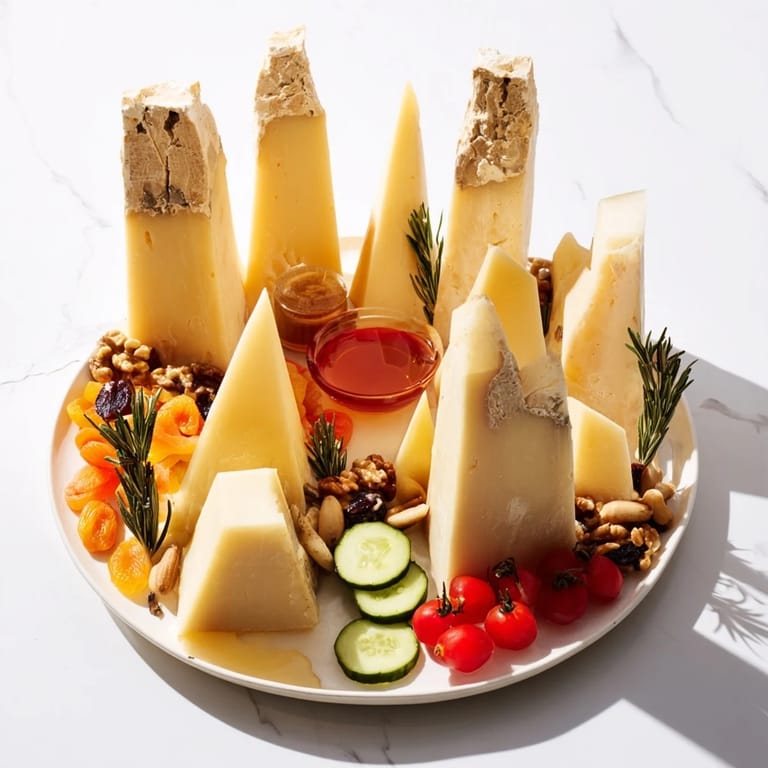
Save I'll never forget the afternoon I discovered that a cheese board could be so much more than a simple arrangement on a cutting board. It was at a friend's dinner party where someone had transformed a wooden platter into an edible landscape, and I was completely captivated. The way the hard cheeses towered like mountain peaks, the soft cheeses nestled like gentle hills, and everything else cascading down created this magical world you could actually eat. That moment changed how I thought about entertaining, and now every time I create a Sculptural Cheese Landscape, I'm transported back to that sense of wonder and possibility.
I remember serving this at my sister's engagement party, watching guests actually gasp when they saw it. People weren't just eating cheese; they were exploring, creating little flavor journeys with each bite. That's when I knew this wasn't just about the ingredients—it was about creating an experience that made people feel something.
Ingredients
- Aged Manchego (150 g): Cut into tall, irregular chunks to form your dramatic peaks. Manchego's nutty, slightly salty character gives you that strong foundation a mountain needs. I learned to cut it into uneven shapes rather than perfect pieces—it looks far more natural and striking.
- Parmigiano-Reggiano (150 g): Break this into rugged shards rather than cutting it neatly. Those jagged edges catch the light beautifully and hint at the complexity you're about to taste.
- Aged Cheddar (150 g): Slice into tall triangles that lean slightly for visual drama. The sharpness of aged cheddar provides contrast to the more delicate cheeses around it.
- Brie (100 g): Cut into thick wedges and place these around the base of your hard cheeses. Their creamy nature makes them feel like soft, rolling hills in your landscape.
- Gorgonzola (100 g): Break into rustic pieces for those interesting blue-veined moments. Don't worry about making it perfect—imperfection is exactly what you want.
- Red Grapes (1 cup, halved): These become your pools of color in the valleys. Halving them makes them nestle better between the cheeses.
- Cherry Tomatoes (1 cup, halved): The bright red provides visual contrast and a fresh pop of acidity that balances the richness of cheese.
- Cucumber (1 small, sliced into rounds): These delicate rounds add another texture and a cooling element that guests really appreciate between bites of aged cheese.
- Apple (1 small, thinly sliced): The slight tartness pairs beautifully with cheddar and brie. Slice just before serving to prevent browning.
- Dried Apricots (1/2 cup): These jewel-toned pieces add sweetness and chewiness that rounds out the board's flavor profile.
- Roasted Almonds (1/2 cup): Scatter these like natural boulders across your landscape. Their crunch contrasts wonderfully with creamy cheeses.
- Walnuts (1/2 cup): Another texture layer that also brings an earthier note to the composition.
- Baguette Slices (12 thin slices): These become your paths and platforms. Thin slices are key—they don't overshadow the cheese and they're easier for guests to build with.
- Assorted Crackers (12 pieces): Choose shapes and textures that interest you. I often mix seeded, herb-flavored, and plain for visual variety.
- Honey (2 tbsp): Drizzle this in small pools or over select cheeses. It creates little moments of sweetness and sparkle on the board.
- Fresh Rosemary Sprigs: These aren't just garnish—they add an herbal aroma and whisper of forest to your cheese landscape.
Tired of Takeout? 🥡
Get 10 meals you can make faster than delivery arrives. Seriously.
One email. No spam. Unsubscribe anytime.
Instructions
- Prepare Your Canvas:
- Start with a large wooden board or platter as your foundation. Make sure it's clean and at room temperature. The wood itself becomes part of your story, so choose one that makes you happy to look at.
- Create Your Mountains:
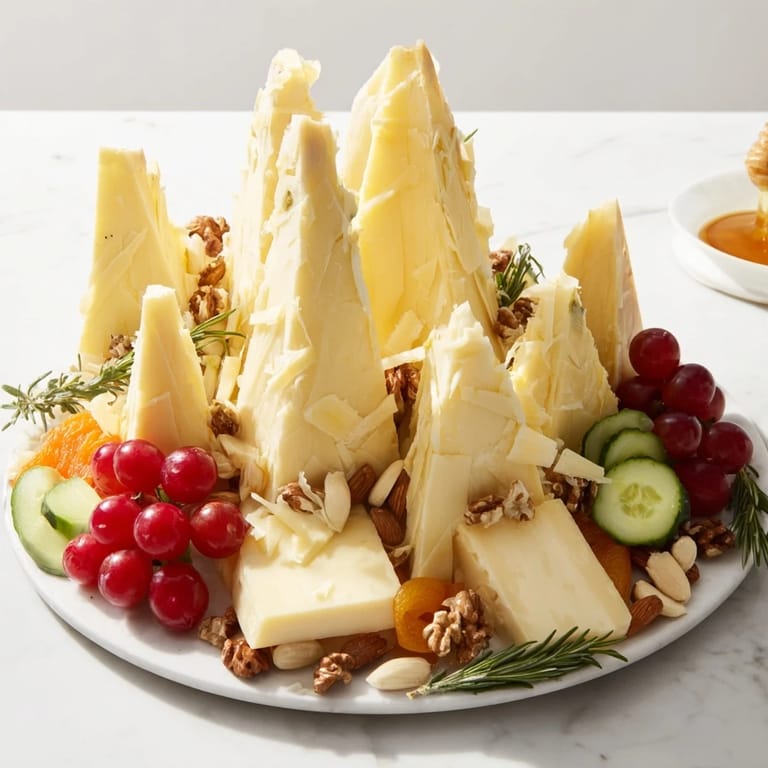
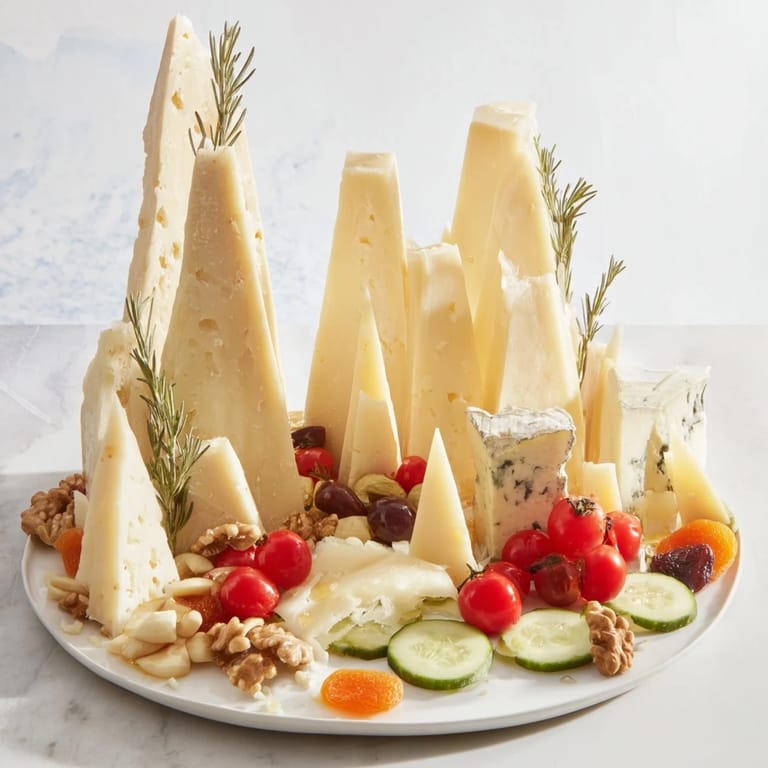
- Arrange the hard cheeses—Manchego, Parmigiano-Reggiano, and aged Cheddar—in tall, vertical formations. Think of these as the backbone of your landscape. Position them slightly off-center for more natural composition. Stand back and look at the silhouette you've created.
- Build Your Hills:
- Nestle the Brie and Gorgonzola wedges and pieces around the base of the hard cheeses. These should feel like they're supporting the mountains while creating their own interest with their creamier texture and color.
- Fill the Valleys:
- This is where you add your fruits and vegetables. Cluster the halved grapes, cherry tomatoes, cucumber rounds, apple slices, and dried apricots in the lower areas and between the cheese formations. Let them flow naturally rather than arranging them with rigid precision.
- Scatter Your Textures:
- Distribute the roasted almonds and walnuts across the board like natural boulders emerging from the landscape. These shouldn't be grouped together but rather scattered to create visual interest and break up the softer elements.
- Create Your Paths:
- Arrange your baguette slices and crackers along the edges and in any remaining spaces. These become the paths guests follow as they explore your creation. Lean them slightly for dimension.
- Add the Magic Touches:
- Drizzle honey in small pools over select cheeses or in empty spaces. Tuck fresh rosemary sprigs into gaps and on top of cheese peaks. Step back and assess—are there any areas that feel bare? Fill them with color and texture.
- The Final Moment:
- Take a breath and look at what you've created. This is your moment before the adventure begins. Serve immediately while everything is at its best, encouraging guests to build their own combinations as they explore the landscape.
 Save
Save I remember one guest who'd always claimed not to be adventurous with food quietly discovering that she loved gorgonzola when she paired it with walnut and apple on her own little flavor journey across the board. That's when I truly understood the power of this presentation—it gives people permission to explore at their own pace.
The Art of Visual Storytelling
This board is about more than arrangement; it's about creating a narrative with your ingredients. The hard cheeses are your story's bold opening, commanding attention and respect. The soft cheeses are the emotional turning point, offering comfort and creaminess. The fruits and vegetables are the details that make the story real and relatable. When you approach it this way, you're not just building a cheese board—you're creating an edible experience that tells the story of flavors, textures, and moments. I've learned that the most memorable boards are the ones where I let the ingredients guide the composition rather than forcing them into a predetermined pattern.
Pairing and Flavor Journeys
The beauty of this landscape approach is that it naturally guides guests toward interesting flavor combinations they might not have attempted on a traditional board. The proximity of different elements becomes an invitation to experiment. I've watched people discover that aged Cheddar with dried apricot and walnut creates an entirely new flavor experience. The scattered arrangement means that the sweet, the savory, the sharp, and the creamy are all within reach of each other, creating a sort of flavor ecosystem. Pair this board with a crisp white wine or a light-bodied red, and you've created something your guests will talk about for months.
Making It Your Own
The most important lesson I've learned about this recipe is that it's a framework, not a rule book. Your personal cheese landscape should reflect what you love and what grows from your region. I've created versions with goat cheese hills, versions with cured meats woven throughout for non-vegetarians, versions garnished with edible flowers that made guests actually pause and smile. The magic happens when you trust your instincts and remember that there's no wrong way to build this board—only your way.
- Try adding fresh figs or dates for deeper sweetness if you want to shift the flavor profile
- Include cured meats like prosciutto or salami if your guests eat meat; drape them artfully around the peaks
- Add edible flowers like pansies or nasturtiums for unexpected color and whimsy
 Save
Save Every time I create one of these boards, I'm reminded that the most meaningful meals aren't about complexity or following rules perfectly—they're about creating space for people to connect, explore, and surprise themselves. That's the real recipe here.
Recipe Guide
- → What types of cheeses work best for tall wedges?
Hard cheeses like aged Manchego, Parmigiano-Reggiano, and aged Cheddar hold shape well when cut into tall chunks, providing vertical structure.
- → How can I add texture variations to the platter?
Incorporate roasted almonds, walnuts, and crunchy crackers or baguette slices to contrast with the creamy and firm cheese textures.
- → What fruits complement the flavor profile?
Red grapes, cherry tomatoes, cucumber slices, apple thin slices, and dried apricots offer refreshing sweetness and acidity to balance the cheeses.
- → How should the ingredients be arranged for visual impact?
Place tall hard cheese chunks as mountain peaks, nestle softer cheeses below as hills, fill valleys with fruits and veggies, scatter nuts as boulders, and line edges with breads as paths.
- → Can this platter accommodate dietary preferences?
Using vegetarian cheeses makes this platter suitable for vegetarian diets; options can be adjusted by selecting preferred or regional cheeses.
- → What finishing touches enhance presentation?
Drizzling honey in small pools and adding fresh rosemary sprigs provide sweetness and a natural, forest-inspired aroma and look.