 Save
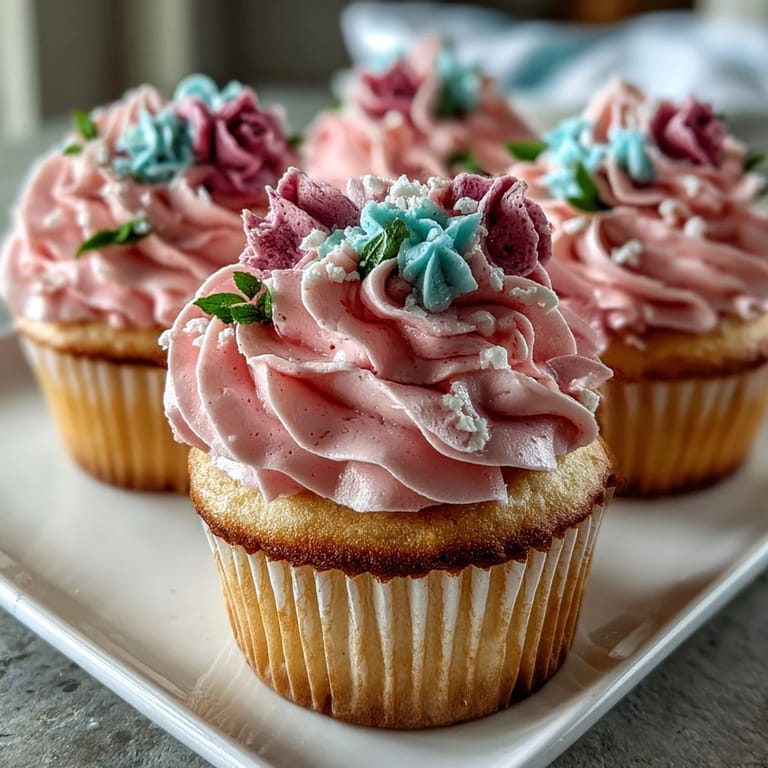
Save My sister texted me a photo of her nursery that spring morning—pale yellow walls, tiny mobiles, and a date circled on the calendar. She asked if I could bring something special to her shower, something that looked like the garden she'd been dreaming about for months. That's when I thought of these cupcakes, delicate vanilla bases crowned with buttercream flowers that could actually look like something real. What started as a simple request became an excuse to dust off my piping bag and remember why small, edible things made by hand matter so much.
I spent the afternoon before the shower piping test flowers onto parchment, my kitchen smelling like vanilla and butter while my niece watched from a stool, narrating what each blob of frosting could become. By the time I got to the actual cupcakes, my hands knew the motion, and suddenly what felt impossible at the start became almost meditative. She picked the purple one first, of course.
Ingredients
- All-purpose flour: The foundation that keeps these cupcakes tender, not dense—sift it if you have time because it really does make a whisper of a difference.
- Granulated sugar: Creates that light, airy crumb when beaten properly with softened butter, which takes patience but pays off immediately.
- Unsalted butter: Use softened butter for the batter and the frosting—cold butter won't incorporate smoothly and warm butter deflates everything.
- Eggs at room temperature: This detail actually matters; cold eggs don't blend as seamlessly and can make the batter look broken.
- Whole milk at room temperature: The temperature keeps the batter stable and prevents the emulsion from separating mid-mix.
- Pure vanilla extract: The good stuff tastes nothing like the imitation kind, and you'll taste the difference in every bite.
- Baking powder: Fresh baking powder is crucial; check your container and replace it yearly because it loses potency faster than you'd think.
- Powdered sugar for buttercream: Sifting removes lumps that would otherwise create a grainy frosting no amount of beating can fix.
- Food coloring: Gel or paste coloring works better than liquid because it won't thin out your buttercream and turn it weepy.
Tired of Takeout? 🥡
Get 10 meals you can make faster than delivery arrives. Seriously.
One email. No spam. Unsubscribe anytime.
Instructions
- Set the stage:
- Preheat your oven to 350°F and line that muffin tin with liners—this sounds obvious, but forgetting this step means peeling dried batter later.
- Combine the dry elements:
- Whisk flour, baking powder, and salt in a bowl so the baking powder distributes evenly and you don't end up with bitter pockets. This takes maybe 30 seconds.
- Cream butter and sugar:
- Beat them together for 2-3 minutes until the mixture looks pale, almost mousse-like, which means air has been incorporated. If it still looks greasy and dense, keep going.
- Add eggs one at a time:
- Let each egg fully incorporate before adding the next—the mixture should stay smooth and creamy, not separated. This is where patience actually changes the outcome.
- Build the batter gently:
- Add half the flour mixture, then the milk, then the remaining flour, mixing just until combined after each. Overmixing develops gluten and makes these tough instead of tender.
- Fill and bake:
- Divide batter evenly so all cupcakes bake at the same rate, filling liners about two-thirds full. Bake 16-18 minutes until a toothpick comes out clean and the tops spring back when lightly touched.
- Cool completely:
- Let them cool on a wire rack before frosting—warm cupcakes melt the buttercream and make piping impossible.
- Make the buttercream:
- Beat softened butter until it's actually creamy, then gradually add sifted powdered sugar so you don't create clouds of sugar dust. This step can't be rushed.
- Achieve the right consistency:
- Add vanilla and milk a little at a time until the frosting is spreadable but holds its shape when piped. You want it thick enough to pipe flowers, not thin enough to drip.
- Tint with color:
- Divide buttercream into bowls and add gel coloring drop by drop, mixing thoroughly—colors deepen slightly as they sit, so start light.
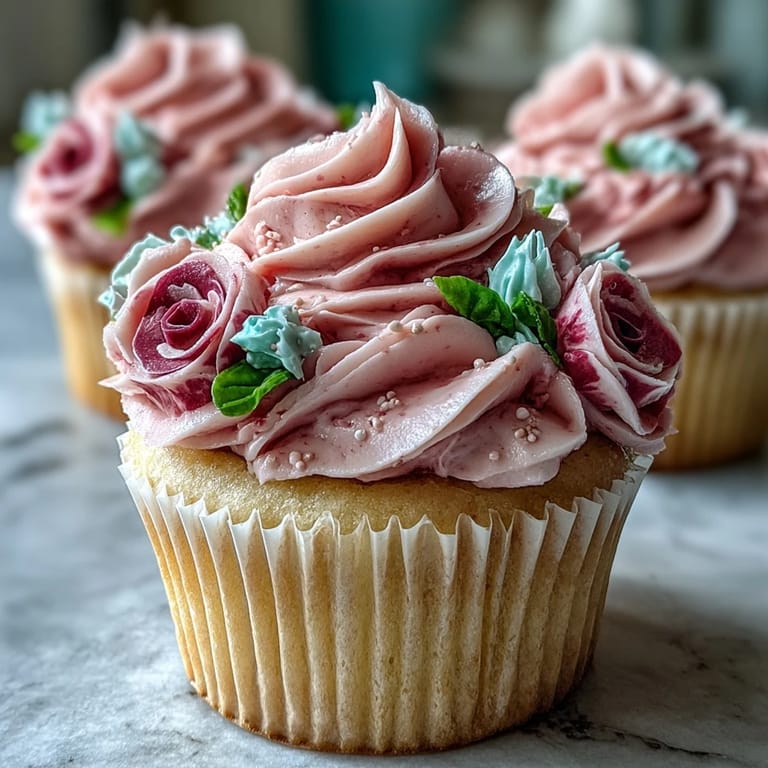
- Pipe the flowers:
- Practice on parchment first if you're new to this, holding the piping bag at a slight angle and rotating your wrist as you squeeze. Once you understand the motion, you'll find a rhythm.
 Save
Save My sister kept one cupcake in her freezer (we still don't know why), and months later after her daughter was born, she sent me a photo of that tiny person's face in profile beside a frosting flower. That moment when something baked becomes a memory marker, connected to a life changing—that's the part that stays with you.
The Vanilla Question
The vanilla in these cupcakes should taste like vanilla, not like the smell of nail polish remover, which means pure extract is non-negotiable. I learned this the hard way by once using what I thought was pure vanilla and discovering it was mostly alcohol and regret. Now I buy the good stuff, store it away from light, and actually taste the difference in the final cupcake.
Piping Tips and Flower Techniques
The first time I tried piping a rose, I held the bag like it owed me money and squeezed so hard the frosting exploded sideways onto my shirt. Learning to let the piping bag do the work instead of forcing it changed everything—it's about gentle pressure and letting the tip create the pattern. The Wilton 104 tip creates petals almost on its own if you give it the chance, and watching a flower emerge from what looked like chaos is genuinely satisfying.
Storage and Celebration Pairings
These cupcakes actually improve slightly the next day when the flavors settle into each other, so baking them a day ahead is not cutting corners, it's strategy. They keep beautifully in an airtight container at room temperature and don't dry out the way some cupcakes do, which makes them perfect for parties where you want one less thing to worry about on the day itself.
- Pair them with something light like sparkling lemonade or a crisp white wine, not heavy drinks that compete with the delicate vanilla.
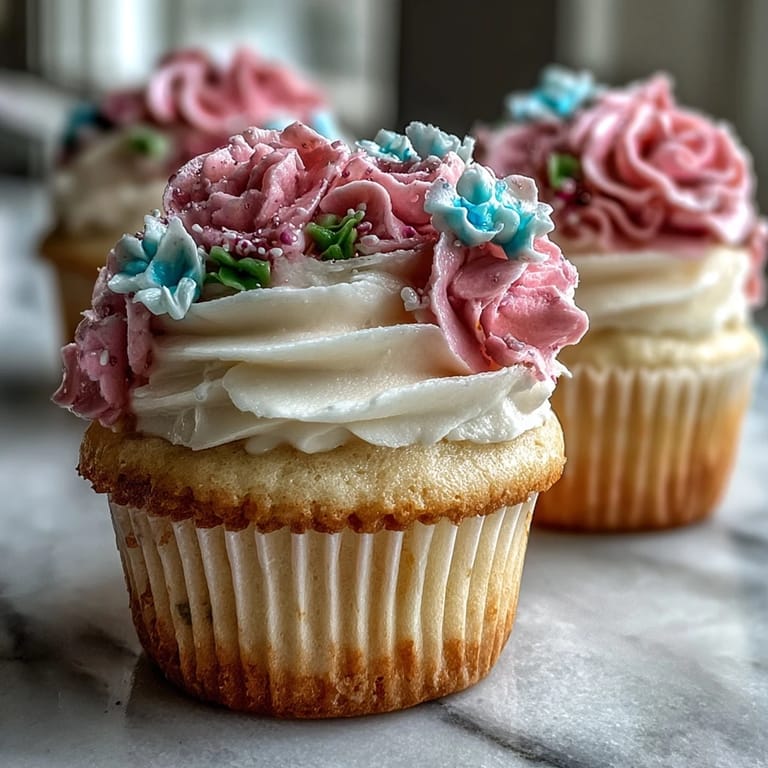
- If you're making these for a shower, add a tiny fondant butterfly or sugar pearl to the center of each flower for extra magic.
- Keep them away from direct sunlight and heat, especially if you're piping flowers in gel color—colors can fade if they sit in strong light.
 Save
Save These cupcakes are the kind of small thing that turns a moment into a memory, the kind you bake when something matters. That's worth the extra time with the mixer and the piping practice on parchment.
Recipe Guide
- → What is the best way to achieve smooth buttercream for piping?
Beat the butter until creamy before gradually adding powdered sugar, ensuring a fluffy and smooth consistency ideal for piping detailed flowers.
- → Can I prepare the cupcakes ahead of time for decorating later?
Yes, cool cupcakes completely before decorating. Store at room temperature in an airtight container for up to 2 days to keep freshness.
- → What piping tips work well for creating floral designs?
Use flower and leaf tips such as Wilton 104, 352, and 1M to create varied petal and leaf shapes for a blooming effect.
- → Are there any ingredients that can add extra flavor to the cupcakes?
A touch of lemon zest in the batter can enhance the flavor profile with a subtle citrus brightness.
- → How do I ensure cupcakes are baked evenly?
Fill liners about two-thirds full and bake at 350°F for 16–18 minutes. Use a toothpick to check for doneness; it should come out clean.