 Save
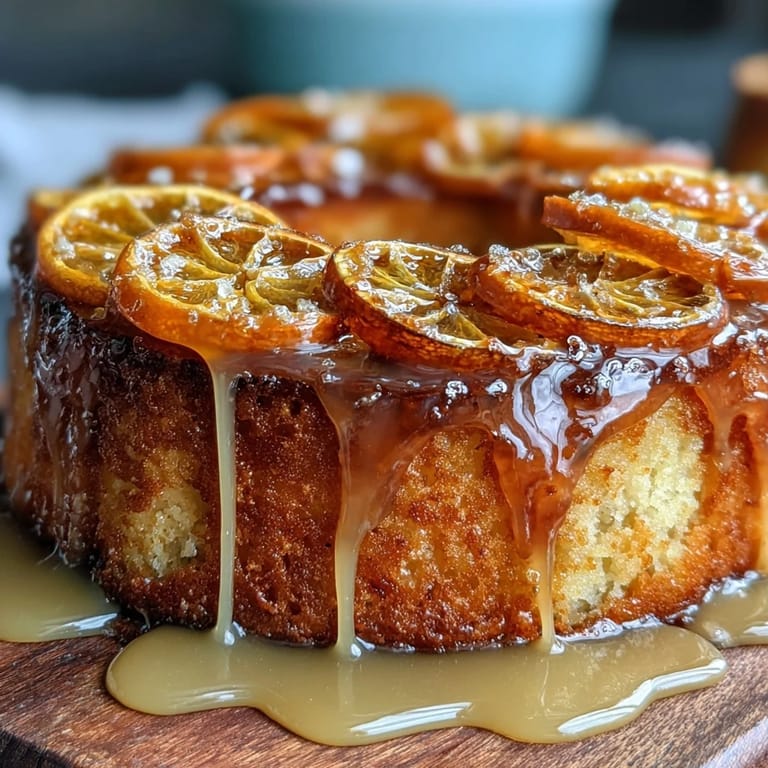
Save There's something about the smell of oranges simmering in sugar that stops you mid-conversation. Years ago, a friend handed me a jar of candied orange peels from a market in Portugal, and I became obsessed with recreating that translucent, jewel-like quality in my own kitchen. One afternoon, I decided to bake them directly into a cake, and what emerged was this tender, fragrant olive oil cake that tastes like Mediterranean sunshine captured in a slice. The bright glaze ties everything together, and now I find myself making this whenever I want to impress someone without fussing around.
I served this to my book club once, and everyone went quiet for a moment after the first bite—the kind of quiet that means they're tasting something they didn't expect. One person asked if it was from a bakery, which felt like the highest compliment. That's when I realized this cake has a way of making you look like you spent hours planning when really, you just followed your instincts and a little bit of patience.
Ingredients
- Medium oranges, thinly sliced (2): The thinner you slice them, the more delicate they become when candied—aim for almost transparent, like stained glass.
- Granulated sugar (1 cup / 200 g for candying, 1 cup / 200 g for cake): Don't skip the step of rubbing it with orange zest; this releases the oils and changes everything.
- Water (1 cup / 240 ml): Just enough to gently poach the oranges without drowning them.
- All-purpose flour (2 cups / 250 g): Spoon it into the measuring cup rather than scooping directly; you'll avoid packing it down accidentally.
- Baking powder (1 1/2 teaspoons) and baking soda (1/2 teaspoon): The combination gives you lift without that metallic tang.
- Salt (1/2 teaspoon): A pinch here makes the citrus flavors pop.
- Eggs, room temperature (3 large): Cold eggs won't emulsify properly with the olive oil, so pull them out of the fridge a bit early.
- Extra virgin olive oil (3/4 cup / 180 ml): Use something you'd actually enjoy on a salad; it matters.
- Whole milk, room temperature (3/4 cup / 180 ml): Room temperature milk blends more smoothly into the batter.
- Vanilla extract (1 teaspoon): A small anchor that lets the citrus shine.
- Orange zest (1 orange): Zest it before you slice the orange for candying.
- Powdered sugar, sifted (1 cup / 120 g): Sifting prevents lumps in your glaze.
- Fresh orange juice (2–3 tablespoons) and lemon juice (1 tablespoon): Adjust to taste; you want brightness, not puckering.
Tired of Takeout? 🥡
Get 10 meals you can make faster than delivery arrives. Seriously.
One email. No spam. Unsubscribe anytime.
Instructions
- Candy the oranges first:
- In a large skillet, combine 1 cup sugar and 1 cup water. Bring it to a gentle simmer over medium heat, stirring until the sugar fully dissolves. Once it's clear, lay your orange slices in a single layer—they should be snug but not crowded—and let them simmer for 20 to 25 minutes, flipping them every few minutes so they cook evenly. You'll know they're done when they've gone from opaque to almost translucent and the edges look slightly candied. Transfer them to a parchment-lined tray to cool completely; they'll continue to firm up as they rest.
- Get your oven and pan ready:
- Preheat your oven to 350°F (175°C) and grease a 9-inch round cake pan thoroughly with butter or oil. Line the bottom with parchment paper so your cake releases cleanly. This step feels small but it's everything.
- Combine your dry ingredients:
- In a medium bowl, whisk together the flour, baking powder, baking soda, and salt until everything is evenly distributed. Set this aside.
- Build your wet base:
- In a large mixing bowl, combine the 1 cup sugar with the orange zest and rub them together with your fingers for about 30 seconds until the mixture is fragrant and wet. This coaxes out the oils and flavors trapped in the zest. Crack in your three room-temperature eggs and whisk until the mixture is pale, thick, and ribbony—this takes about 2 minutes and means your eggs are incorporating air, which helps the cake rise.
- Incorporate the olive oil gently:
- Here's the moment that matters: slowly stream in the olive oil while whisking constantly. If you dump it all in at once, the batter can break. Take your time and whisk steadily until everything is silky and combined.
- Alternate and fold in your dry and wet ingredients:
- Add half the dry mixture to the wet mixture and stir until just barely combined. Pour in half the milk and the vanilla, stir until combined, then repeat with the remaining dry ingredients and milk. Stop as soon as you don't see any white streaks of flour; overworking this batter makes the cake dense.
- Layer and bake:
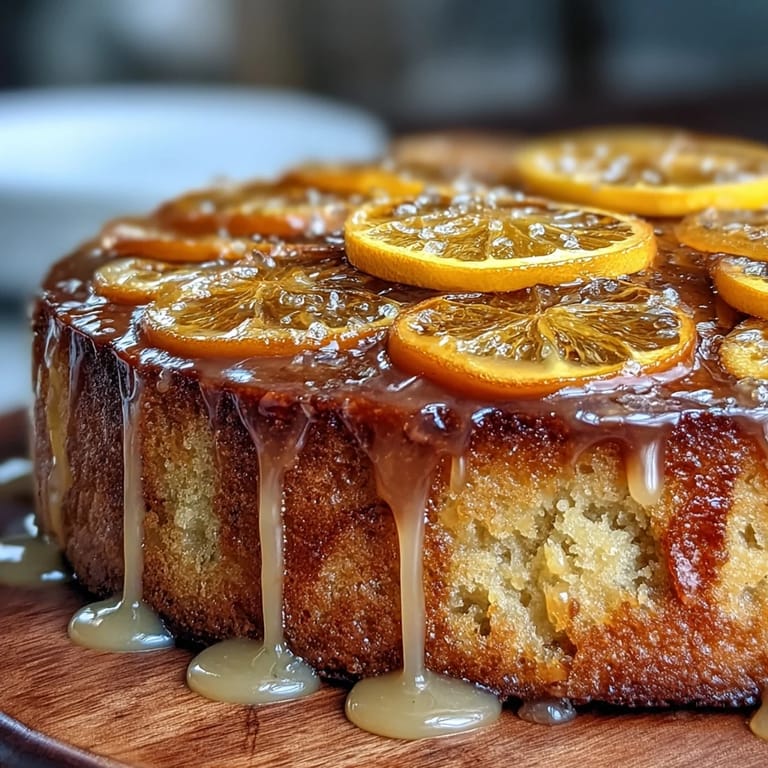
- Arrange your cooled candied orange slices on the bottom of your prepared pan—they'll create a jeweled layer once the cake is inverted. Pour the batter gently over them and smooth the top with a spatula. Slide the pan into the oven and bake for 45 to 50 minutes, until a toothpick inserted into the center comes out clean or with just a few moist crumbs clinging to it.
- Cool with patience:
- Let the cake rest in the pan for 15 minutes (this allows the structure to set), then turn it out onto a wire rack and let it cool completely. This matters; pouring glaze on a warm cake will cause it to slide right off.
- Make and finish with the glaze:
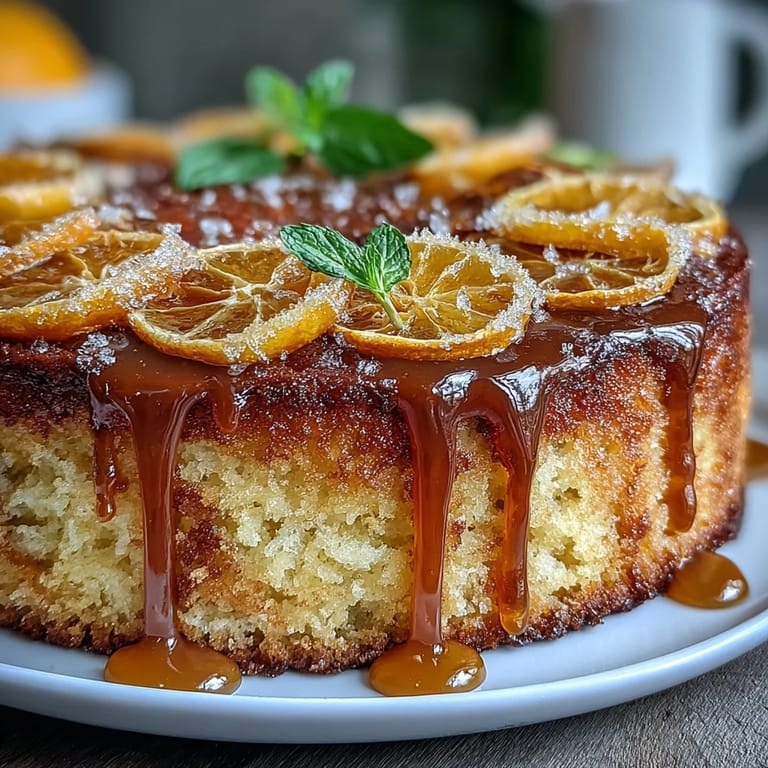
- Whisk together the sifted powdered sugar, orange juice, and lemon juice until you have a consistency that falls slowly from a spoon. Drizzle it over the cooled cake in whatever pattern feels right. If you've reserved a few candied orange slices, scatter them on top for drama.
 Save
Save This cake taught me that sometimes the best desserts are the ones that taste like they came from somewhere else—somewhere sunnier, somewhere that moves slower. It's become my cake for when I want to feel a little less ordinary in the kitchen.
The Magic of Candied Citrus
Candying oranges is almost meditative once you accept that it takes time. You're essentially slow-cooking the fruit until it surrenders its bitterness and becomes something sweet and fragrant. I've learned to listen for the gentle bubble of the syrup rather than watching the clock; that sound tells you the temperature is right. The reward is those translucent slices that add both flavor and visual beauty to anything they touch.
Why Olive Oil Changes Everything
Olive oil cakes were a revelation to me the first time I tasted one—they have this tender, almost silky crumb that butter cakes simply can't match. The oil creates a different kind of emulsion than butter, resulting in something that stays moist longer and has a delicate, almost tender structure. It's also why people keep coming back for slices days later, and why this cake is so forgiving if you're not a seasoned baker.
Serving Suggestions and Storage
This cake arrives at its best when served at room temperature with a cup of strong Earl Grey tea or a glass of Moscato d'Asti—something that echoes its sweetness without overwhelming it. Leftovers store beautifully in an airtight container for up to three days, and the flavors actually deepen and meld as it sits. You can also gently reheat a slice for 10 seconds in the microwave if you want to taste it as if freshly baked.
- Blood oranges create a stunning color variation if you want to surprise someone.
- A thin dollop of whipped cream or Greek yogurt on the side makes it feel even more special.
- This cake freezes beautifully for up to two weeks if you wrap it well before glazing.
 Save
Save This cake has become my answer to the question of what to bring when you want to feel generous without spending your whole day in the kitchen. It asks for a little attention but rewards you with something that tastes like you know secrets.
Recipe Guide
- → How are the candied oranges prepared?
Orange slices are simmered gently in a sugar and water syrup until translucent and tender, then cooled before layering in the cake.
- → Can I substitute the milk with another ingredient?
Yes, Greek yogurt can replace milk for a tangier and moister crumb texture.
- → What pan size is best for baking this cake?
A 9-inch round cake pan is recommended to ensure even baking and proper texture.
- → How long should the cake cool before glazing?
Let the cake cool completely on a wire rack to allow the glaze to set properly without melting.
- → What flavors pair well with this olive oil cake?
Pairing options include Moscato d'Asti or Earl Grey tea to complement the citrus and olive oil notes.