 Save
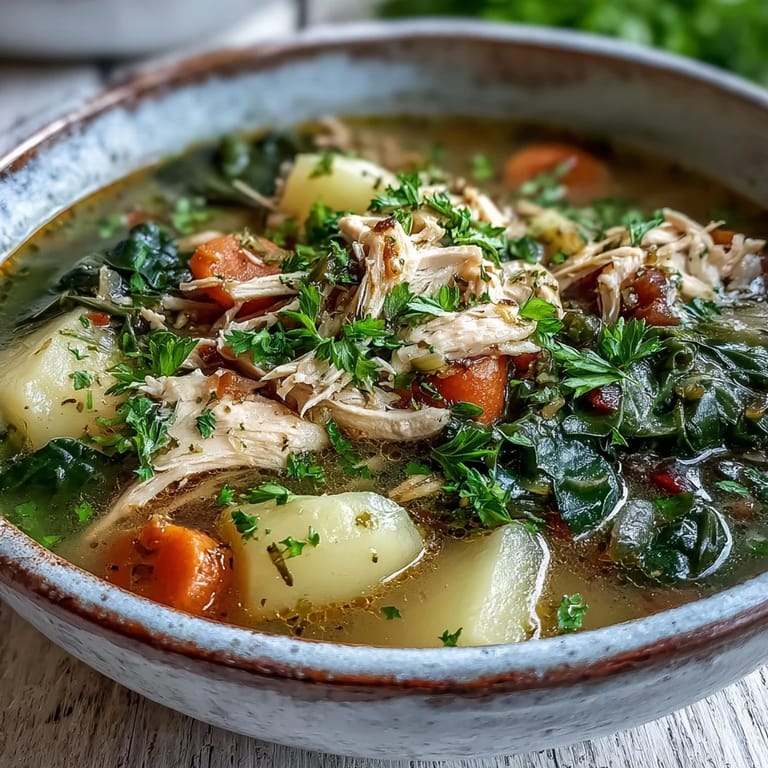
Save There's something about a pot of collard greens soup simmering on the stove that makes a kitchen feel instantly lived-in and warm. My neighbor brought me a container of this one winter afternoon when I was recovering from a cold, and I was struck by how it managed to be both deeply comforting and genuinely good for you. The broth was savory without being heavy, the chicken tender enough to fall apart with a spoon, and those collard greens had a subtle earthiness that elevated the whole thing beyond just another chicken soup. I made a batch the next week and realized this wasn't just food—it was the kind of meal that feels like someone actually cares about feeding you well.
I served this to my sister during a chaotic holiday visit when we needed something that wouldn't add stress to the kitchen, and she actually went back for seconds without asking what was in it. That's when I knew it wasn't just my comfort talking—it's genuinely the kind of soup that reminds people why they love eating home-cooked meals in the first place.
Ingredients
- Boneless, skinless chicken breasts (2, about 400 g): Buy them fresh if you can and pat them dry before adding to the broth—they'll cook more evenly and shred more cleanly this way.
- Collard greens (1 large bunch, about 300 g): Remove the tough stems completely and chop the leaves into bite-sized pieces so they don't overwhelm the spoon.
- Yukon Gold potatoes (2 medium): These waxy potatoes hold their shape better than russets and won't turn your broth starchy or cloudy.
- Carrots (2 medium): Slice them thin enough that they soften in the same time as everything else.
- Celery stalks (2): This is your aromatic foundation along with onion, so don't skip it even if you think you don't like celery.
- Onion (1 medium): Dice it small so it breaks down into the broth rather than sitting in distinct chunks.
- Garlic cloves (3), minced: Add it after the softer vegetables so it doesn't burn and turn bitter.
- Low-sodium chicken broth (1.5 liters or 6 cups): Taste your broth before you start—some store-bought versions are quite salty, so you might not need the full teaspoon of salt.
- Bay leaf (1): This adds a subtle depth that people never quite identify but always notice is missing if you leave it out.
- Dried thyme (1 teaspoon): If you have fresh thyme on hand, use about three times the amount and add it near the end.
- Smoked paprika (1 teaspoon): This is what gives the broth its warmth and color without any heat or sharpness.
- Black pepper (½ teaspoon): Freshly cracked is noticeably better here.
- Salt (1 teaspoon): You'll adjust this at the very end anyway, so don't overthink it now.
- Olive oil (2 tablespoons): Good quality matters less here than it does in salads, but use what you have.
- Lemon juice (from ½ lemon): Added right at the end, this brightens everything without making the soup taste sour.
- Fresh parsley (optional, for garnish): It's truly optional, but a small handful scattered on top adds a fresh visual note that makes you want to dig right in.
Tired of Takeout? 🥡
Get 10 meals you can make faster than delivery arrives. Seriously.
One email. No spam. Unsubscribe anytime.
Instructions
- Build your aromatics:
- Heat the olive oil in your large pot over medium heat, then add the diced onion, carrots, and celery. You want to hear them sizzle gently—not aggressively pop—which means your heat is right. Let them soften for 5 to 6 minutes, stirring occasionally.
- Wake up the garlic:
- Once the vegetables have softened and smell sweet, add your minced garlic and stir constantly for about a minute. You're looking for the kitchen to smell noticeably garlicky and fragrant, not burned.
- Add the chicken and broth:
- Slide the chicken breasts into the pot along with the potatoes, bay leaf, thyme, smoked paprika, salt, and pepper. Pour in all your broth and stir everything together so nothing sticks to the bottom.
- Bring to a boil and simmer:
- Let it come to a rolling boil, then turn the heat down to a gentle simmer and cover the pot. You should see just a few lazy bubbles breaking the surface, not an aggressive boil that will make the chicken tough. Set a timer for 20 minutes.
- Shred the chicken:
- When 20 minutes are up, carefully remove the chicken breasts with tongs or a slotted spoon and place them on a cutting board. Using two forks, pull the chicken apart into shreds—it should come apart easily if it's done. Return the shredded chicken to the pot and give everything a stir.
- Add the greens and finish:
- Stir in your chopped collard greens, pushing them down into the liquid so they're submerged. Simmer uncovered for 10 to 12 minutes, watching as the bright green darkens just slightly and the leaves become tender. This is the moment to taste and adjust your salt and pepper, then finish with the lemon juice.
- Serve with intention:
- Ladle the soup into bowls, letting everyone get a share of the chicken, greens, and broth. A small handful of fresh parsley on top isn't required, but it catches the light and makes the whole thing look like you put thought into it.
 Save
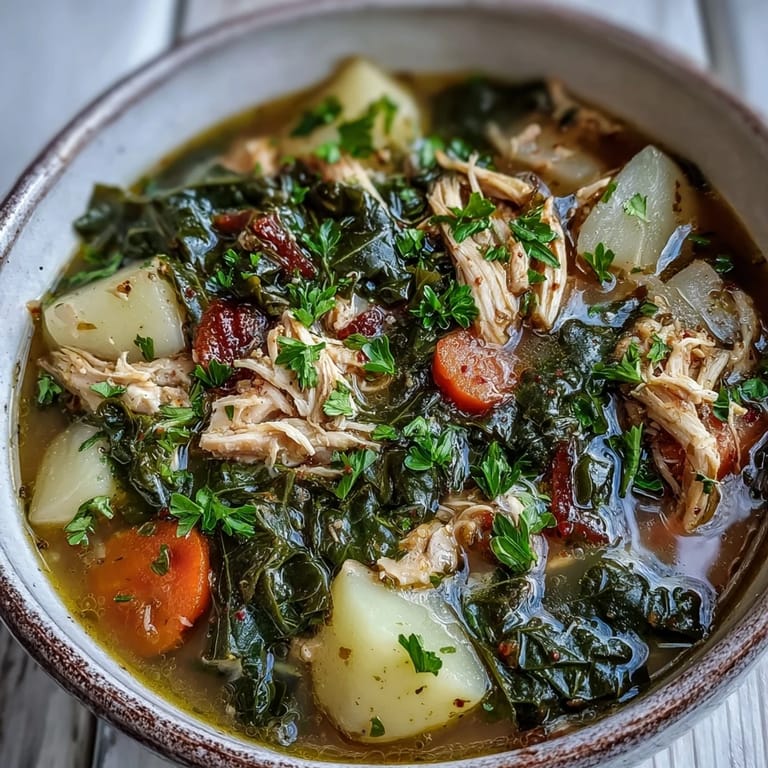
Save My mom once told me that soup is the food you make when you want someone to know you're thinking about them, and this one proves it every single time. The way it fills a bowl, steams into your face, and leaves you feeling genuinely restored is what keeps me coming back to it season after season.
Why This Soup Works Year-Round
In winter, it's exactly what you want when it's cold outside and you need something warm in your hands. But in summer, when you're reheating it from the fridge, the flavors actually deepen and meld in a way that makes you forget it's not winter anymore. The collard greens stay good for days, the chicken doesn't dry out, and the broth tastes better on day three than it did on day one.
Variations That Actually Work
If you don't have collard greens or simply don't like them, kale and Swiss chard are genuinely good substitutes—kale gets softer than you'd expect in the broth, and chard adds a slightly different earthiness that's equally welcome. Some people add a Parmesan rind while everything simmers, which sounds odd until you taste how it rounds out the broth without making it creamy. You can also make this vegetarian by skipping the chicken and using vegetable broth with a can of white beans stirred in toward the end for protein.
Serving Suggestions and Storage
This soup is complete on its own, but there's no shame in serving it with crusty bread for soaking up the broth, or spooning it over brown rice if you want something more substantial. Leftovers keep beautifully in the refrigerator for up to four days, and it actually freezes well if you remove the bay leaf and let it cool completely first. The only real rule is to never, ever reheat it at a rolling boil—gentle warmth preserves the texture of the greens and keeps the chicken from turning rubbery.
- Make it ahead and store it in individual containers so you have grab-and-go lunches all week.
- If the broth seems to have gotten thick in the refrigerator, just add a splash of fresh broth or water when you reheat.
- Taste it again before serving because flavors can get muted after sitting, and you might want to adjust the lemon juice or salt one more time.
 Save
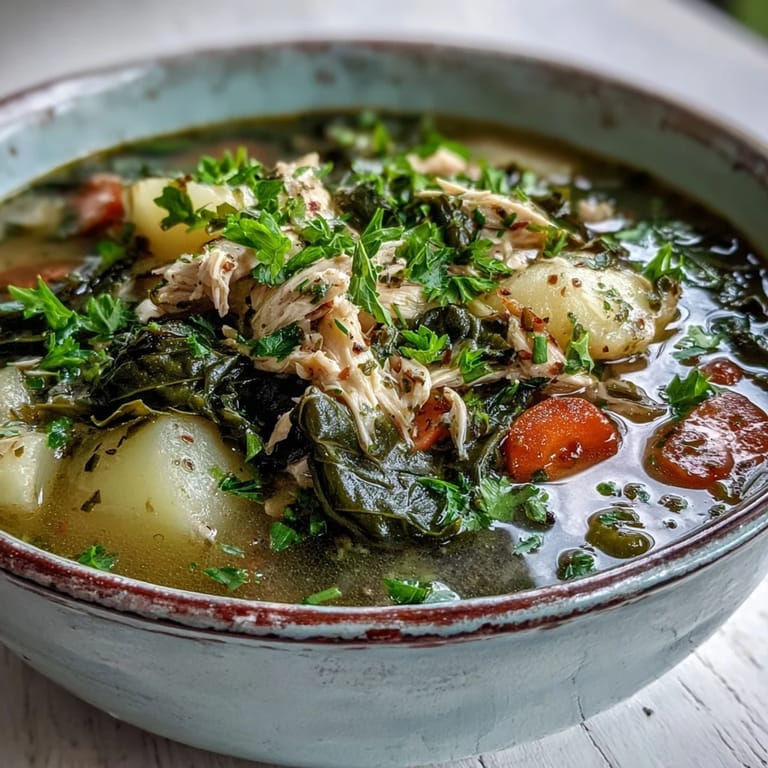
Save This is the kind of soup that tastes simple because it actually is simple, with no tricks or shortcuts trying to hide beneath the surface. Make it once and you'll find yourself reaching for it again whenever you need something that feels like genuine care in a bowl.
Recipe Guide
- → How do I prepare collard greens for soup?
Remove the tough stems from the collard greens and chop the leaves into bite-sized pieces. Add them during the last 10-12 minutes of simmering to maintain their bright color while becoming tender.
- → Can I make this soup ahead of time?
Yes, this soup reheats beautifully. Store in an airtight container in the refrigerator for up to 4 days. The flavors often improve after resting overnight.
- → What can I substitute for collard greens?
Kale or Swiss chard work wonderfully as substitutes. Adjust cooking time slightly as kale may need a few extra minutes while chard cooks faster.
- → Is this soup freezer-friendly?
Absolutely. Cool completely before transferring to freezer-safe containers. Freeze for up to 3 months. Thaw overnight in the refrigerator before reheating.
- → How can I add more protein to this soup?
Consider adding white beans like cannellini or great Northern beans during the last 15 minutes of cooking. Alternatively, serve with a side of crusty bread for a complete meal.