 Save
Save There's a particular Thursday evening that stays with me—the one where I threw together whatever looked promising in my pantry and ended up with something that tasted like it had simmered for hours. Red wine, sausage, cream, all in one pot, and suddenly my kitchen smelled like an Italian trattoria. My partner came home, and before I could even explain what I was making, they just stood in the doorway breathing in that deep, savory aroma. That's when I knew this recipe deserved to become a regular in our rotation.
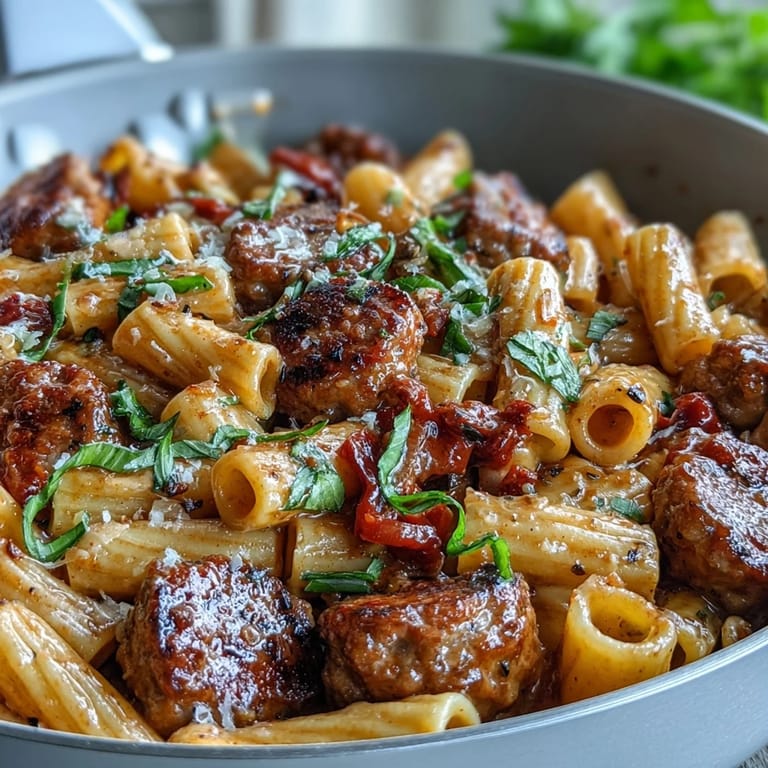
I made this for a small dinner party once, and what struck me was how the sausage broke down into tiny, savory pieces that distributed throughout the pasta like flecks of flavor. One guest asked if I'd been cooking it all day. When I told them it was 30 minutes start to finish, they didn't believe me until I showed them the empty pot.
Ingredients
- Italian sausage, 400 g (14 oz), casings removed: This is your flavor anchor—choose mild if you prefer subtle heat, spicy if you want a little kick that lingers on your tongue.
- Medium onion, finely chopped: Don't rush the chopping; small pieces distribute the sweetness evenly throughout the pot.
- Garlic, 3 cloves, minced: Mince it fine enough that it melts into the sauce rather than sitting in obvious chunks.
- Red bell pepper, diced: This adds brightness and a gentle sweetness that balances the wine's tannins.
- Canned chopped tomatoes, 400 g (14 oz): The acidity here is crucial—it prevents the cream from feeling too heavy.
- Short pasta, 300 g (10 oz), penne or rigatoni preferred: Shapes with ridges catch the sauce better than smooth pasta, trust me on this.
- Dry red wine, 120 ml (1/2 cup): Use something you'd actually drink; cheap wine tastes cheap in the final dish.
- Chicken or vegetable broth, 700 ml (3 cups), low-sodium: Low-sodium gives you control over the final salt level and lets the other flavors shine.
- Heavy cream, 120 ml (1/2 cup): Add it at the very end so it stays silky rather than curdling.
- Parmesan cheese, 40 g (1/2 cup), grated: Fresh grating makes a noticeable difference—the pre-shredded stuff has anti-caking agents that affect the texture.
- Soy sauce, 2 tbsp: This is the surprising element that deepens the savory notes in ways people can't quite identify.
- Dried oregano, 1 tsp: It releases its oils into the liquid, infusing the entire dish with herbal warmth.
- Chili flakes, 1/2 tsp, optional: A small amount lingers pleasantly rather than overwhelming.
- Black pepper, 1/2 tsp: Add this early so it distributes; don't save it for the end.
- Salt, to taste: Reserve final seasoning adjustments until the cream goes in.
- Fresh basil or parsley, chopped: The brightness at the finish lifts the richness and makes the whole dish feel fresher than it is.
Tired of Takeout? 🥡
Get 10 meals you can make faster than delivery arrives. Seriously.
One email. No spam. Unsubscribe anytime.
Instructions
- Brown the sausage:
- Set your pot over medium heat and add the sausage without any oil—it releases its own fat as it cooks. Break it apart with a spatula into small, irregular pieces rather than trying to create uniform crumbles; you want some texture variation. After 5–6 minutes, the meat should look deeply browned and smell almost caramelized.
- Build the base:
- Toss in your onion, garlic, and bell pepper, stirring constantly for the first minute so the garlic doesn't burn. You'll notice the raw vegetables soften and begin releasing their moisture after about 3–4 minutes, creating the aromatic foundation for everything that follows.
- Deglaze with wine:
- Pour in the red wine slowly, scraping the bottom of the pot with your wooden spoon to lift all those browned, flavorful bits. Let it bubble gently for about 2 minutes—you're not trying to cook off all the alcohol, just reduce the sharp edge.
- Add the tomato base:
- Stir in the canned tomatoes, broth, soy sauce, oregano, chili flakes if using, and black pepper. The liquid should look deep and fragrant, with the sausage and vegetables distributed throughout.
- Cook the pasta in the sauce:
- Add the uncooked pasta directly to the pot, pushing it down gently so it's mostly submerged. Bring everything to a gentle boil, then reduce the heat to medium-low and cover. Stir occasionally every 3–4 minutes to prevent sticking on the bottom, and after about 12–15 minutes, the pasta should be tender and most of the liquid absorbed.
- Finish with cream:
- Stir in the heavy cream and grated Parmesan, cooking uncovered for just 2–3 minutes more until the sauce turns silky and coats each piece of pasta. The heat should be low enough that the cream doesn't bubble aggressively—you're building a sauce, not curdling dairy.
- Taste and adjust:
- Take a spoonful of the pasta with some sauce and taste it. The soy sauce should add a savory note you can't quite identify, and the overall flavor should feel balanced between savory, tomato-bright, and creamy rich.
- Serve warm:
- Ladle into bowls and finish with a handful of fresh basil or parsley, a crack of black pepper, and maybe a tiny drizzle of olive oil if you're feeling generous.
 Save
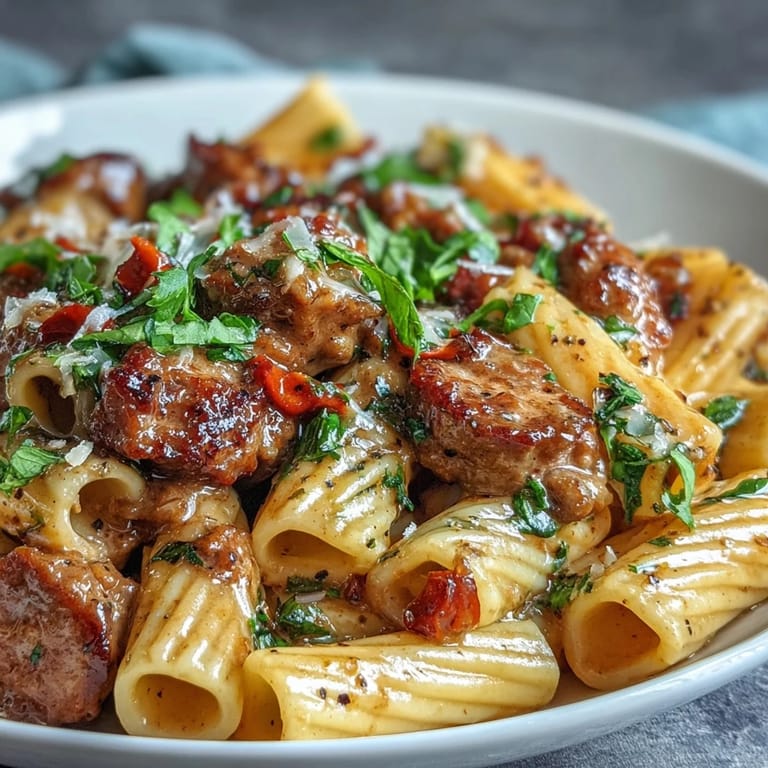
Save There's something oddly comforting about ladling a one-pot meal into bowls, knowing that every spoonful has the same balance of tender pasta, savory meat, and creamy sauce. It's the kind of dish that disappears without anyone thinking about whether they're still hungry.
The Secret of the Soy Sauce
I was skeptical the first time I saw soy sauce in an Italian-inspired recipe, but it works because it adds umami without adding recognizable flavor. It deepens the savory notes so the dish tastes richer and more complex than the ingredient list might suggest. The tomato and cream can feel one-dimensional without it; with it, something shifts into place.
Timing and the One-Pot Magic
The entire appeal of this dish rests on cooking everything together rather than in stages. The pasta absorbs the broth and wine as it cooks, becoming infused with flavor from the inside out. By the time you add the cream, you're finishing a dish that's already rich with flavor, not trying to rescue something bland.
Wine Pairings and Variations
Whatever red wine you use for cooking, keep a glass nearby—both for sipping as you cook and for pairing with dinner. A Chianti or basic Pinot Noir works perfectly; the acidity echoes in your mouth when you taste the finished pasta. You can swap the sausage for turkey sausage or a plant-based version, reduce the cream by a splash if you want something less rich, or add a pinch more chili flakes if your household likes heat.
- Fresh pasta would cook faster here, so watch it carefully and pull it off heat when it's barely tender.
- If you're doubling the recipe for a crowd, use a larger pot but don't increase the seasonings by the same ratio—taste as you go.
- Leftovers actually improve after a night in the fridge, when all the flavors have settled into each other.
 Save
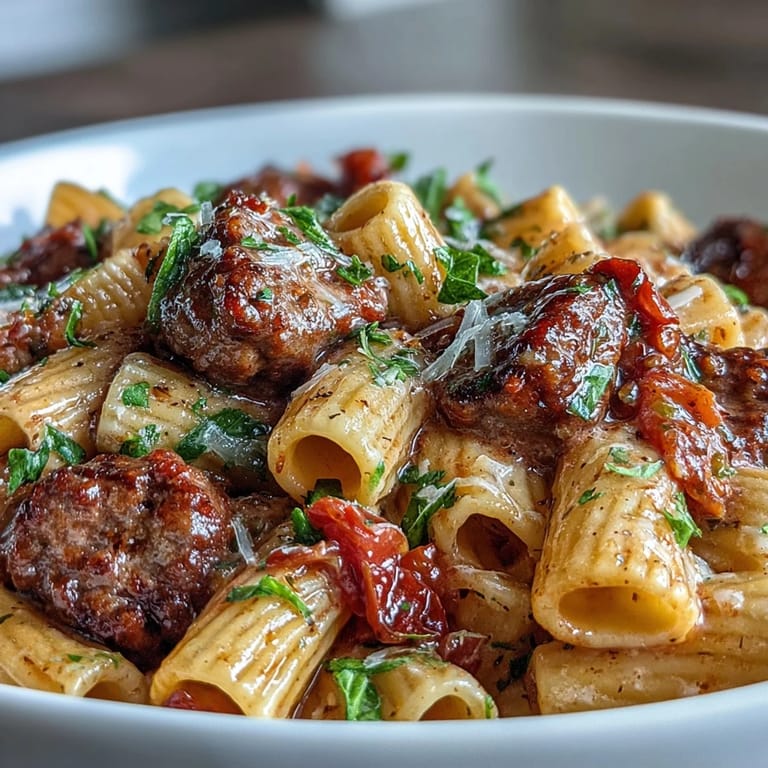
Save This is the kind of recipe that earns its place in your regular cooking rotation because it delivers on every front: flavor, comfort, and speed. Make it once and you'll know exactly why it works.
Recipe Guide
- → Can I use different pasta shapes?
Short pasta shapes like penne, rigatoni, fusilli, or even macaroni work well. They catch the sauce nicely and cook evenly in the liquid.
- → What type of red wine works best?
A dry red wine like Pinot Noir, Merlot, or Chianti works beautifully. Choose something you'd enjoy drinking, as the flavor will concentrate in the dish.
- → Can I make this without cream?
You can omit the cream for a lighter version. The pasta starches will still create a silky sauce, though it won't be as rich.
- → How do I store leftovers?
Store in an airtight container in the refrigerator for up to 3 days. The pasta will absorb more sauce, so add a splash of broth or water when reheating.
- → Can I use spicy sausage?
Absolutely! Spicy Italian sausage adds a nice kick. You can reduce or omit the chili flakes if you prefer less heat.
- → Why is there soy sauce in this pasta?
A small amount of soy sauce enhances the savory umami flavors without adding a detectable taste. It deepens the overall flavor profile.