 Save
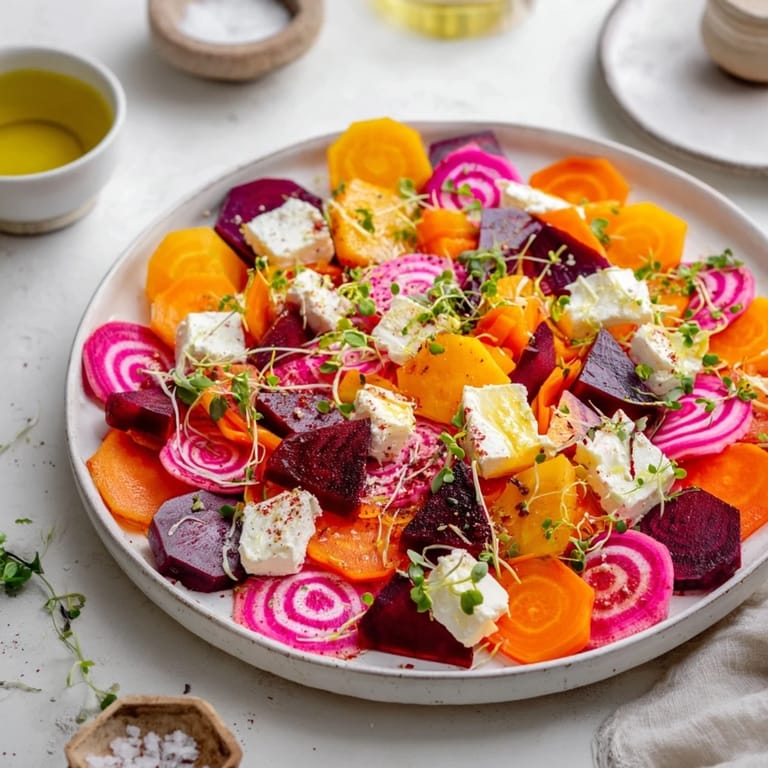
Save I'll never forget the afternoon I stumbled into a tiny gallery kitchen in a friend's loft, where her chef partner was arranging vegetables like brushstrokes on canvas. There, on a simple white platter, were jewel-toned cucumbers, golden beets, and feta cheese cut into impossible geometric shapes—triangles, hexagons, and parallelograms—creating this stunning Cubist composition that made my eyes go wide before my mouth even watered. That moment changed how I thought about food: it wasn't just something to taste, but something to experience as art first, then flavor.
I made this for my mom's book club once, and I watched these women—all of them intimidated by modern food trends—literally lean in closer to understand what they were looking at. By the time they started tasting, they were already emotionally invested. That's when I realized this dish isn't pretentious; it's generous in the best way.
Ingredients
- 1 small cucumber, peeled: The cool, crisp backbone of this dish—watery and refreshing. I always peel it to make the geometry cleaner and the visual impact stronger.
- 1 medium golden beet, cooked and peeled: The earthy sweetness everyone remembers. Cook yours a day ahead if you want to skip that step on presentation day. The golden variety is less staining than red.
- 1 medium watermelon radish, peeled: This is the show-off ingredient—those concentric pink and white rings inside create an almost impossible natural geometry. It's peppery and surprisingly tender when cut thin.
- 1 ripe avocado: Choose one that yields gently to pressure; you want it creamy enough to cut cleanly but firm enough to hold its shape on the platter.
- 100 g feta cheese, block form: Buy it as a block, never crumbled. Room temperature feta cuts like butter and holds its edges beautifully.
- 1 ripe mango, peeled: The sunshine piece. Test for ripeness by smell—it should be fragrant, not hard. Firm enough to cut into shapes, soft enough to melt on your tongue.
- 2 tbsp extra virgin olive oil: This is your final statement, so use the good stuff. It's not just seasoning; it's the glossy finish that makes everything look intentional.
- 1 tbsp lemon juice: Keeps the avocado from browning and brightens every other flavor on the plate. Fresh lemon only—bottled changes the taste entirely.
- Flaky sea salt, to taste: The texture matters here. Flaky salt catches the light and adds visual interest alongside flavor.
- Fresh cracked black pepper: The final note of complexity. Crack it fresh if you can—pre-ground pepper tastes tired by comparison.
- Microgreens or fresh herbs: Basil and cilantro both work beautifully depending on your mood. This is where you add the final color note—think of it as signing your name on the composition.
Tired of Takeout? 🥡
Get 10 meals you can make faster than delivery arrives. Seriously.
One email. No spam. Unsubscribe anytime.
Instructions
- Gather your tools and envision the layout:
- Set out your sharp chef's knife and, if you have them, small cookie cutters. Lay out your large flat platter on the counter—this is your canvas, and you want to see the whole composition taking shape. Take a breath. This isn't rushed; this is deliberate.
- Cut your vegetables and fruits into geometric poetry:
- Start with the cucumber—slice it into triangles, then cut some of those triangles into parallelograms. Move to the beet and cut hexagons or irregular polygons. The watermelon radish almost cuts itself into natural shapes—work with those concentric rings. Cut the mango into triangular wedges. Everything should be about 1 cm thick so you get that satisfying bite, not a paper-thin whisper. The goal isn't perfection; it's intentionality. You'll know when a piece feels right in your hand.
- Cut the feta into matching geometric precision:
- This is where the dish becomes coherent. Cut your feta block into cubes, prisms, or whatever geometric shapes echo what you've already made. Cold feta from the fridge will cut cleanly without crumbling. Work quickly so it doesn't warm and become sticky.
- Arrange like you're painting with vegetables:
- This is the meditation part. Place each piece close together, creating a mosaic—no overlapping, all touching like puzzle pieces. Start with the most beautiful pieces: those pink-and-white watermelon radish slices, the golden beet, the sunshine mango. Fill the negative space with cucumber and avocado. Tuck the feta in where it balances the composition. Step back. Turn the platter. Does it feel balanced? Does your eye travel across it with pleasure?
- Season with intention:
- Drizzle the olive oil in a thin, even stream across the arrangement. Watch it catch the light. Squeeze the lemon juice with the same care. Sprinkle the flaky sea salt—not too much, just enough to catch light and taste. Crack fresh pepper over everything. This isn't about drowning the vegetables; it's about finishing them like a painter adds the final gloss to a canvas.
- Garnish and serve immediately:
- Scatter your microgreens or fresh herbs across the top—they're the signature that says you made this with intention. Serve right away, while the vegetables are crisp and the arrangement is pristine. This is at its best in the first 10 minutes.
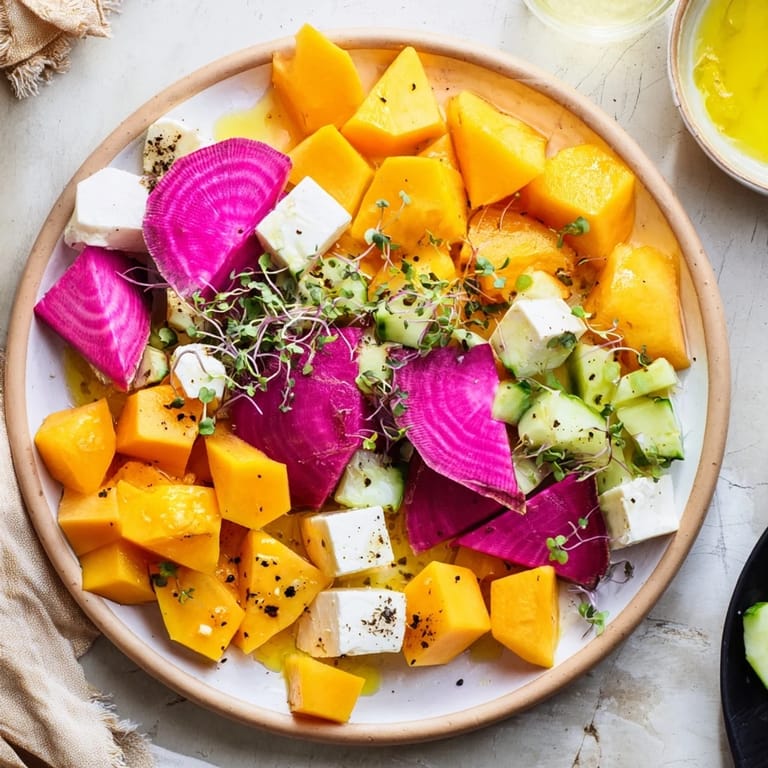 Save
Save I once watched my sister's five-year-old daughter point at this platter and say, 'It looks like a puzzle I want to eat,' and I realized that's exactly what I was after—food that delights the eye as much as the palate, that makes people slow down and actually pay attention before they bite down.
The Art of Geometric Cutting
The knife work here is more about confidence than technique. You don't need to be a trained chef to cut a triangle or a hexagon—you just need to commit to the line. I learned this from watching my friend in that gallery kitchen: she didn't hesitate. Each cut was decisive. When you cut with intention, even slightly imperfect shapes look intentional rather than accidental. The geometric shapes don't need to be mathematically perfect; they need to feel purposeful. Use a cookie cutter if it helps, but honestly, a good knife and a steady hand can create more interesting irregular polygons than any cutter ever could.
Why This Works as an Appetizer
This dish sits in that perfect appetizer space—substantial enough to satisfy, light enough to leave room for what comes next. The raw vegetables are crisp and refreshing, waking up the palate. The feta and avocado add enough richness that people feel nourished. And because each bite is its own tiny flavor combination, it's endlessly interesting—no single note dominates. I've served this before everything from delicate fish to rich beef, and it never competes; it only prepares.
Making It Your Own
This is a template more than a rigid recipe. Some seasons I swap the mango for ripe peaches. Other times I add thin slices of purple carrot or yellow bell pepper for more color. For vegan guests, firm tofu cut into cubes works beautifully—press it well first, and it holds its edges as crisply as feta. The essential principle is contrast: colors that make each other brighter, textures that make each other more interesting, flavors that balance rather than blend. Once you understand that, you can riff endlessly.
- Try adding thinly sliced radishes or daikon for a peppery crunch that surprises
- Substitute fresh mozzarella or burrata for the feta if that's where your heart goes
- A pinch of sumac or pomegranate molasses on top adds a tangy complexity that feels sophisticated
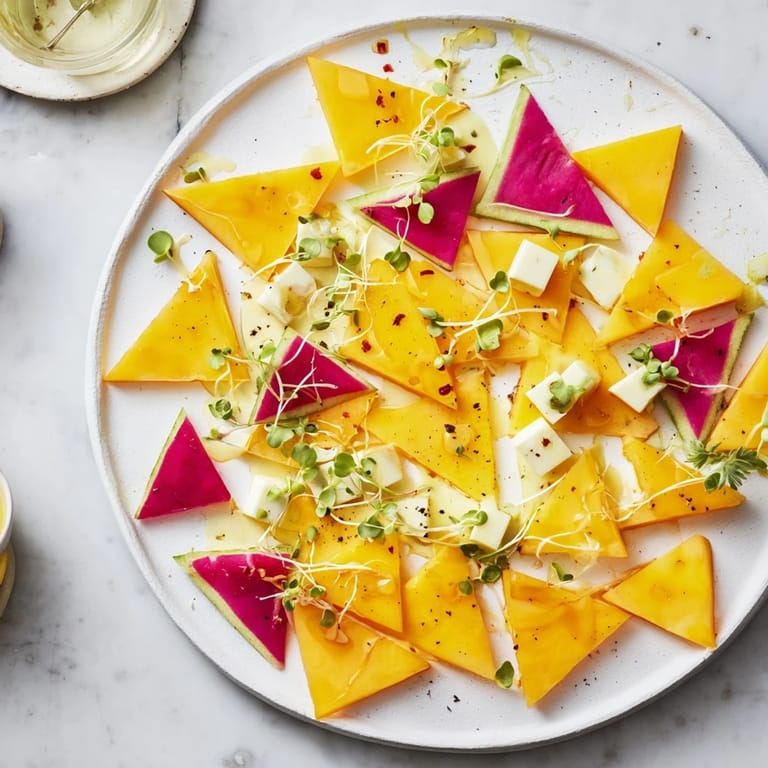 Save
Save This dish taught me that food can be sculpture, that presentation matters not because it's pretentious but because it shows respect for both the ingredients and the people eating them. Every time I make it, I think of that afternoon in the gallery kitchen, and I'm grateful that someone showed me this way of seeing dinner.
Recipe Guide
- → How do you cut vegetables into geometric shapes?
Use a sharp knife or small cookie cutters to slice vegetables and fruits into shapes like triangles, hexagons, and parallelograms, about 1 cm thick for precision and consistency.
- → What cheeses work well for this dish?
Feta cheese in block form works perfectly when cut into cubes or prisms, providing a creamy texture that complements fresh produce.
- → Can I substitute feta for a dairy-free alternative?
Yes, firm tofu cut into geometric shapes makes a great vegan substitute, maintaining the dish’s texture and visual appeal.
- → What garnishes enhance the presentation?
Microgreens or fresh herbs like basil and cilantro add fresh color and subtle herbal notes that elevate the dish's flavor and appearance.
- → How is the dish seasoned?
Drizzle extra virgin olive oil and lemon juice evenly, then sprinkle flaky sea salt and freshly cracked black pepper to brighten the flavors without overpowering them.