 Save
Save I'll never forget the moment my nephew asked me to create something for his science fair party that would make everyone say 'wow.' I was in my kitchen, thinking about DNA helixes and molecular structures, when it hit me—why not build one you could actually eat? I grabbed cheese, olives, tomatoes, and started arranging them on a board like I was constructing something in a lab. Two hours later, guests were photographing this edible double helix, and kids were learning about base pairs while snacking. That's when I realized some of the best dishes aren't just about taste—they're about sparking joy and curiosity.
I served this at my daughter's birthday party last summer, and what started as an educational appetizer became the thing everyone kept coming back to. People were so charmed by the DNA structure that they lingered around the board, mixing and matching ingredients, creating their own little science moments. That's when I knew this wasn't just food—it was edible art that brought people together.
Ingredients
- Black olives, pitted and sliced (100 g): These form one of your twin strands and bring a deep, briny richness that anchors the whole presentation. I learned to always pit them myself rather than buying pre-pitted—they hold their shape better and taste fresher.
- Cherry tomatoes, halved (100 g): Their vibrant red creates the perfect color contrast against the olives, and their slight sweetness keeps the board from feeling too savory. Choose tomatoes that are firm but ripe for the best visual impact.
- Cucumber, cut into thin half-moons (100 g): This brings a crisp, cooling element and a pale green that bridges your color palette. The thin half-moons curve naturally, which is a small detail that actually helps follow the helix twist.
- Roasted red peppers, sliced (100 g): These add a silky texture and sweet, smoky depth that makes people pause and ask what that flavor is. I use jarred peppers to save time, and honestly, they're just as good as homemade.
- Smoked salmon or marinated tofu strips (100 g, optional): This is your luxury layer—the smoked salmon brings sophistication, while tofu keeps things vegetarian and equally elegant. Don't skip this if you want your helix to feel like the main event.
- Mozzarella cheese, cut into strips or small cubes (150 g): These are your rungs, the connectors that hold your entire structure together both visually and conceptually. Fresh mozzarella works beautifully, but firm varieties hold their shape better on the board.
- Cheddar cheese, cut into strips or small cubes (100 g): The orange hue adds warmth and creates a second color story for your rungs. I've found that using both cheeses—not just one—gives the helix a more sophisticated, almost scientific look.
- Fresh basil leaves (50 g): Tuck these along the lines for bursts of green and fresh aroma that remind people this is alive with flavor. Tear them gently just before serving so they don't bruise.
- Crackers or gluten-free crackers (50 g, optional): Serve alongside so guests can build little bites if they prefer, or use them to scoop up any juices that pool on the board.
- Olive oil (1 tbsp): A light drizzle right before serving adds shine and brings all the flavors into conversation with each other. Don't skip this—it transforms the board from pretty to intentional.
- Freshly ground black pepper, to taste: This small finale rounds out all the bright, fresh elements and adds a whisper of warmth.
Tired of Takeout? 🥡
Get 10 meals you can make faster than delivery arrives. Seriously.
One email. No spam. Unsubscribe anytime.
Instructions
- Map Out Your Twin Strands:
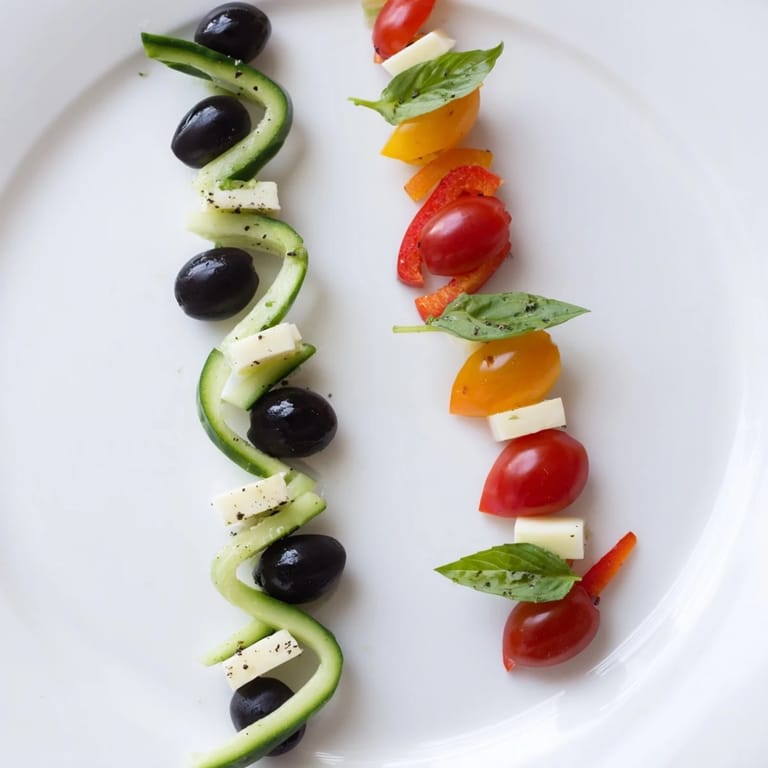
- Grab your largest, most beautiful serving board—this is your stage. Using black olives, create the first long, gently twisting line across the board. Imagine you're drawing with your hands as much as you are with ingredients. Now create the second parallel line using cherry tomatoes, positioning it about 3 to 4 inches away. Step back and let your eye guide you—these lines should feel like they're gently spiraling around an invisible axis. This is the foundation, and taking a minute here sets the tone for everything that follows.
- Deepen the Contrast:
- Between and alongside your two main lines, weave in additional strands using cucumber and roasted red peppers. Think of this like adding depth to a painting—you're creating layers so that when someone looks down at your board, they see complexity and intention. This is where your tofu or smoked salmon can go too, threading through to add that extra visual moment. Don't worry about perfection; nature's helix isn't perfectly straight anyway.
- Connect Your Base Pairs:
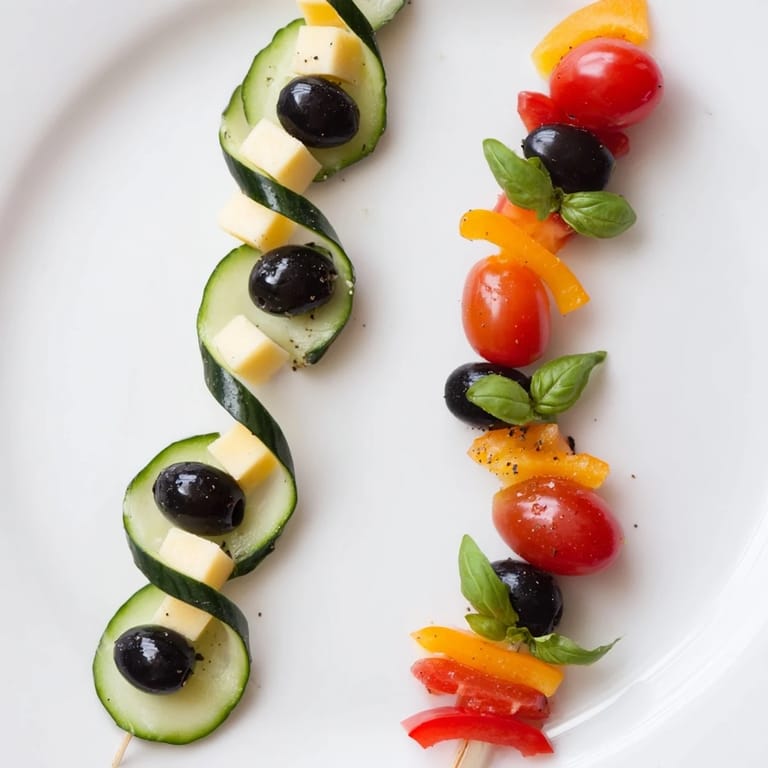
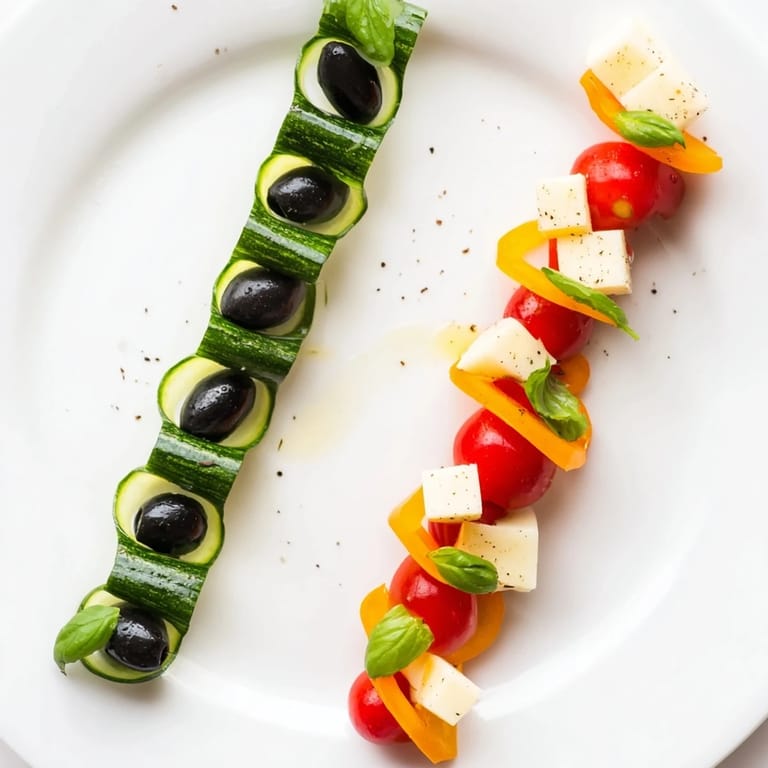
- Now comes the moment where this becomes unmistakably a DNA helix. Take your mozzarella strips and arrange them perpendicularly between your two lines, like you're building a bridge. Space them about 2 inches apart. Then do the same with cheddar, alternating the cheese types so there's a rhythm to the connections. Your hands know what to do here—you're not just placing cheese, you're completing a structure. I like to use small toothpicks to hold everything in place if the board will travel, or if it's just sitting on your table, the weight of the pieces keeps everything exactly where you want it.
- Bring In the Green:
- Tear basil leaves and scatter them along your lines and between the rungs. Don't be shy—this adds color, aroma, and when people eat it, a fresh herbal note that ties everything together. The green should feel intentional but not calculated.
- Finish Like You Mean It:
- Drizzle the whole creation with a light hand of olive oil. Watch how it catches the light and brings a subtle shine to every ingredient. Finish with a crack of fresh black pepper across the entire board. This tiny step is what makes people say, 'Wow, they really thought about this.'
- Serve and Watch the Magic:
- Place your crackers nearby if you're using them, and step back. Your edible double helix is now ready to amaze.
 Save
Save I remember one guest—a biochemistry professor—standing in front of the board for a full minute, studying it like it was a museum piece. Then she smiled and said, 'This is beautiful.' Not just the food, but what it represented. That moment taught me that cooking is a form of storytelling, and sometimes the story is about science, learning, and the way food can make abstract ideas suddenly delicious and real.
The Science Behind the Structure
A DNA double helix is nature's way of encoding life, with two strands twisted together and connected by base pairs that hold the whole structure upright. When you build this appetizer, you're not just making something pretty—you're translating a biological concept into something your guests can touch, taste, and understand in a whole new way. The parallel lines represent the sugar-phosphate backbones, the cheese rungs represent the base pair connections, and the way it all twists together mirrors the actual geometry of DNA. It's a lesson in science that happens to be delicious.
Making It Your Own
The beauty of this recipe is that it's genuinely a canvas for your creativity and whatever's in your kitchen. Love purple cabbage? Add it. Have a block of gouda that needs using? Slice it thin and use it as a rung. Want to make it fully vegan? Swap the cheeses for plant-based versions and the salmon for marinated tofu, and no one will know the difference—except that they'll marvel at how thoughtful you are. I've made versions with beet slices, avocado ribbons, and even prosciutto for a more luxe gathering. Each time, it felt like my own creation while still honoring the DNA structure that makes it so special.
Pairing and Presentation Tips
This helix sings when paired with a crisp white wine—a sauvignon blanc or pinot grigio cuts through the richness of the cheese and complements the fresh vegetables perfectly. If you're going non-alcoholic, sparkling water with a squeeze of fresh lemon is equally refreshing. For presentation, I've learned that tilting the board slightly so it catches the light makes the whole thing shimmer. And here's a secret: if you're bringing this to a party, assemble it in the venue rather than at home. People remember seeing it come together, and honestly, it travels better when you're not trying to keep everything perfectly arranged during transport.
- Use a wooden serving board over ceramic for a warmer, more natural look that photographs beautifully.
- Arrange ingredients in a cool, quiet space before the party so they're at their freshest and crispest when guests arrive.
- If guests will be plucking ingredients throughout the evening, arrange them generously so the board still looks abundant even as people graze.
 Save
Save This dish proves that the most memorable food doesn't have to be complicated—it just has to be thoughtful and made with a little bit of joy. I hope your next gathering is filled with the kind of moments where food becomes a conversation starter and a memory.
Recipe Guide
- → What ingredients create the contrasting lines?
Alternating slices of black olives, cherry tomatoes, cucumber, roasted peppers, and optional smoked salmon or marinated tofu form the two parallel lines.
- → How are the cheese rungs arranged?
Mozzarella and cheddar cheese strips or cubes are placed perpendicularly between the two lines to mimic the connecting base pairs of a double helix.
- → Can this dish be made vegan?
Yes, by substituting smoked salmon with marinated tofu and replacing dairy cheese with plant-based alternatives.
- → What are suitable accompaniments?
Fresh basil leaves add aroma and color, while crackers or gluten-free crackers provide a crisp side option.
- → Is cooking required for this appetizer?
No cooking is necessary; it’s assembled fresh, making it quick and convenient for gatherings.