 Save
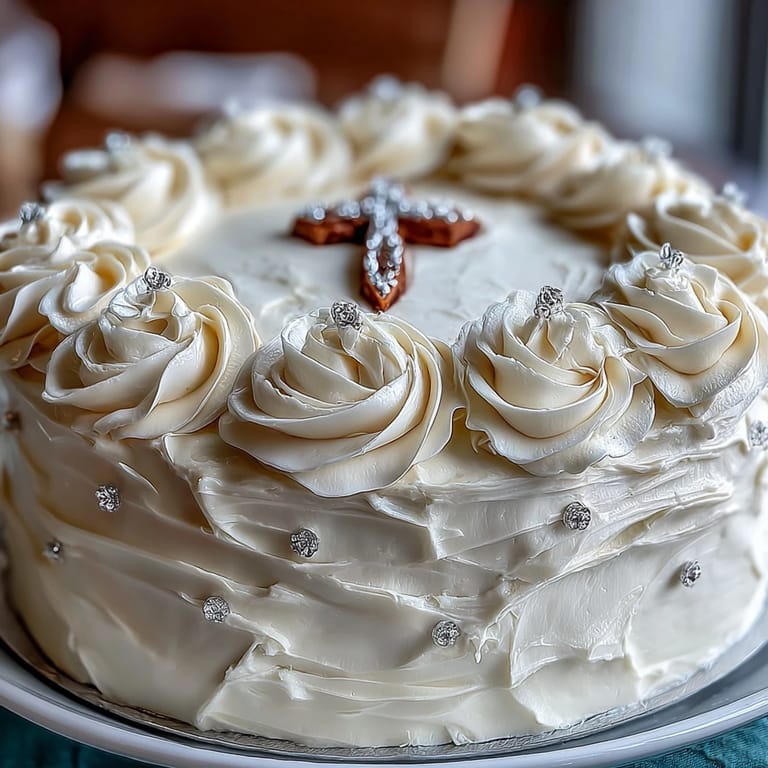
Save The first time I decorated a cake for someone's milestone moment, my hands shook a little as I positioned those fondant roses. There's something about creating a cake for a First Communion—it's not just dessert, it's a centerpiece for a sacred day, a edible memory that sits at the heart of celebration. This vanilla sponge with its silky buttercream and delicate white fondant roses became my go-to recipe precisely because it strikes that balance between elegant and approachable, making anyone feel like a pastry artist.
I'll never forget watching my neighbor's daughter's face when she saw this cake at her party—the way her eyes went wide, not because it was fancy, but because someone had taken the time to make something so thoughtfully delicate just for her. That's when I realized this recipe isn't about impressing people with technical skill; it's about showing up with care. The buttercream is forgiving enough that small mistakes disappear under a fondant rose, and that grace matters more than you'd think when stakes feel high.
Ingredients
- All-purpose flour (2 ½ cups): Room temperature flour blends better with your wet ingredients, so pull it out an hour before baking if you remember.
- Baking powder (2 ½ tsp): This is what gives you that tender crumb—don't skip or swap it out for baking soda unless you know what you're doing.
- Unsalted butter (1 cup for sponge, 1 ½ cups for frosting): Softened butter creams more evenly, and unsalted lets you control the salt level entirely.
- Granulated sugar (2 cups): The creaming process with butter takes about three minutes and should look pale and fluffy, like cumulus clouds.
- Eggs (4 large, room temperature): Cold eggs won't incorporate properly, so leave them on the counter while you prep everything else.
- Pure vanilla extract (1 tbsp for cake, 2 tsp for frosting): The quality of vanilla is noticed here more than anywhere else—use the good stuff.
- Whole milk (1 cup): Room temperature milk prevents temperature shock when mixed with your butter-sugar mixture.
- Powdered sugar (5 cups, sifted): Sifting removes lumps before they ruin your frosting texture.
- White fondant (16 oz): Buy quality fondant or make your own; cheap fondant tastes waxy and cracks when you work it.
- Green gel food coloring: Gel is more concentrated than liquid, so a tiny drop goes a long way for fondant leaves.
- Cross topper: Edible toppers taste better than plastic, but either works—just remove plastic before eating.
Tired of Takeout? 🥡
Get 10 meals you can make faster than delivery arrives. Seriously.
One email. No spam. Unsubscribe anytime.
Instructions
- Get your mise en place ready:
- Preheat your oven to 350°F and let it reach temperature while you grease and line two 8-inch round pans with parchment paper. Having everything within arm's reach before you start mixing prevents panic and keeps your ingredients at the right temperature.
- Combine your dry ingredients:
- In a medium bowl, whisk together flour, baking powder, and salt for about a minute—whisking aerates the flour and distributes leavening evenly. Set this aside and try not to walk away too far; you'll need it soon.
- Cream butter and sugar into clouds:
- Beat softened butter and sugar together for a full three minutes until the mixture is pale, fluffy, and noticeably lighter than when you started. You'll hear the mixer working harder as the volume increases—that's exactly what you want.
- Incorporate eggs one at a time:
- Add one egg, beat until it disappears into the mixture, then add the next one—this takes about a minute per egg but ensures a stable emulsion. Toss in your vanilla extract and mix for another thirty seconds.
- Alternate flour and milk gently:
- Add a third of your flour mixture, mix on low until just combined, then add half the milk, mix again, then another third of flour, the remaining milk, and finally the last of the flour. Overmixing at this point develops gluten, which makes the cake tough.
- Bake with confidence:
- Divide batter evenly between pans and smooth the tops, then bake for 30 to 35 minutes until a toothpick inserted in the center comes out clean or with a few moist crumbs clinging to it. The kitchen will smell like vanilla heaven.
- Cool with patience:
- Let cakes rest in their pans for ten minutes—this prevents them from cracking—then turn them onto wire racks to cool completely, which takes about an hour. Don't rush this step even if you're excited.
- Make your buttercream:
- Beat softened butter until it's creamy and pale, then gradually add your sifted powdered sugar a cup at a time, scraping down the bowl between additions. Add vanilla and a pinch of salt, then add milk or heavy cream one tablespoon at a time until you reach a spreadable consistency that holds a peak.
- Assemble the cake:
- Level your cake layers if one is taller than the other, place one layer on your cake board, spread a thick layer of buttercream on top, then gently press the second layer down. Apply a thin crumb coat over the entire cake and chill for twenty minutes—this seals in crumbs so your final frosting layer looks pristine.
- Apply the final frosting:
- Spread a smooth, generous final layer of buttercream around the cake using an offset spatula dipped in hot water for smoother strokes.
- Roll and shape fondant roses:
- Roll out white fondant to about an eighth of an inch thick, then create small balls and flatten them into petal shapes, overlapping them slightly as you roll them together to form roses. This takes patience more than skill—each rose is just layers of petals you've assembled.
- Arrange your decorations:
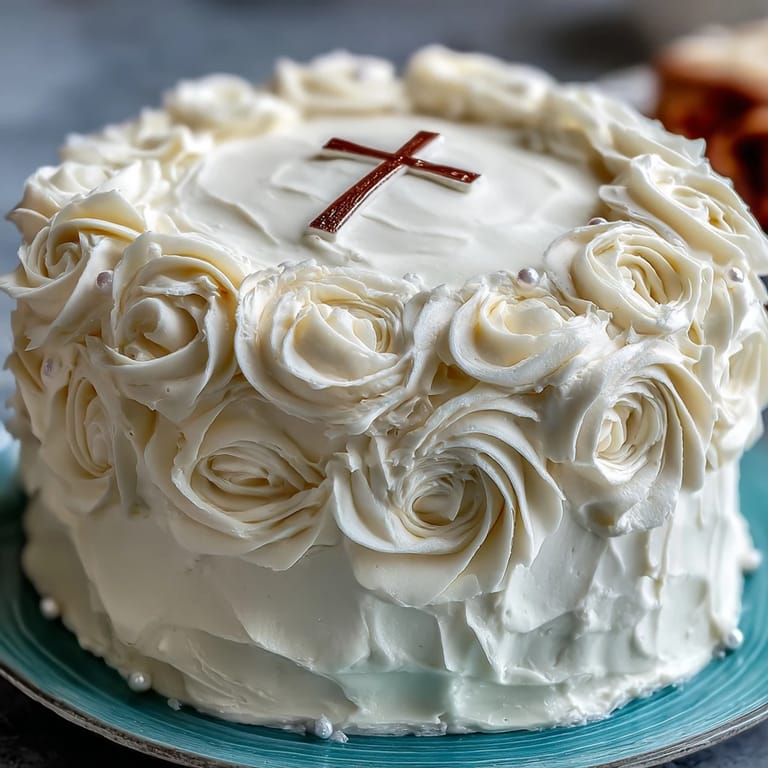
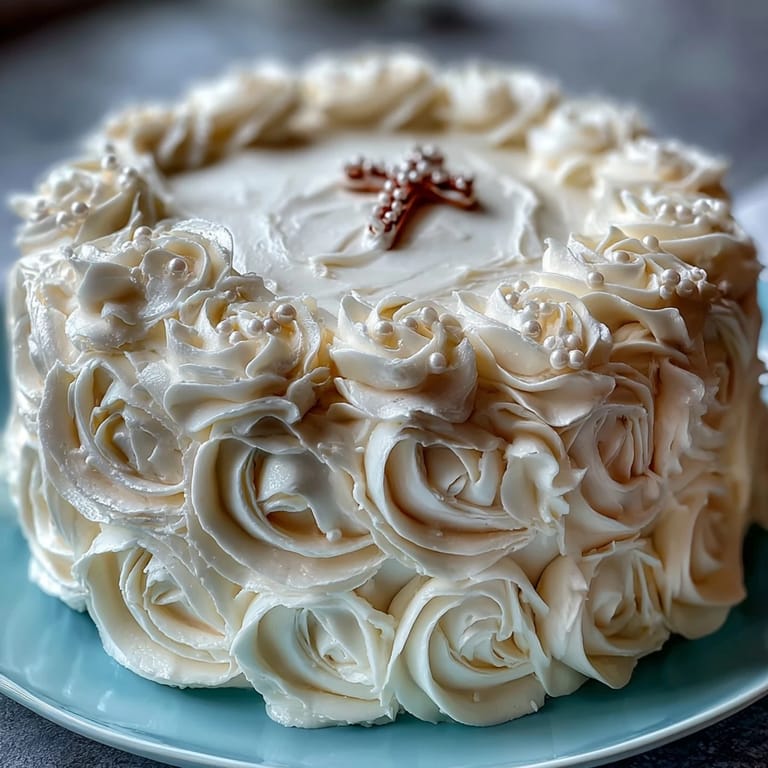
- Position fondant roses around the cake, add tiny fondant leaves tinted green if you want, scatter edible pearls or dragees in between, and place your cross topper at the center or wherever feels right.
- Chill before serving:
- Give the finished cake at least an hour in the refrigerator so the fondant sets and the cake firms up—this also makes slicing cleaner.
 Save
Save What I love most about this cake is that it demands you slow down. Between waiting for eggs to come to room temperature and letting fondant roses set, you're forced into a rhythm that feels almost meditative, and by the time you place that cross on top, you've poured genuine intention into something edible. That's what makes this cake meaningful—not the technique, but the presence you bring to it.
Fondant Roses: Easier Than You Think
The first time I tried fondant roses, I was convinced I'd end up with awkward blobs that no cross topper could save. Turns out, the key is accepting that imperfection looks romantic from three feet away, and fondant is incredibly forgiving because it doesn't crack like royal icing does. Start with pea-sized balls, flatten them gently between your thumb and fingers, and overlap them in a spiral—each petal doesn't need to be perfect because the whole is always more beautiful than its parts.
Buttercream Consistency Is Everything
I once made this cake with buttercream that was slightly too soft, and watching it slip down the sides in a warm kitchen was both hilarious and educational. Now I add milk gradually and stop the moment my frosting reaches soft-peak consistency—it should hold a peak when you lift the spatula, but still spread smoothly. The difference between spreadable and slovenly is usually just one tablespoon of milk, so patience wins here.
Making This Cake Your Own
This recipe is a blank canvas, and I've played with it enough times to know its generous limits. Lemon zest transforms the vanilla into something bright, almond extract adds a delicate nod to French pastries, and even a touch of cardamom works if you're feeling adventurous. The fondant roses can be tinted pale pink or soft gold, the edible pearls can become silver dragees, and the whole aesthetic shifts with just these small choices.
- Substitute half the butter in the sponge with neutral oil for a slightly lighter, more tender crumb.
- Use a one-to-one gluten-free flour blend if needed, though you may need to add five minutes to your baking time.
- Add white chocolate shavings or candied flowers for additional texture and visual interest without extra complexity.
 Save
Save This cake has become my way of saying I'm present for someone's important moments, and every time I make it, I remember that the most meaningful recipes are the ones that give us permission to slow down and show up with care. Serve it cold, watch someone's face light up, and know that you've made something that tastes as good as it looks.
Recipe Guide
- → How do I achieve tender vanilla sponge layers?
Use room temperature ingredients and cream butter and sugar well to incorporate air, ensuring a light texture. Alternate folding flour and milk gently to avoid overmixing.
- → What is the best way to make smooth buttercream frosting?
Beat softened butter until creamy, then gradually add powdered sugar and vanilla. Add milk or cream a tablespoon at a time until desired consistency is achieved.
- → How can I shape realistic white fondant roses?
Roll small fondant balls, flatten and carefully shape petals. Assemble petals layer by layer, slightly overlapping to mimic natural rose form.
- → Can I add color to the fondant leaves?
Yes, use green gel food coloring mixed into a small portion of fondant to shape leaves that complement the white roses.
- → How should the cake be stored before serving?
Chill the decorated cake to set the buttercream and fondant adornments, keeping it covered to prevent drying out.
- → Is it possible to make gluten-free adjustments?
Yes, substitute all-purpose flour with a 1:1 gluten-free flour blend to maintain texture without gluten.