 Save
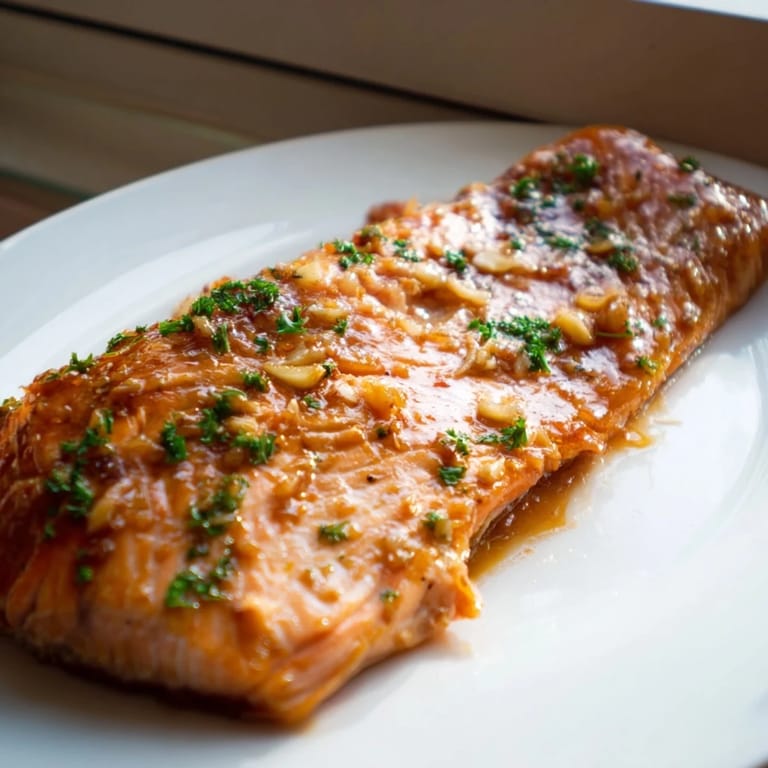
Save My neighbor brought me a jar of dark wildflower honey last spring, and I wasn't sure what to do with it until I spotted salmon on sale. I melted butter in a bowl, stirred in garlic and that honey, and brushed it over the fillets without much of a plan. The smell that filled my kitchen fifteen minutes later—sweet, savory, almost caramelized—made me wish I'd doubled the recipe. Now I keep both honey and salmon stocked because this dish has become my go-to when I want something that feels special but doesn't demand an hour at the stove.
I made this for my sister's birthday dinner last fall, and she kept scraping the sticky, golden pan juices onto her rice. She's not usually one to get excited about fish, but she texted me the next morning asking if I'd write down the measurements. That's when I realized this wasn't just another salmon recipe—it was the kind of dish that turns skeptics into believers. The balance of sweet honey, sharp garlic, and bright lemon makes every bite feel intentional, like you actually know what you're doing in the kitchen.
Ingredients
- Salmon fillets (4, about 170 g each): Skin-on holds together better during roasting, but skinless works if that's what you prefer or what's available.
- Salt and freshly ground black pepper: A light seasoning before glazing lets the fish shine without competing with the honey garlic flavors.
- Honey (3 tablespoons): Use a good quality honey—it's the backbone of the glaze and you'll taste the difference between generic and something with character.
- Unsalted butter (2 tablespoons, melted): Adds richness and helps the glaze cling to the salmon instead of sliding off into the pan.
- Garlic (3 cloves, minced): Fresh garlic is essential here; jarred stuff turns bitter under high heat and you'll regret the shortcut.
- Soy sauce (1 tablespoon): Brings a salty, umami depth that keeps the glaze from tasting one-note; swap for tamari or coconut aminos if you need it gluten-free.
- Fresh lemon juice (1 tablespoon): Cuts through the sweetness and brightens the whole dish—bottled juice won't give you the same zing.
- Dijon mustard (1 teaspoon, optional): A little secret I learned by accident when I had it on hand; it adds a subtle tang and helps emulsify the glaze.
- Fresh parsley (1 tablespoon, chopped): A sprinkle at the end makes the dish look alive and adds a hint of freshness that balances the richness.
- Lemon wedges: For serving, because a squeeze of extra lemon at the table is always welcome.
Tired of Takeout? 🥡
Get 10 meals you can make faster than delivery arrives. Seriously.
One email. No spam. Unsubscribe anytime.
Instructions
- Prep your oven and tray:
- Preheat to 200°C (400°F) and line a baking tray with parchment paper so cleanup is painless. If you skip the parchment, the glaze will stick and you'll be scrubbing later.
- Season the salmon:
- Pat each fillet dry with paper towels—moisture is the enemy of a good sear—and arrange them on the tray. Season both sides lightly with salt and pepper, remembering the soy sauce in the glaze will add saltiness too.
- Mix the glaze:
- In a small bowl, whisk honey, melted butter, minced garlic, soy sauce, lemon juice, and Dijon mustard until everything is smooth and glossy. Taste it with a clean spoon; it should be sweet, salty, and a little sharp all at once.
- Brush the fillets:
- Use a pastry brush to coat the top and sides of each fillet generously with glaze, making sure the garlic bits are evenly distributed. Don't be shy—this is where all the flavor lives.
- Roast until tender:
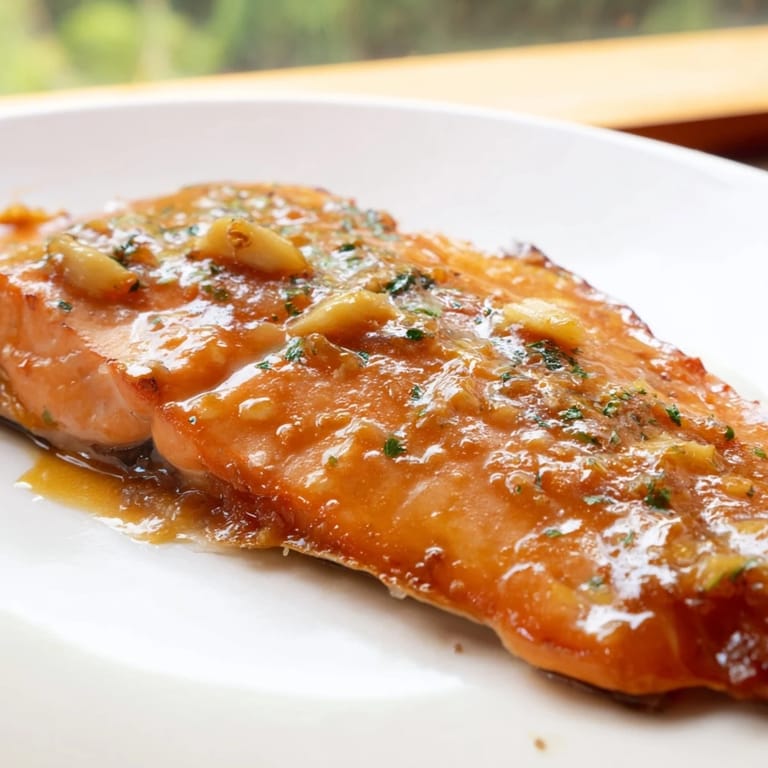
- Slide the tray into the oven and roast for 12 to 15 minutes, depending on thickness, until the salmon flakes easily with a fork. The edges should look caramelized and the center should still be slightly glossy.
- Broil for extra caramelization (optional):
- If you want a darker, stickier glaze, switch to broil for 1 to 2 minutes at the end. Watch it like a hawk because the sugars in honey can burn fast.
- Finish and serve:
- Pull the tray out, spoon any pan juices over the fillets, and scatter chopped parsley on top. Serve immediately with lemon wedges on the side for squeezing.
 Save
Save The first time I served this to my partner, he was quiet for a few bites, then looked up and said it tasted like something from a restaurant. I laughed because all I'd done was throw together pantry staples and trust the oven. But that's the thing about this recipe—it makes you look like you know secrets you don't, and everyone at the table feels a little more cared for because of it.
What to Serve Alongside
I usually reach for jasmine rice because it soaks up the pan juices beautifully, but roasted asparagus or a handful of sautéed green beans work when I want something lighter. A simple arugula salad with lemon vinaigrette keeps the meal from feeling too heavy, and sometimes I'll toss in sliced avocado for creaminess. The glaze is rich enough that you don't need complicated sides—just something fresh and something starchy to balance the sweetness.
How to Know When It's Done
Salmon should flake easily when you press a fork into the thickest part, but it should still look slightly translucent in the very center—it'll finish cooking as it rests. If you have an instant-read thermometer, aim for 55 to 60°C (130 to 140°F) for moist, tender fish. I learned the hard way that waiting until it's fully opaque in the pan means it'll be dry by the time it hits the plate, so pull it a minute early and trust the carryover heat.
Make It Your Own
Once you've made this a few times, you'll start tweaking it to suit your mood. A pinch of crushed red pepper flakes in the glaze gives it a gentle kick without overpowering the sweetness, and swapping maple syrup for honey makes it taste more autumnal. I've also used lime juice instead of lemon when that's what I had, and it worked beautifully with a side of cilantro rice.
- Try adding a teaspoon of grated fresh ginger to the glaze for a subtle warmth that plays well with the garlic.
- If you're out of Dijon, a tiny splash of apple cider vinegar will give you that tangy edge.
- Leftovers (if there are any) flake perfectly over a grain bowl the next day with avocado and pickled onions.
 Save
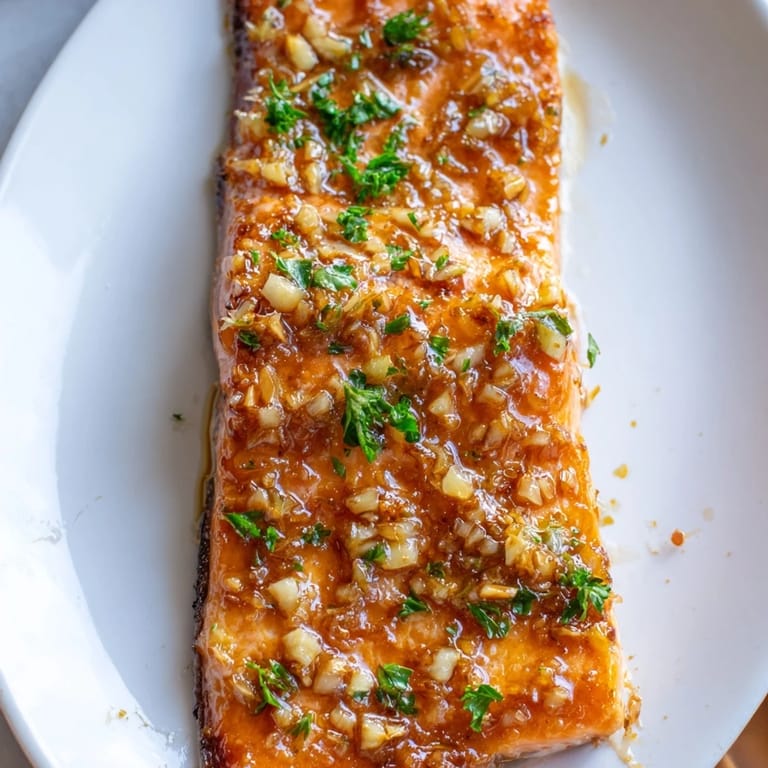
Save This dish has earned a permanent spot in my weeknight rotation, and I hope it does the same for you. It's proof that a few good ingredients and fifteen minutes of heat can turn an ordinary evening into something worth remembering.
Recipe Guide
- → How do I know when the salmon is fully cooked?
The salmon is done when it flakes easily with a fork and the flesh is opaque throughout. Depending on thickness, roasting typically takes 12-15 minutes at 200°C. A meat thermometer should read 63°C at the thickest point.
- → Can I prepare the glaze in advance?
Yes, you can whisk the glaze components together up to 2 hours ahead and store it in an airtight container at room temperature. Simply brush it onto the salmon just before roasting for best results.
- → What are good side dish options?
Steamed or boiled rice, roasted asparagus, oven-roasted potatoes, or a crisp green salad complement the honey garlic flavors beautifully. Lemon wedges for serving enhance the citrus notes in the glaze.
- → How can I add more heat to this dish?
Stir a pinch of crushed red pepper flakes into the glaze before brushing onto the salmon. Start with 1/4 teaspoon and adjust to your heat preference. Alternatively, garnish with fresh chili slices after roasting.
- → Is this suitable for a gluten-free diet?
Yes, it's naturally gluten-free if you use gluten-free soy sauce or tamari as a substitute. Always check label ingredients on all condiments if you have celiac disease or gluten sensitivity.
- → Can I use frozen salmon fillets?
Thaw frozen salmon completely in the refrigerator before cooking. Pat dry thoroughly with paper towels to remove excess moisture, which ensures even cooking and better glaze adherence.