 Save
Save I discovered The Kinetic Motion Blur at a gallery opening in Brussels, where a chef was creating live installations that moved as you looked at them. The vegetables seemed to dance from clustered richness into scattered whispers, and I realized that's exactly what food should do—tell a story through motion and space. That night, I came home determined to recreate that feeling in my own kitchen, understanding finally that plating isn't decoration, it's conversation.
The first time I made this for friends, I watched their faces shift from curiosity to understanding as they traced the movement with their eyes before tasting. Someone said it felt like eating motion itself, and I knew I'd captured something real—that moment when food becomes memory.
Ingredients
- Golden beet, thinly sliced: Its sunshine color anchors the dense side; slice on a mandoline for that ethereal thinness that lets light pass through
- Red beet, thinly sliced: Deep earthiness that intensifies the visual drama—it stains your fingers and your mind in the best way
- Watermelon radish, thinly sliced: The secret weapon; its white exterior and pink interior create natural gradation without you doing anything
- Persian cucumber, thinly sliced: Refreshing counterpoint; I learned to slice these last or they'll weep and dilute your dressing
- Baby carrots, sliced on a bias: The bias cut mirrors the diagonal flow of your composition—geometry matters here
- Creamy goat cheese, room temperature: Must be soft enough to dollop with intention; cold goat cheese fights back, warm goat cheese surrenders
- Toasted hazelnuts, roughly chopped: Toast them yourself moments before—the aroma is your kitchen's applause
- Black sesame seeds: Tiny anchors that catch light and hold visual weight across the sparse side
- Microgreens: Choose arugula for peppery sharpness or radish for a subtle bite that wakes everything up
- Fresh dill, fronds only: The feathery texture echoes the motion you're creating; dill is delicate, so add it last
- Extra virgin olive oil: Good oil tastes like the olive grove it came from—don't waste it on heat, let it shine raw
- Fresh lemon juice: Squeezed that morning, not bottled; acidity is your salt in this composition
- Honey: Just enough to whisper sweetness and help the dressing cling to the vegetables
- Salt and pepper: Season to taste, but remember the goat cheese brings salt too
Tired of Takeout? 🥡
Get 10 meals you can make faster than delivery arrives. Seriously.
One email. No spam. Unsubscribe anytime.
Instructions
- Make Your Dressing First:
- Whisk together the olive oil, lemon juice, honey, salt, and pepper in a small bowl. Taste it—it should sing with brightness. This is your sauce's moment alone before it meets the vegetables. Set it aside and let it sit for a moment; dressings improve when they're allowed to think.
- Begin the Dense Cluster:
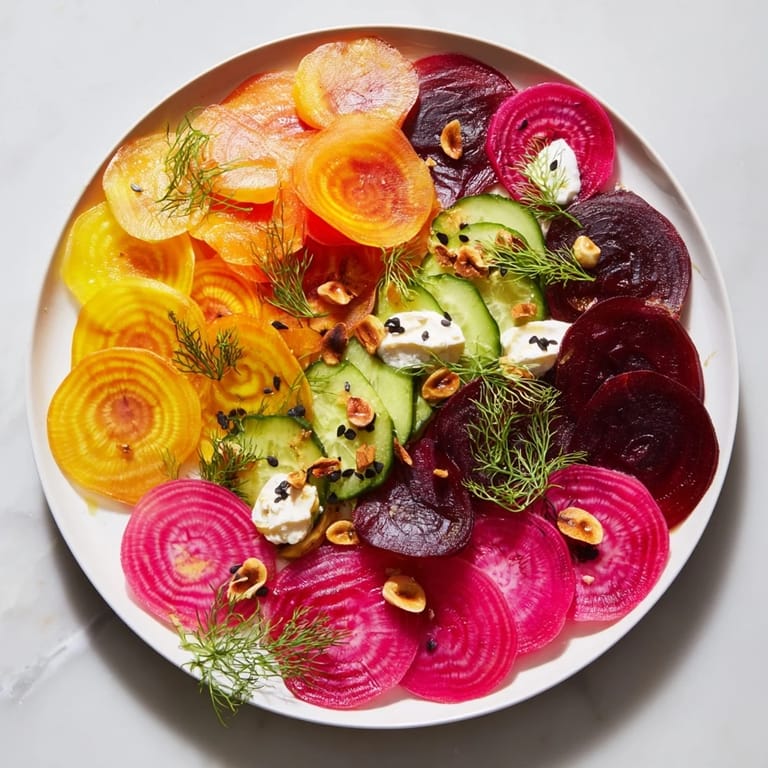
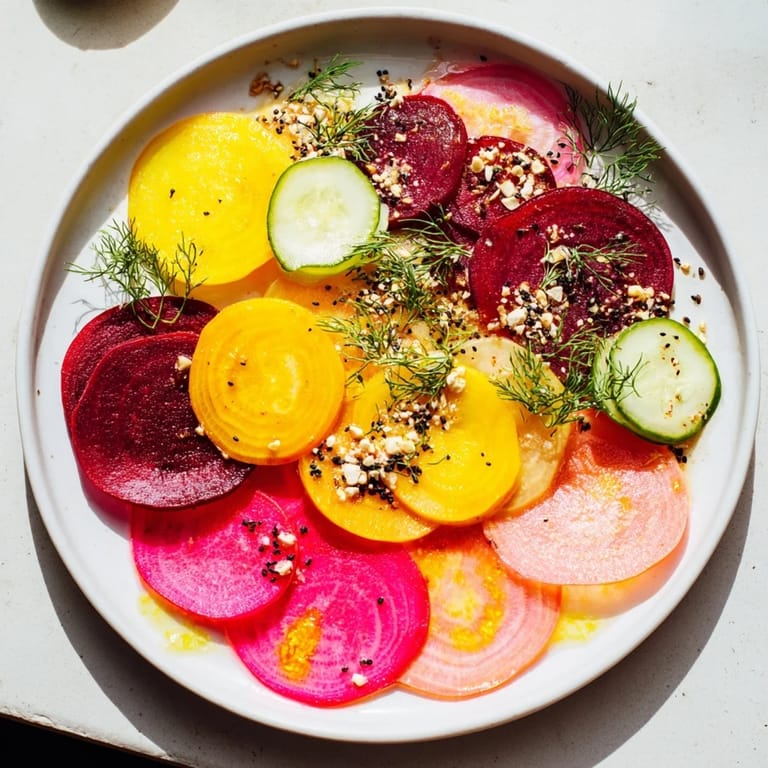
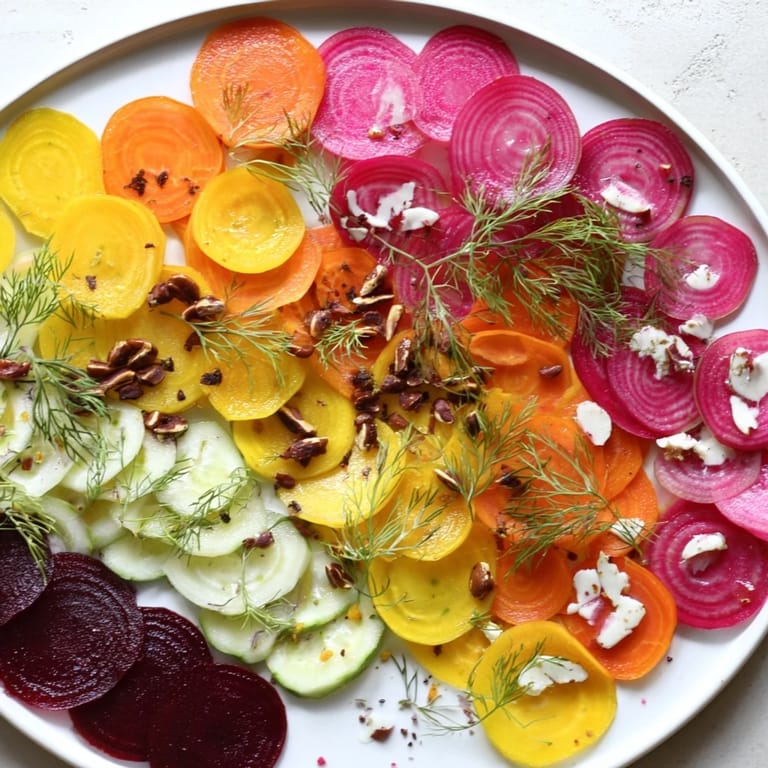
- Start on one side of your platter or plate with the golden beet slices, overlapping them like roof shingles, each slice slightly tilted to catch the light. This is where you begin the story. Nestle in some red beet and watermelon radish slices, building height and color density. Your hand is creating an argument between order and abundance.
- Create the Fade:
- As you move across the platter toward the opposite edge, space the vegetable slices further apart, letting white plate show through like negative space in a painting. This gradual transition is everything—it's the kinetic part, the motion that makes eyes follow an invisible line.
- Distribute the Goat Cheese:
- Place small, generous dollops of goat cheese in the dense cluster area, letting it pool slightly into the spaces between vegetables. As you move toward the sparse side, place fewer dollops, almost trailing off. The cheese is your anchor and your punctuation.
- Scatter the Textural Elements:
- Sprinkle the toasted hazelnuts generously over the dense area, then scatter them more sparsely as you move outward. Do the same with the black sesame seeds. Watch how these darker elements hold the composition together, like dots connecting invisible lines.
- Add the Greens at the Last Moment:
- Pile the microgreens and dill fronds mostly on the dense side, letting just a few delicate pieces drift toward the sparse area. This is your finishing move, the detail that catches light and movement. The fronds should look like they might blow away.
- Dress with Intention:
- Drizzle the dressing across the entire composition, but use a lighter hand toward the sparse side to preserve the visual effect. The dressing should glisten without drowning. Taste a bite of dressed vegetable before serving—adjust salt and lemon if needed.
- Serve Immediately:
- The moment you finish is the moment to plate for guests. Vegetables will begin to weep into the plate, microgreens will begin to wilt. This dish is meant to be eaten at its moment of greatest beauty.
 Save
Save I served this at my mother's birthday dinner on the kind of evening when everyone lingered at the table long after dessert. Someone asked for the recipe and my mother—who has never cared much for vegetables—asked for seconds. That's when I understood: food becomes love when you arrange it with thought.
Thin slicing isn't just technique, it's a choice to make vegetables vulnerable and luminous. When you take a mandoline to a beet, you're not just preparing food, you're revealing its translucence. I learned this from a Japanese chef who said every slice is an opportunity to show respect for what grew in the earth. Slice slowly. Notice the color gradations. Pay attention to the moment the blade passes through.
We live in an age of abundance, but we've forgotten how to see it. The Kinetic Motion Blur is vegetarian not from restriction but from celebration—a statement that vegetables deserve the center of the plate and the attention of your guests. This is the kind of dish that makes vegetarian eating feel like a choice, not a compromise. It's beautiful enough to photograph, fresh enough to taste like the farmer's market that morning, and simple enough that anyone with a sharp knife can create something gallery-worthy.
Spring invites you to use early radishes, tender asparagus ribbons, and the first microgreens. Summer calls for heirloom carrots in their full color spectrum, summer squash ribbons, and edible flowers. Fall begs for watermelon radish, golden beets, and purple cabbage. Winter is when you understand that roots were meant for this dish—they store color and sweetness until you need them most.
- For spring: Replace some vegetables with thinly sliced spring peas, young fava beans, and fresh pea tendrils
- For a lighter version: Use half the goat cheese and double the microgreens for a brighter, more herbaceous finish
- To add richness: Scatter crispy pancetta or smoked salmon among the vegetables for a pescatarian interpretation
 Save
Save This is a dish that taught me plating is just another form of care, and care is always delicious. Make it for someone and watch what happens.
Recipe Guide
- → How do I create the kinetic motion effect?
Arrange sliced vegetables densely on one side, gradually spacing them out toward the opposite edge, layering cheese and nuts to enhance the fading visual impact.
- → Can I substitute the goat cheese?
Yes, a plant-based cheese works well for vegan adaptations while maintaining creamy texture in the dish.
- → What nuts are featured in this dish?
Toasted hazelnuts add a rich crunch, complemented by the subtle nuttiness of black sesame seeds.
- → What dressing pairs best with these ingredients?
A simple dressing of extra virgin olive oil, fresh lemon juice, honey, salt, and pepper brightens and balances the flavors.
- → How do I maintain freshness when serving?
Serve immediately after drizzling the dressing to ensure the vegetables stay crisp and the visual effect remains striking.