 Save
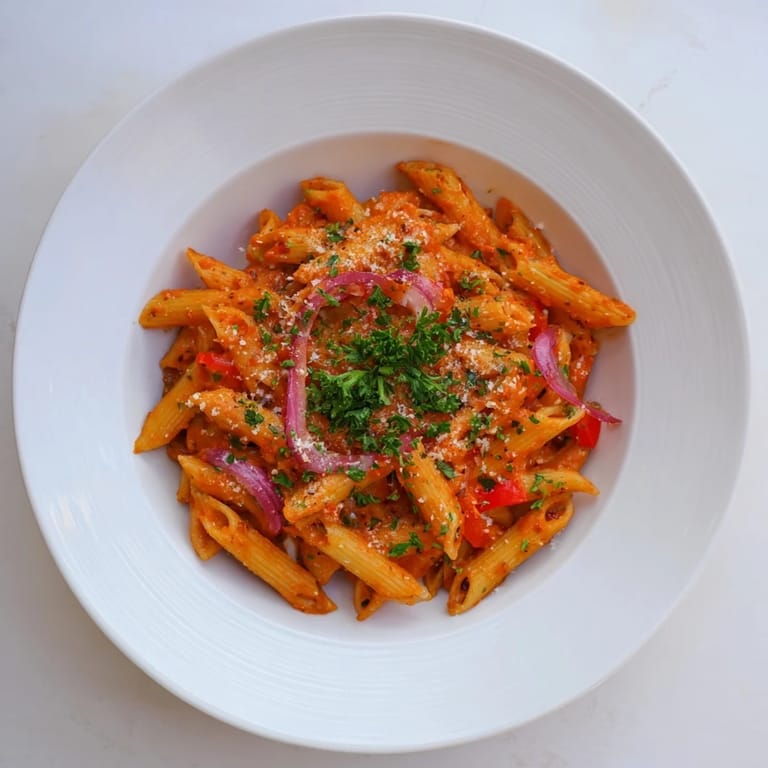
Save I used to think pasta meant two pots minimum, one for boiling and another for sauce. Then a friend showed me this trick on a Tuesday night when I had nothing but pantry staples and zero patience. The pasta cooked right in the sauce, soaking up every spicy, garlicky bit, and I never went back. Now its my go-to when I want bold flavor without the cleanup marathon.
I made this for a group of friends during a late summer dinner party, and someone asked if I had been secretly taking Italian cooking classes. I hadnt, but watching them twirl their forks and reach for seconds felt like winning something. The kitchen smelled like a trattoria, and the empty pot at the end of the night said everything.
Ingredients
- Penne or rigatoni: Short pasta with ridges grabs onto the sauce beautifully, and it holds up well when cooked directly in liquid.
- Water or vegetable broth: Broth adds a deeper savory layer, but water works perfectly fine if thats what you have.
- Red onion: Sweeter and mellower than yellow onion, it gives the base a gentle warmth without overpowering the heat.
- Garlic cloves: Fresh garlic is non-negotiable here, it blooms in the oil and perfumes the whole dish.
- Red bell pepper: Adds sweetness and a soft texture that balances the spice beautifully.
- Canned diced tomatoes: Use the kind with juices, they become the backbone of your sauce as the pasta simmers.
- Olive oil: A good quality olive oil makes a difference, especially since it starts the whole flavor build.
- Italian seasoning: A blend of oregano, basil, and thyme that brings everything together without fuss.
- Crushed red pepper flakes: This is where the diavola heat comes from, start with less if youre cautious.
- Smoked paprika: Adds a subtle smokiness that makes the dish taste more complex than it actually is.
- Salt and black pepper: Season as you go, tasting near the end to get it just right.
- Parmesan cheese: Stir it in at the end for creaminess and a salty umami punch.
- Fresh parsley or basil: A handful of herbs brightens everything up and makes it look like you tried harder than you did.
- Lemon zest: Optional, but a little zest lifts the richness and adds a surprising pop.
Tired of Takeout? 🥡
Get 10 meals you can make faster than delivery arrives. Seriously.
One email. No spam. Unsubscribe anytime.
Instructions
- Start with the aromatics:
- Heat olive oil in a large deep skillet over medium heat until it shimmers. Add the chopped red onion and let it soften for 2 to 3 minutes, stirring occasionally until it smells sweet and looks translucent.
- Build the flavor base:
- Toss in the minced garlic and sliced red bell pepper. Cook for another 2 minutes, stirring often, until the garlic is fragrant and the pepper starts to soften at the edges.
- Combine everything:
- Add the diced tomatoes with their juices, uncooked pasta, water or broth, Italian seasoning, red pepper flakes, smoked paprika, salt, and black pepper. Stir everything together so the pasta is mostly submerged.
- Simmer and stir:
- Bring the pot to a boil, then reduce the heat to a steady simmer. Cook uncovered for 12 to 14 minutes, stirring frequently to keep the pasta from sticking, until its al dente and most of the liquid has been absorbed into a thick sauce.
- Finish with richness:
- Remove the pot from heat and stir in the grated Parmesan and lemon zest if using. Taste and adjust the salt or heat to your liking.
- Serve it up:
- Divide the pasta among bowls and top with fresh parsley or basil and extra Parmesan. Serve immediately while its steaming hot.
 Save
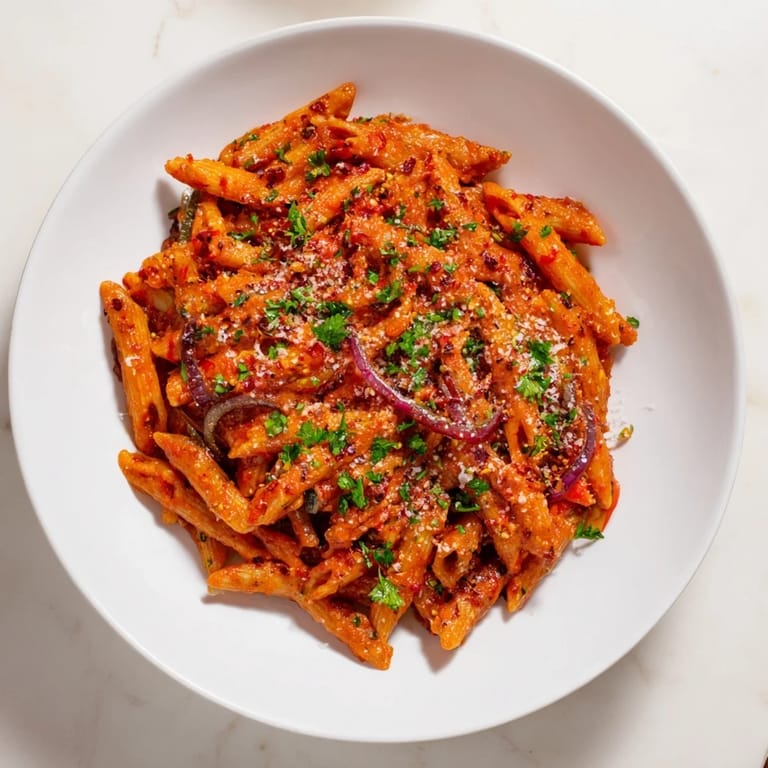
Save One night I forgot to buy heavy cream for a different recipe and threw this together instead. My partner, who usually needs convincing to eat vegetarian, went back for thirds. It became our weeknight ritual, the kind of meal that feels like a small celebration even on a random Wednesday.
Make It Your Own
If you want more protein, toss in sliced cooked chicken sausage or sauteed shrimp right at the end. For a vegan version, swap the Parmesan for nutritional yeast and youll still get that cheesy, savory note. You can also throw in a handful of spinach or kale in the last few minutes of cooking for extra greens without changing the vibe.
What to Serve It With
This pasta is bold enough to stand alone, but a simple arugula salad with lemon and olive oil cuts through the heat nicely. Garlic bread or focaccia on the side makes it feel like a full Italian spread. If youre pouring wine, a crisp Pinot Grigio or a light Chianti works beautifully.
Storing and Reheating
Leftovers keep in an airtight container in the fridge for up to three days. The pasta will absorb more liquid as it sits, so when you reheat it on the stove, add a splash of water or broth to loosen it back up. It actually tastes even better the next day once the flavors have had time to marry.
- Reheat gently over medium-low heat, stirring often to prevent sticking.
- Add a drizzle of olive oil or a sprinkle of fresh Parmesan before serving leftovers.
- This doesnt freeze well because the pasta texture changes, so plan to eat it within a few days.
 Save
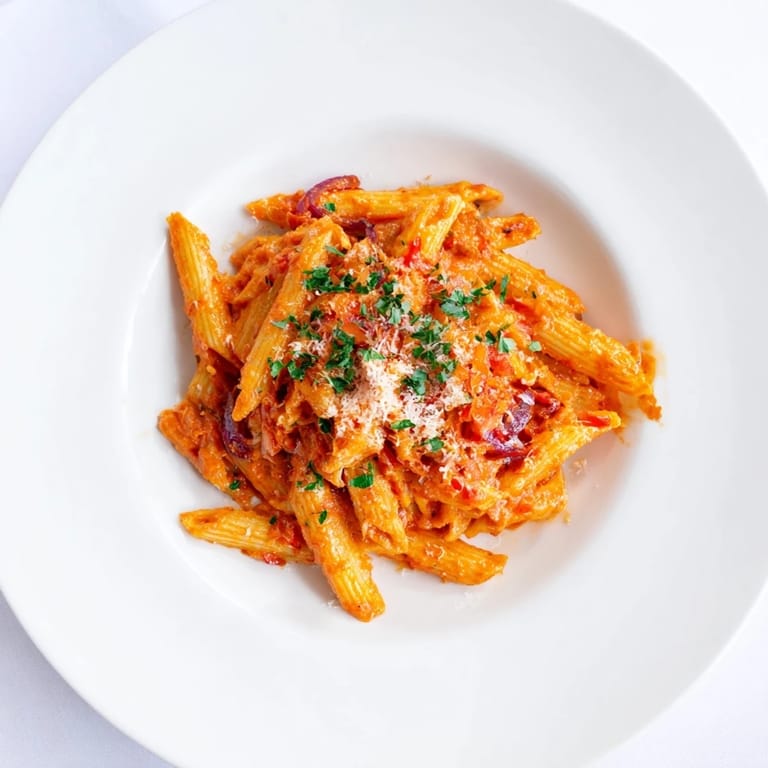
Save This dish reminds me that good food doesnt need to be complicated or expensive. It just needs to taste like you meant it, and this one always does.
Recipe Guide
- → What kind of pasta works best for this dish?
Penne or rigatoni are ideal as their tubular shape captures sauce and spices well, providing balanced bites.
- → How can I adjust the spice level?
Modify the amount of crushed red pepper flakes to suit your heat preference, starting with less and adding more as desired.
- → Can this be made vegan?
Yes, substitute Parmesan cheese with nutritional yeast to maintain a cheesy depth while keeping it vegan.
- → Is it possible to add protein?
For added protein, stir in cooked chicken sausage or sautéed shrimp after the pasta finishes cooking.
- → What liquid works best for cooking?
Water or low-sodium vegetable broth both work well, with broth adding an extra layer of savory flavor.
- → How do I prevent the pasta from sticking?
Stir frequently during simmering and ensure enough liquid covers the pasta to keep it from sticking.