 Save
Save I first encountered this dish at a small modern restaurant tucked away in a quiet corner of the city, where the chef explained that plating was as important as flavor. Watching them create those tiny dots of color across the white plate felt like witnessing an artist at work, and I became completely mesmerized. That night, I decided I had to learn this technique myself—not just for the visual drama, but because each spoonful promised a different story on the plate.
I remember making this for my sister's birthday dinner, and her eyes lit up the moment the plate arrived. She was so reluctant to disturb it that I had to laugh and tell her that the whole point was to experience it—to mix and match the dots, to discover new flavor combinations with each spoonful. That's when I realized this dish was about more than just looking beautiful; it was about giving people permission to play with their food.
Ingredients
- Beetroot puree (80 g): This gives you that deep, earthy sweetness and gorgeous deep crimson color. The key is cooking it until completely tender so it blends into silk.
- Carrot puree (80 g): Brings brightness and natural sweetness that balances the earthier notes. Orange purees are forgiving—they always look vibrant.
- Green pea puree (80 g): This is your fresh, grassy note. Fresh or frozen peas work equally well; frozen actually preserves the color beautifully.
- Yellow bell pepper puree (80 g): Roasting first deepens its flavor and adds a subtle smokiness that surprises people.
- Greek yogurt (60 g): Creamy, tangy, and provides that beautiful neutral white canvas for your dots to pop against.
- Crème fraîche (40 g): Richer than yogurt with a subtle tartness—it's the grown-up version of sour cream and worth seeking out.
- Basil pesto (1 tbsp): Herbaceous and aromatic; a tiny dot goes a long way in terms of flavor impact.
- Red pepper coulis (1 tbsp): Bright, slightly sweet, and visually striking. This is what ties the whole plate together aesthetically.
- Balsamic reduction (1 tbsp): Dark, glossy, and adds that sophisticated note. A single drizzle becomes a statement.
- Pickled red onions (20 g, finely diced): The sharp, vinegary punch that makes people pause and say 'what is that flavor?' These must be finely diced to work as a garnish.
- Microgreens: These tiny leaves are pure theater—use whatever variety speaks to you, but they should be fresh and tender.
- Toasted black sesame seeds (1 tbsp): The nuttiness and slight crunch are essential. Toast them yourself if you can; the flavor difference is remarkable.
- Pomegranate seeds: Jewel-like bursts of tartness and texture. They look like tiny garnish dots themselves.
- Sea salt flakes and freshly ground black pepper: The final seasoning layer that brings everything into focus.
Tired of Takeout? 🥡
Get 10 meals you can make faster than delivery arrives. Seriously.
One email. No spam. Unsubscribe anytime.
Instructions
- Cook and puree each vegetable with intention:
- Start by cooking your beetroot, carrot, and peas until they're completely tender—this takes about 15 minutes. While they're cooking, roast your yellow bell pepper until the skin blisters and chars slightly. Once everything is soft, blend each one separately with just a whisper of olive oil and a pinch of salt until it's completely smooth with no lumps. This is your moment to taste and adjust seasoning for each puree individually.
- Load your tools like an artist loading a palette:
- Transfer each puree into its own piping bag or squeeze bottle—this is where having multiple containers really matters. Do the same with your yogurt and crème fraîche in separate bags, and your pesto, coulis, and balsamic in squeeze bottles. Lay everything out in front of you so you can see all your colors at once.
- Create your pointillist composition with patience:
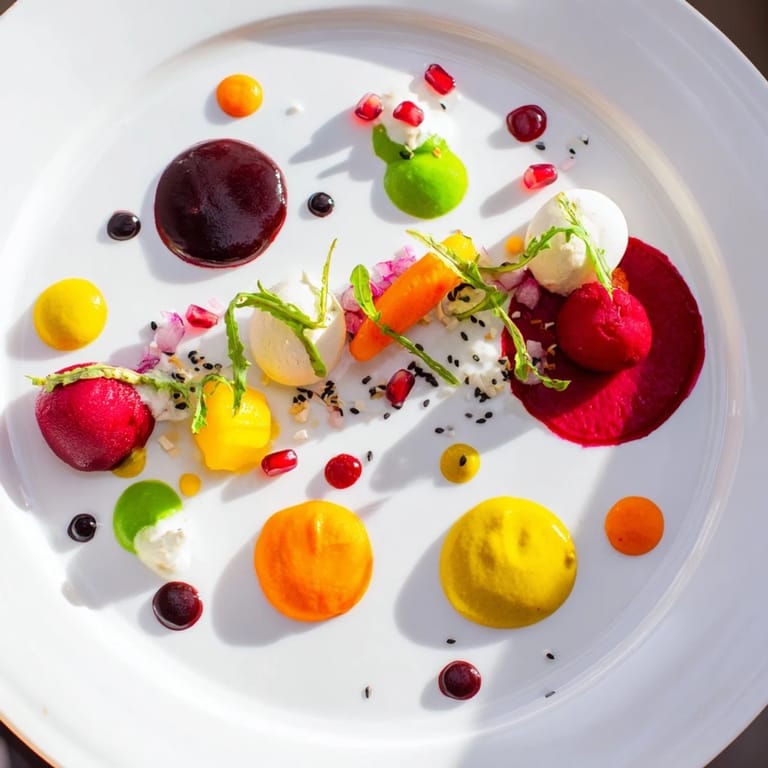
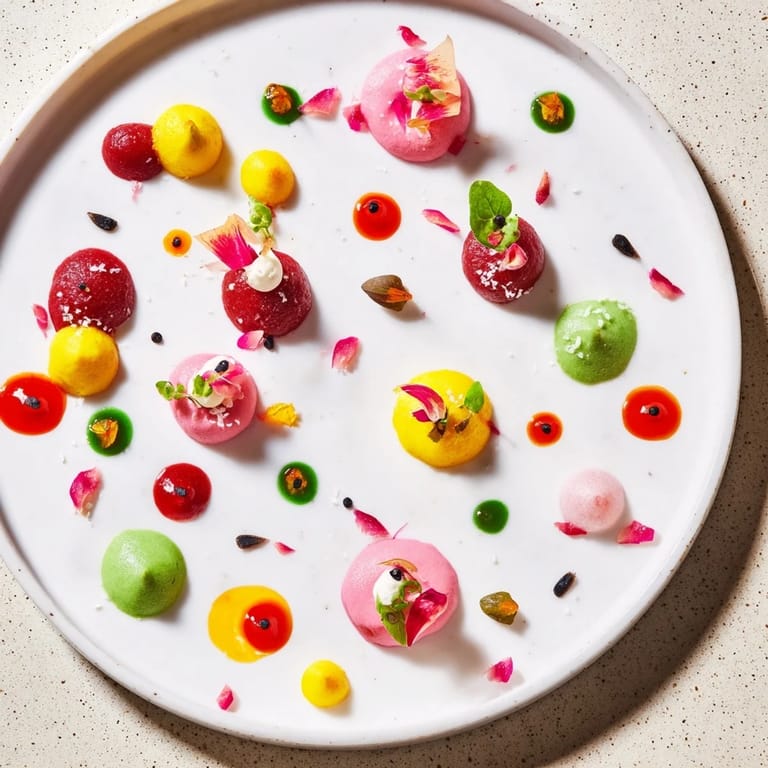
- On each plate, begin dotting and creating tiny mounds across the surface, but here's the secret: don't touch them to each other. Leave breathing room between each dot, just like a Pointillist painter would. Vary the sizes—some dots barely bigger than a peppercorn, others the size of a thumbnail. Step back and look at your plate from above to make sure the colors are distributed evenly and create visual harmony.
- Layer on the delicate garnishes with precision:
- Now comes the part where tweezers become your best friend. Sprinkle the finely diced pickled onions around the dots—they should be so small they look like tiny rubies. Arrange your microgreens thoughtfully, then scatter the black sesame seeds and pomegranate seeds. If using edible flowers, place them where they'll frame the composition.
- Finish with the final flourish:
- Just before serving, taste the plate by touching a tiny bit of one element to your tongue—is it seasoned enough overall? Now finish with a light shower of sea salt flakes and fresh black pepper. Serve immediately, because this is a dish that's meant to be experienced at its visual peak.
 Save
Save What struck me most when I finally served this was that it transformed a simple dinner into an experience. My guests didn't just eat; they discussed, discovered, and debated which combination of dots tasted best. That's when I understood—this dish is about conversation and connection, wrapped up in edible art.
The Art of Color Theory on a Plate
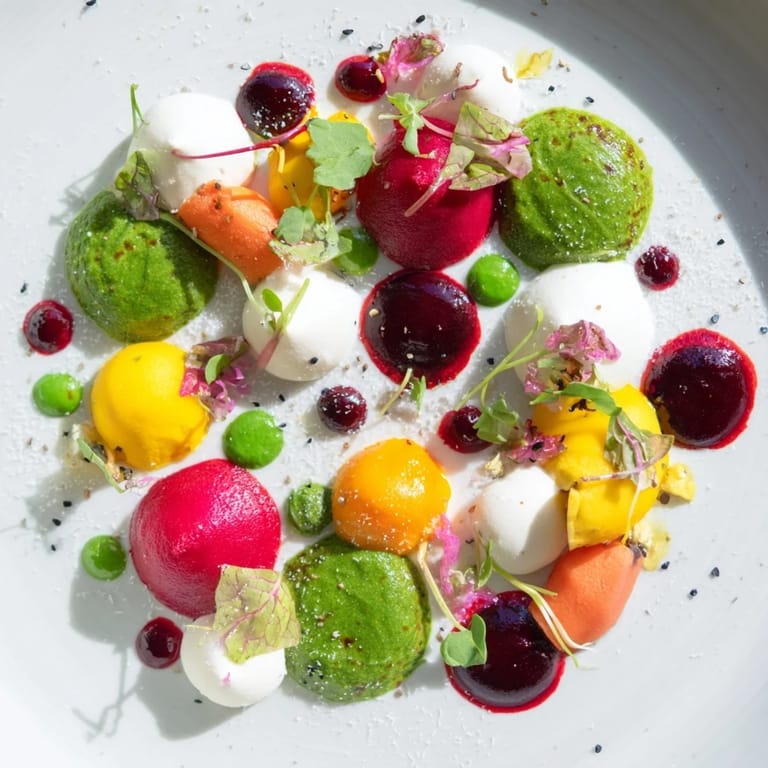
When I first started making this, I arranged the colors randomly, but it felt chaotic rather than artistic. Then I learned that opposing colors on the color wheel—like the deep red of beets against the bright green of peas—actually make each other sing visually. Now I think about it like a painter would: the yellows and oranges create warmth, the greens and purples create coolness, and the contrast between them is what makes your eye travel across the plate. It's not just food anymore; it's a deliberate visual statement.
Making It Your Own
This recipe is genuinely a template rather than a rulebook. I've made it with purple sweet potato instead of carrot, added a mushroom puree for earthiness, and once even experimented with a white cauliflower puree for extra contrast. The technique stays the same, but the conversation changes entirely based on what vegetables you choose. Each version tells a different story about the season or what was calling to me in the market that day.
Pairing and Serving Moments
Serve this as the opening act of a dinner party, and watch how it sets the tone for everything that follows. Pair it with a crisp Sauvignon Blanc that echoes the fresh, bright flavors on the plate. You can also serve it alongside thin, crispy crackers or toasted sourdough for textural contrast, though honestly, some of my favorite versions have been enjoyed entirely on their own, eaten with a small spoon like it's the most precious thing in the world.
- If you're making this for a crowd, you can prep all the purees the night before and assemble plates just before service—it takes maybe two minutes per plate once you develop a rhythm.
- Keep a damp cloth nearby while plating; if you make a mistake, you can gently wipe and start that dot over again.
- The beauty of this dish is that it's vegetarian but feels luxurious enough to impress even the most dedicated meat-eaters at your table.
 Save
Save This dish taught me that food is art, and art should be shared with people you care about. Every time I make it, I'm reminded that the best meals are the ones that spark conversation and create memories.
Recipe Guide
- → How are the purees prepared for the dish?
Each vegetable is cooked and blended separately with olive oil and salt until smooth, then placed in piping bags for precise application.
- → What ingredients create the contrasting textures?
Accents like pickled red onions, microgreens, toasted sesame seeds, and pomegranate seeds add crunchy and fresh textures around the smooth purees.
- → Can this dish accommodate vegan diets?
Yes, by substituting dairy yogurt and crème fraîche with plant-based alternatives, the dish can be made fully vegan.
- → What plating technique is used here?
The dish uses a pointillist approach, arranging colorful dots and small mounds of purees and sauces in a scattered, artful pattern on the plate.
- → What drinks pair well with this preparation?
A crisp Sauvignon Blanc enhances the fresh and vibrant vegetable flavors, making an excellent accompaniment.