 Save
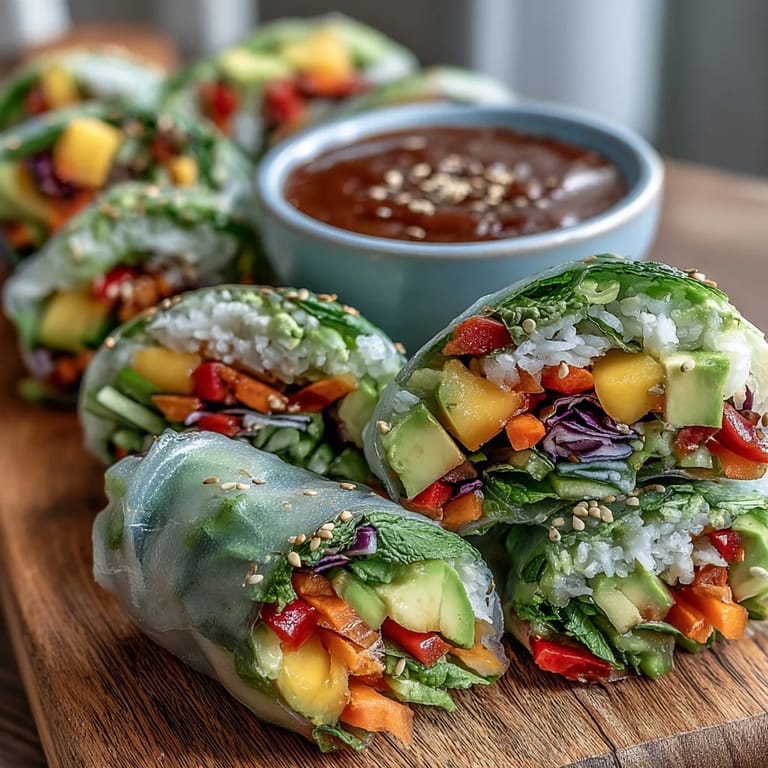
Save There's something almost meditative about assembling spring rolls on a lazy afternoon, when you've got nowhere to be and the kitchen feels like your own little workshop. My sister brought a bag of impossibly ripe mangoes to my place one summer, and instead of letting them turn brown on the counter, I decided to finally make these vibrant rolls I'd been eyeing. The moment I unrolled that first rice paper and watched it soften into a translucent sheet, I was hooked—suddenly I had a technique that felt both elegant and forgiving, a way to turn a handful of fresh ingredients into something that looked like it came from a restaurant.
I made a double batch for my friend's dinner party last spring, thinking I'd have some left over, but they disappeared within minutes of hitting the table. Someone asked for the recipe mid-bite, and I realized I'd stumbled onto something special—not just delicious, but the kind of food that makes people feel like you've really thought about them. The sweet chili sauce became the star of the show, with guests sneaking extra dips even after their rolls were gone.
Ingredients
- Rice paper wrappers (22 cm diameter): These are delicate but more forgiving than they first appear; keep them away from direct heat and they'll soften beautifully in warm water without tearing.
- Ripe mango: Choose one that gives slightly to pressure—it should smell fragrant at the stem end, and the sweetness is what balances the herbaceous herbs and fresh vegetables.
- Ripe avocado: Slice just before assembly so it doesn't brown, and use a gentle hand when handling since it bruises easily but adds that essential creamy richness.
- Carrot and cucumber: Julienne them thin so they're actually pleasant to bite through in the roll rather than creating tough resistance.
- Red bell pepper: The color matters here visually, but the flavor brings a subtle sweetness that echoes the mango beautifully.
- Purple cabbage: This adds a pleasant crunch and earthiness that grounds all the tropical elements, plus it doesn't wilt as quickly as regular cabbage.
- Fresh mint, cilantro, and basil: Don't skip the variety—each herb brings its own personality, and together they create an aromatic complexity that makes these rolls feel special.
- Sweet chili sauce: The backbone of everything, so whether you buy quality jarred or make homemade, this is where you invest your attention.
- Lime juice: A squeeze of brightness that elevates the sauce from one-dimensional to genuinely memorable.
- Soy sauce or tamari: Just enough to deepen the sauce's savory notes without overpowering the fresh elements.
- Toasted sesame seeds: A final flourish that adds nutty depth and a textural surprise.
Tired of Takeout? 🥡
Get 10 meals you can make faster than delivery arrives. Seriously.
One email. No spam. Unsubscribe anytime.
Instructions
- Prep like you mean it:
- Arrange all your vegetables, herbs, mango, and avocado on a platter before you start rolling—this prevents scrambling midway and keeps everything from browning. A moment spent organizing now saves frustration later.
- Warm water is your friend:
- Fill a shallow dish with warm water and submerge one rice paper wrapper for just 10 to 15 seconds until it's pliable but still slightly firm to the touch. Over-soaking turns them into mush; under-soaking and they crack.
- Set the stage:
- Lay your softened wrapper on a damp kitchen towel or cutting board—the moisture keeps it from sticking while still giving you control. This small step makes rolling exponentially easier.
- Fill with intention:
- Place a small amount of each filling in the lower third of the wrapper, layering from hearty to delicate so textures stack nicely. Think of it as arranging a small composition rather than just stuffing.
- Roll with confidence:
- Fold the bottom over the filling, tuck in the sides firmly, and roll upward with steady pressure—too gentle and they unravel, too rough and the wrapper tears. You'll find your rhythm after the first two.
- Repeat and breathe:
- Work through your remaining wrappers at a comfortable pace; there's no prize for speed here, just fresh rolls that hold together. If your wrapper dries out, dip it one more time.
- Mix the sauce:
- Whisk sweet chili sauce, lime juice, and soy sauce together in a small bowl, tasting as you go—you might want more lime or less salt depending on your sauce brand. Sprinkle sesame seeds on top if using, adding that final textural spark.
- Serve immediately:
- These are best enjoyed fresh, when the rice paper still has a gentle chew and the herbs are at their most fragrant. Plate them with the sauce nearby and watch them disappear.
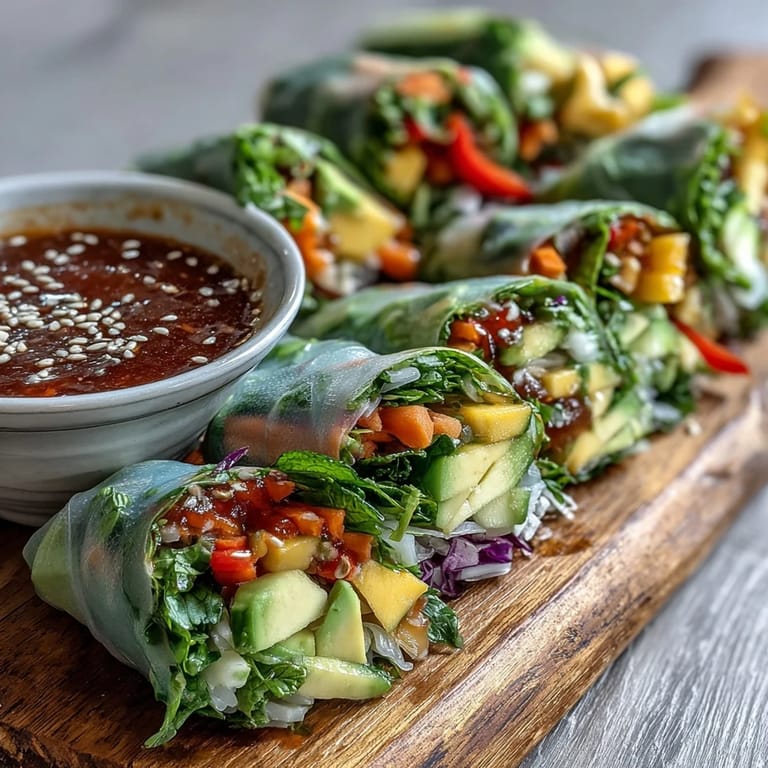 Save
Save There was a moment when my nephew, who's notoriously picky, grabbed one of these rolls and actually asked for seconds without being prompted. It hit me then that this dish bridges something important—it's healthy without feeling like a sacrifice, beautiful enough to impress without requiring culinary school, and genuinely craveable rather than virtuous. That's when food becomes more than fuel; it becomes a small gesture of care on a plate.
The Art of the Rice Paper
Getting comfortable with rice paper wrappers takes maybe three rolls, and then it becomes second nature. The trick I learned was treating them like delicate fabric rather than dough—they're forgiving if you respect their texture. I used to overthink the water temperature until a friend casually mentioned hers comes from a just-boiled kettle diluted with a touch of cool water, and suddenly my success rate jumped dramatically.
Building Flavor Layers
The genius of these rolls is that every component pulls its weight flavor-wise, so nothing gets lost. The avocado provides richness, the mango brings sweetness, the cabbage adds earthiness, and the herbs—especially that combination of three different types—create this aromatic complexity that makes you slow down and actually taste what you're eating. I used to think more ingredients meant more work, but with spring rolls it means more interest in every single bite.
Storage and Make-Ahead Magic
While these taste best fresh, I've learned they can last up to 24 hours in the refrigerator if you wrap them carefully in damp paper towels and then plastic wrap. The rice paper becomes slightly chewier the next day, which some people actually prefer, though the vegetables lose their snap. This makes them perfect for meal prep if you're thinking ahead, though I'll admit rolling them the morning-of feels like a nicer ritual than reaching into the fridge.
- If you're making these a few hours ahead, keep them in the coolest part of your fridge and don't slice them until right before serving to prevent the filling from drying out.
- The dipping sauce keeps for three days in a sealed container, so you can make extra batches for different meals throughout the week.
- Store any leftover rice paper wrappers in a cool, dry place and they'll keep for months, making spontaneous spring roll cravings totally manageable.
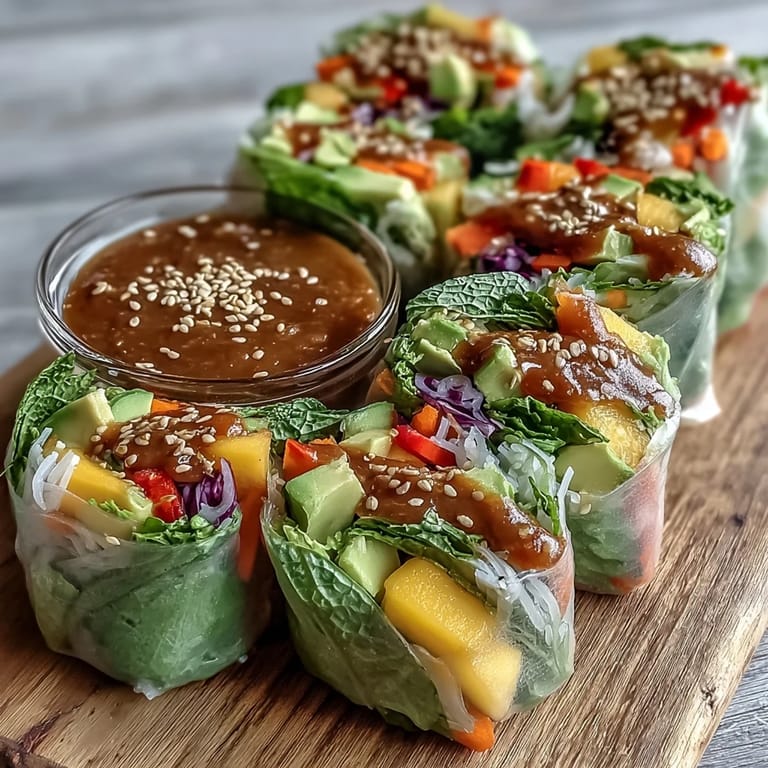 Save
Save These spring rolls have become my go-to when I want to cook something that feels both nourishing and celebratory. There's something deeply satisfying about creating something beautiful with your own hands, and these rolls deliver on that promise every single time.
Recipe Guide
- → How do I prevent rice paper wrappers from tearing?
Soak each wrapper in warm water for just 10–15 seconds until pliable. Over-soaking makes them too fragile. Handle gently on a damp surface while rolling.
- → Can I make these spring rolls ahead of time?
They're best enjoyed fresh within a few hours. For storage, wrap individually in damp paper towels and plastic, then refrigerate up to 24 hours. The wrappers may become slightly chewy.
- → What can I substitute for the fresh herbs?
Thai basil, regular basil, mint, and cilantro work beautifully. Feel free to adjust based on preference or availability. Fresh herbs provide essential brightness to the filling.
- → How do I make the sweet chili sauce gluten-free?
Use tamari instead of soy sauce and verify your sweet chili sauce is gluten-free. Many commercial brands contain wheat, so check labels carefully or prepare homemade sauce using certified gluten-free ingredients.
- → Can I add protein to these spring rolls?
Thin strips of marinated baked tofu or tempeh work wonderfully. Marinate in soy sauce, lime juice, and garlic before adding to the rolls. Edamame or steamed shrimp also complement the tropical flavors.
- → What's the best way to cut mango for spring rolls?
Peel the mango, then slice lengthwise along each side of the flat pit. Score the flesh in a crosshatch pattern without cutting through the skin, then scoop out. Cut the strips into thinner pieces for even rolling.