 Save
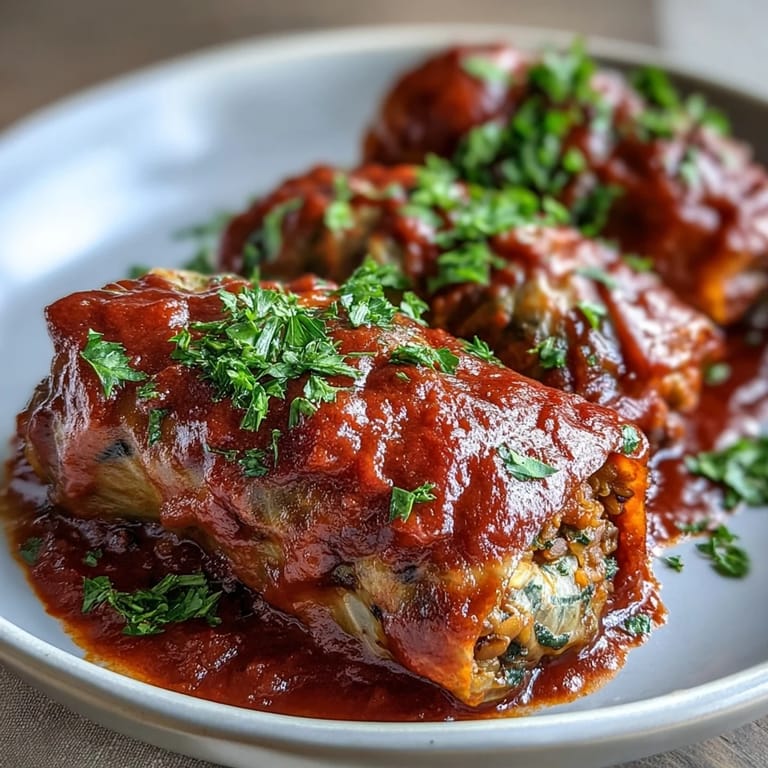
Save My friend Sarah showed up to dinner one winter evening with a mysterious covered dish, insisting that what was inside would change my mind about plant-based cooking. When she lifted the lid to reveal these golden-brown cabbage rolls nestled in ruby-red sauce, steam rising like a promise, I was skeptical. One bite later, I understood: the lentils had turned nutty and substantial, the rice had soaked up all those herb flavors, and the whole thing tasted like someone had distilled comfort into a single roll. I've been making them ever since, always thinking of her face when I take that first bite.
I made these for my partner's family dinner last year, and his mother asked for the recipe before dessert—that's when I knew they'd landed. The kitchen had filled with this deep, savory aroma for nearly two hours, and the tomato sauce had reduced to something almost glossy. When we pulled them from the oven, the sauce bubbled around the edges like it was alive. Everyone went quiet for a moment, which in a loud family like his meant everything.
Ingredients
- 1 large head green cabbage: Look for one that feels dense and heavy, with leaves that peel away smoothly—flimsy cabbages are harder to work with.
- 1 cup cooked brown rice: Cook it the day before if you want less to juggle; cold rice actually rolls more easily.
- 1 cup cooked green or brown lentils: They hold their shape better than red lentils and give you that hearty texture you're after.
- 1 small onion, finely chopped: Go small so the pieces dissolve into the filling rather than stay chunky.
- 2 cloves garlic, minced: Raw garlic will be harsh here, so make sure to cook it with the onions first.
- 1 medium carrot, grated: Grating releases the natural sugars and helps bind the filling together.
- 2 tbsp tomato paste: This is your umami backbone; don't skip it or dilute it with water.
- 1 tbsp olive oil for filling: Use a good one if you have it, something you'd actually taste.
- 2 tbsp chopped fresh parsley: Fresh herbs make the difference between something good and something you'll remember.
- 1 tsp dried thyme: Thyme has this woodsy note that plays beautifully with tomato and lentils.
- 1 tsp smoked paprika: The smokiness adds depth that makes people think you've been cooking this for hours.
- 1/2 tsp salt and 1/4 tsp black pepper: Season as you go so nothing needs rescuing at the end.
- 2 cups canned crushed tomatoes for sauce: San Marzano tomatoes taste noticeably better if your budget allows.
- 1 tbsp olive oil for sauce: Same oil, different job—this one carries the garlic and onion flavors into the tomatoes.
- 1 small onion and 2 cloves garlic for sauce: Yes, more of these; the sauce needs its own aromatic foundation.
- 1 tsp dried oregano: Oregano and tomato are a classic pair for a reason.
- 1 tsp sugar (optional): Canned tomatoes can be acidic, and a tiny pinch of sugar rounds that out without making anything sweet.
Tired of Takeout? 🥡
Get 10 meals you can make faster than delivery arrives. Seriously.
One email. No spam. Unsubscribe anytime.
Instructions
- Heat your oven and prep the leaves:
- Set your oven to 375°F and bring a large pot of salted water to a rolling boil. You want that water salty like the sea because it seasons the leaves from the outside in. Carefully peel 8 to 10 whole leaves from the cabbage head by running your knife around the core and letting them fall away—this gentleness matters. Blanch them in the boiling water for 2 to 3 minutes until they're pliable and the thick parts turn translucent, then drain them on a clean kitchen towel and let them cool completely.
- Make the filling base:
- Heat 1 tablespoon of olive oil in a skillet over medium heat and add your chopped onion and garlic, stirring until they soften and start smelling like dinner, about 3 to 4 minutes. Add the grated carrot, tomato paste, thyme, smoked paprika, salt, and pepper, cooking for another 2 minutes until the tomato paste darkens slightly and becomes fragrant—this step matters more than you'd think.
- Combine and season:
- In a large bowl, mix the cooked rice, lentils, sautéed vegetables, and fresh parsley together until everything is evenly distributed. Taste it now and adjust the seasoning; this is your only chance to fix it before everything gets rolled up inside cabbage.
- Build your sauce:
- In a saucepan, heat 1 tablespoon of olive oil and sauté a small chopped onion and 2 minced cloves of garlic until they turn translucent and golden. Pour in your crushed tomatoes, add the oregano, optional sugar, salt, and pepper, then simmer for 10 minutes so the flavors have time to get to know each other.
- Layer the baking dish:
- Spread about 1/2 cup of the tomato sauce across the bottom of your baking dish in a thin, even layer. This cushion prevents sticking and keeps the bottoms from browning too much.
- Roll with intention:
- Lay one cabbage leaf flat and trim away the thick central stem if it's too prominent. Place 2 to 3 tablespoons of filling at the base of the leaf, fold in the sides, and roll up tightly away from you, making sure to tuck as you go. Place each roll seam-side down in the baking dish and repeat with the remaining leaves and filling, nestling them together snugly.
- Sauce and cover:
- Pour the remaining sauce over all the rolls, making sure some pools in between them so every roll gets moisture from all sides. Cover the dish tightly with foil—this traps steam and keeps everything from drying out during the first stretch of baking.
- Bake low and patient:
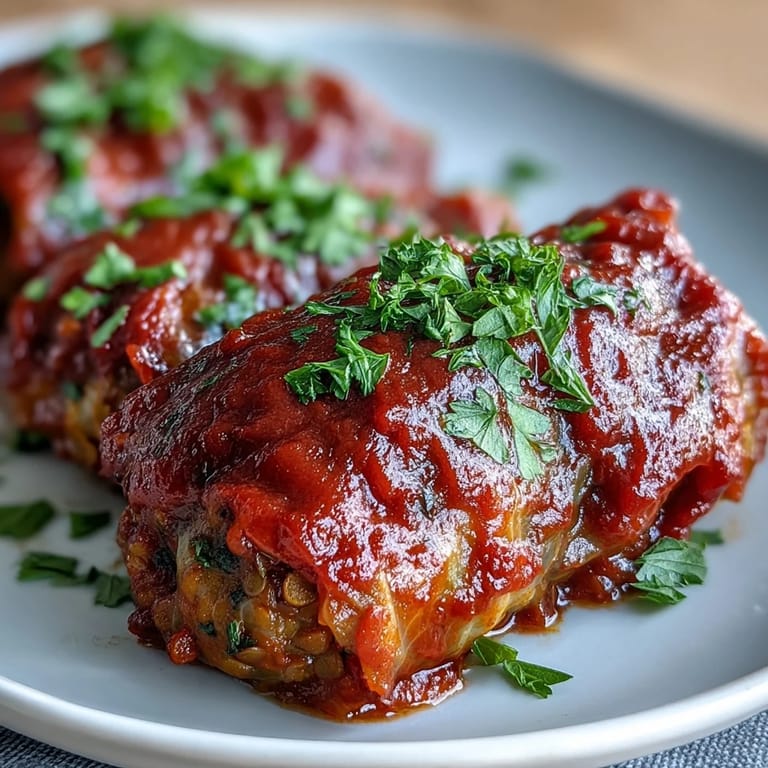
- Bake covered for 45 minutes, then remove the foil and bake for another 10 to 15 minutes until the sauce around the edges is bubbling gently and the tops have taken on a light golden color. Let the whole dish cool for 5 minutes before serving so everything sets and holds together when you plate it.
 Save
Save What struck me most the first time I served these was how quiet the table got. Not awkward quiet, but the kind where everyone's too busy tasting and thinking to make conversation. My uncle, who'd spent his childhood eating cabbage rolls his own mother made, closed his eyes on the first bite. That's when I knew I'd done something right.
Why Cabbage Rolls Are Perfect for Plant-Based Cooking
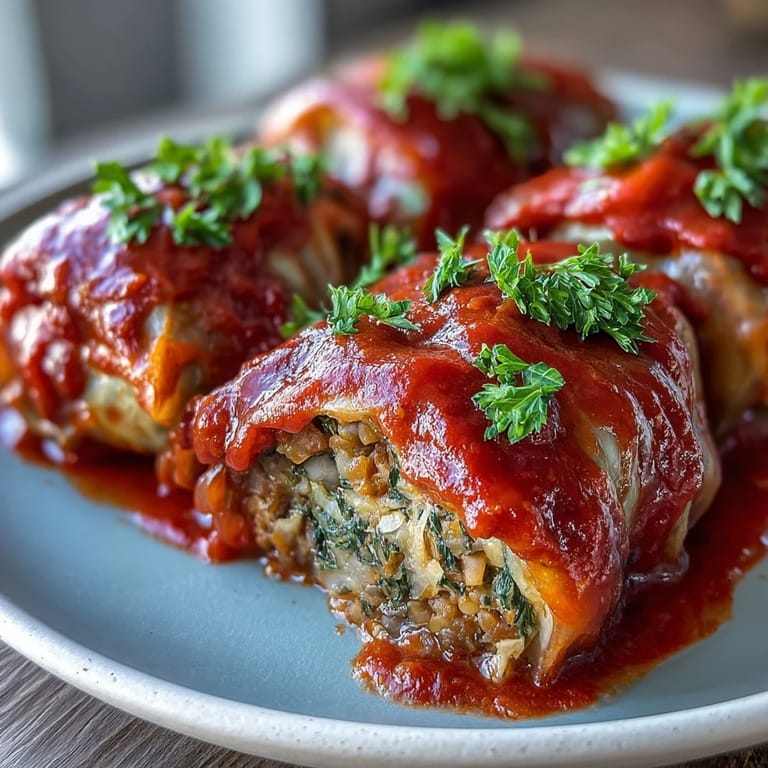
Cabbage rolls are one of those dishes where being vegan actually makes things easier, not harder. You don't miss dairy or eggs because the dish was never built around them—it's about texture, flavor, and that feeling of being taken care of. The filling gains heft from lentils and rice instead of meat, and honestly, that combination gives you more interesting flavors than ground beef ever could. I've learned that the best plant-based cooking doesn't try to replicate what meat does; it celebrates what plants can do on their own terms.
The Secret of Getting the Sauce Right
The sauce is where most people falter with cabbage rolls. They think it should be thin and watery, but it shouldn't be. You want it to reduce down during baking until it's almost glossy, coating each roll with a concentrated tomato flavor. Start your sauce before you do anything else so it has those 10 minutes to simmer and deepen. The tiny pinch of sugar isn't about sweetness—it's about making the tomato flavor sing by balancing any acidity. I learned this the hard way after making the sauce too thin the first time and ending up with rolls swimming in juice instead of nestled in sauce.
Storage and Making Ahead
These rolls are one of my favorite reasons to cook on a Sunday afternoon. You can assemble the entire baking dish in the morning, cover it, refrigerate it, and just pop it in the oven when you get home from work—add 10 minutes to the baking time since it'll be cold. You can also freeze them after baking, and they reheat beautifully either in the oven or gently in the microwave. They're somehow even better the next day because all the flavors have more time to find each other.
- Freeze unbaked rolls in the assembled baking dish for up to 3 months, then bake from frozen (add 20 minutes to the total time).
- Refrigerate finished rolls for up to 4 days in an airtight container.
- Reheat gently in a 325°F oven covered with foil so they warm through without drying out.
 Save
Save These cabbage rolls have become my answer to the question, What can I make that feels special but doesn't require hours in the kitchen? They're proof that plant-based cooking can be just as comforting and unforgettable as anything else.
Recipe Guide
- → Can I prepare these cabbage rolls ahead of time?
Yes, you can assemble the rolls up to 24 hours in advance. Place them in the baking dish with sauce, cover tightly with plastic wrap and foil, and refrigerate. Add 10-15 minutes to the baking time if cooking directly from the refrigerator.
- → What's the best way to soften cabbage leaves without tearing them?
Blanch the leaves in boiling salted water for 2-3 minutes until they become pliable. You can also freeze the whole cabbage head overnight, then thaw it completely - this naturally softens the leaves and makes them easier to separate and roll.
- → Can I substitute the lentils with another protein?
Absolutely. Cooked chickpeas, black beans, or crumbled tofu work well as alternatives. You can also use textured vegetable protein (TVP) rehydrated in vegetable broth for a meat-like texture.
- → How do I store and reheat leftovers?
Store leftover cabbage rolls in an airtight container in the refrigerator for up to 4 days. Reheat in a covered dish in the oven at 350°F for 20-25 minutes, or microwave individual portions for 2-3 minutes until heated through.
- → Why is my tomato sauce too acidic?
Canned tomatoes can vary in acidity. Add 1 teaspoon of sugar as suggested in the ingredients, or try a pinch of baking soda to neutralize the acid. You can also add a splash of plant-based milk or a tablespoon of tomato paste to mellow the flavor.
- → Can these cabbage rolls be frozen?
Yes, they freeze beautifully. After baking, cool completely and freeze in an airtight container for up to 3 months. Thaw overnight in the refrigerator and reheat in the oven at 350°F until warmed through, about 30 minutes.