 Save
Save The first time I tasted genuine Tom Yum soup wasn't in Thailand but at a cramped Bangkok-style street stall tucked behind a shopping mall, where the cook worked with the speed of someone who'd made this dish ten thousand times. A single spoonful and I understood why this soup had become a global obsession—it wasn't just hot and sour, it was alive, practically singing on my tongue with lemongrass and lime. That night I went home determined to recreate it, and after several humbling attempts, I finally understood the secret: this soup lives or dies by balance, not just ingredient quality.
I made this soup for my neighbor who'd been under the weather, and watching her take that first spoon and actually smile was one of those quiet kitchen victories you don't forget. She asked me to teach her, and now on Friday nights she texts me photos of her Tom Yum attempts—some better than others, but each one made with genuine care. That's when I realized this soup had become more than a recipe; it was a bridge between people who just wanted to share something good.
Ingredients
- Chicken or vegetable stock (4 cups): This is your foundation, so use something you'd actually taste on its own—weak broth will betray you every time.
- Lemongrass (2 stalks, trimmed and smashed): The soul of Tom Yum, but smashing it releases those oils that make magic happen.
- Kaffir lime leaves (4, torn): Don't skip these; they're impossible to fake and their brightness is irreplaceable.
- Galangal (3 slices) or ginger: Galangal tastes different—peppery and slightly medicinal—but ginger works if that's what you have.
- Thai bird's eye chiles (2, sliced): These little peppers pack serious heat, so taste as you go and add cautiously.
- Mushrooms (200 g, sliced): Cremini, button, or oyster all work beautifully; they soak up the broth like tiny flavor sponges.
- Tomatoes (2 medium, cut into wedges): Fresh and ripe is non-negotiable—they add natural sweetness that balances the sour and spice.
- Onion (1 small, sliced): This softens into almost nothing but contributes a gentle sweetness to the base.
- Garlic (3 cloves, smashed): Smashing it instead of mincing lets you remove the pieces later if you prefer.
- Shrimp (300 g, peeled and deveined) or tofu: Shrimp cooks in seconds, so watch it like a hawk to avoid rubbery, overcooked pieces.
- Fish sauce (3 tbsp): This is the umami anchor; it smells funky in the bottle but transforms into something savory and essential.
- Fresh lime juice (2 tbsp): Always fresh, never bottled—the difference is night and day.
- Sugar (1 tsp): Just enough to whisper sweetness and let everything else shine.
- Chili paste nam prik pao (1 tsp, optional): This adds depth if you want a roasted, slightly caramelized heat.
- Fresh cilantro and green onions: These are your final flourish, adding brightness right at the end.
- Lime wedges, to serve: Let people adjust sourness to their own preference.
Tired of Takeout? 🥡
Get 10 meals you can make faster than delivery arrives. Seriously.
One email. No spam. Unsubscribe anytime.
Instructions
- Build your aromatics foundation:
- Bring your stock to a gentle boil and immediately add the lemongrass, kaffir lime leaves, galangal, chiles, smashed garlic, and onion. Let this simmer for 10 minutes—you'll notice the broth gradually shifting from pale yellow to a deeper golden color as the flavors infuse. Don't rush this step; it's the difference between flat soup and aromatic soup.
- Add the vegetables:
- Slip in the mushroom slices and tomato wedges, giving them a gentle stir so they're fully submerged. Let them cook for about 5 minutes until the mushrooms soften and the tomatoes start to break down slightly, releasing their natural sweetness into the broth.
- Cook your protein:
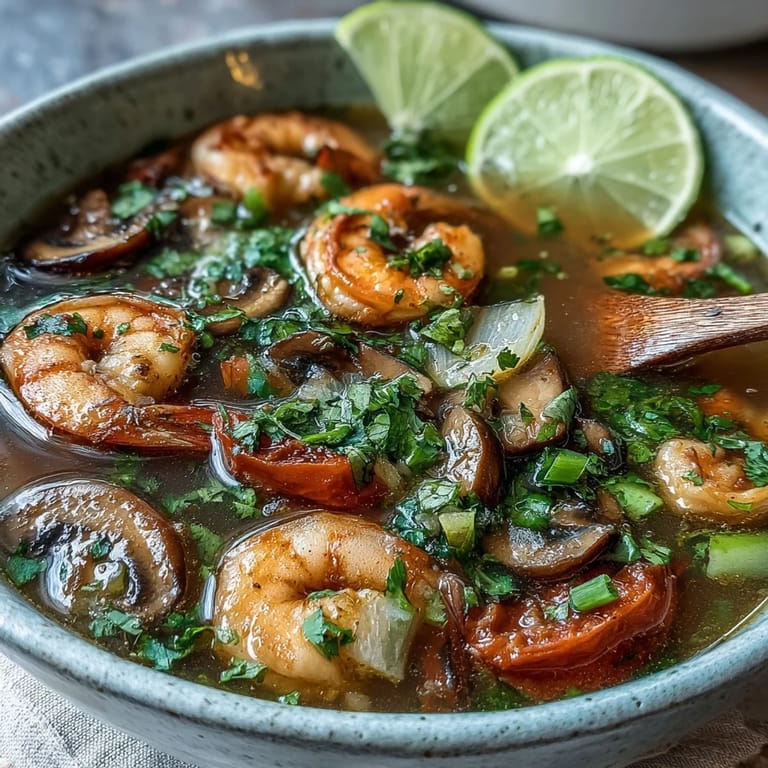
- Add your shrimp (or tofu) and watch closely—shrimp should turn pink and firm in just 2 to 3 minutes, and overcooked shrimp becomes rubbery fast. If using tofu, let it warm through gently since it doesn't need cooking, just heating.
- Season to balance:
- Stir in the fish sauce, fresh lime juice, sugar, and chili paste if using, then taste and adjust immediately. This is the moment where you make it yours—some people want more sourness, others more heat, and that's perfectly fine.
- Finish and serve:
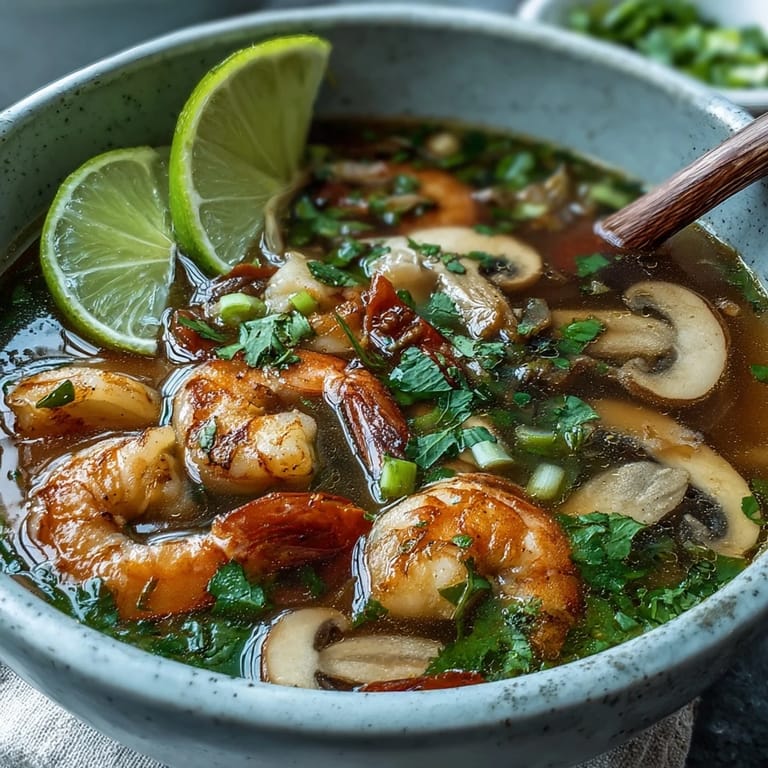
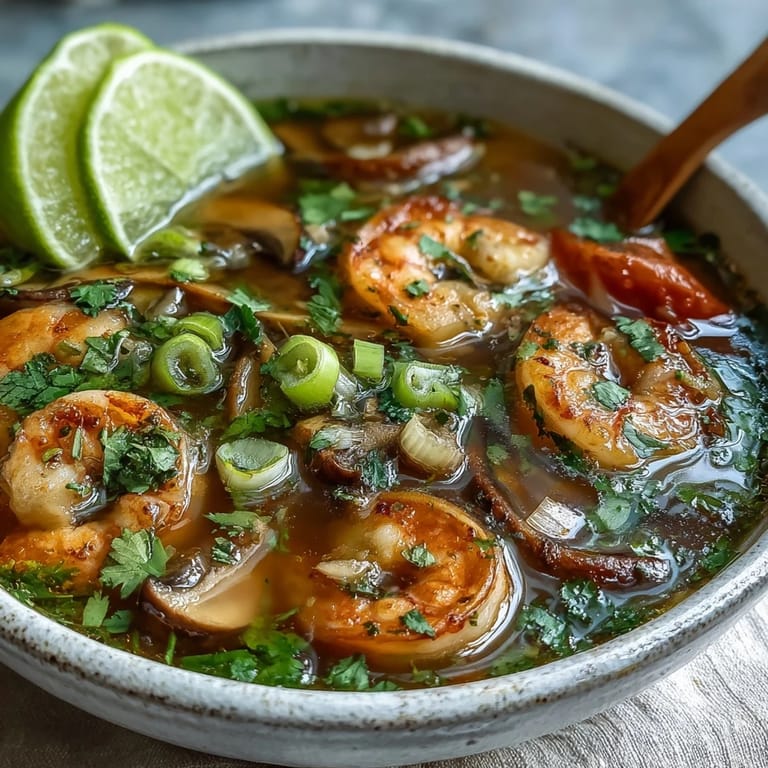
- Remove the pot from heat, ladle the soup into bowls, and top each one with a scatter of fresh cilantro, sliced green onions, and a lime wedge on the side. Let people squeeze in as much lime as they want right at the table.
 Save
Save 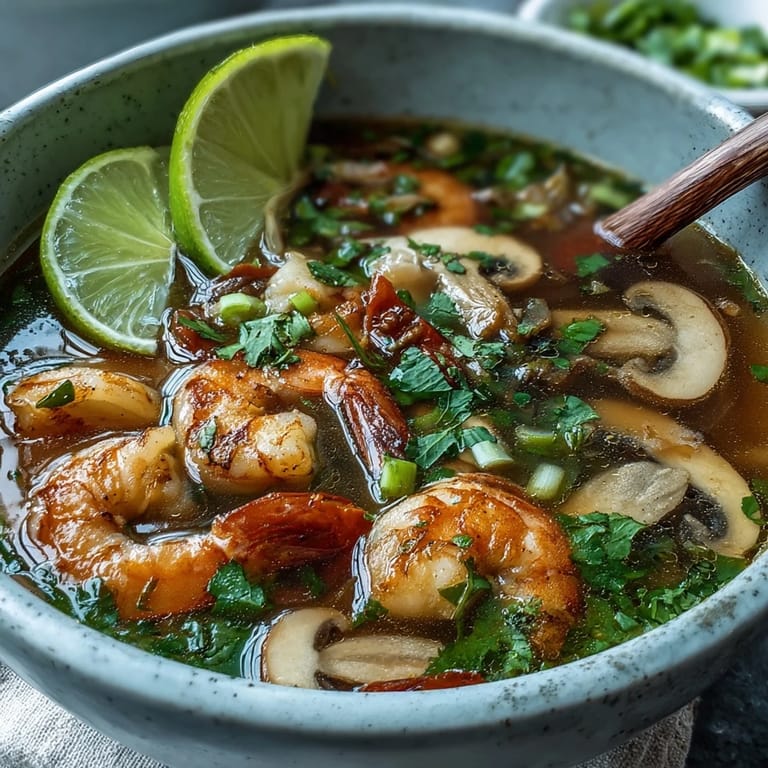 Save
Save There's a moment in making this soup when all the elements suddenly come together and you can smell that unmistakable Tom Yum fragrance filling your kitchen—that's when you know you're on the right track. It's that aromatic hug that reminds you why people fall in love with Thai cooking.
Finding Your Heat Level
Thai bird's eye chiles are genuinely spicy, so if you're not confident about heat tolerance, start with one and add the second only if you're brave. I learned this the hard way when I added all three to a pot meant for someone who barely eats spicy food, and let's just say they spent the next hour with a glass of milk in hand. Now I always let people choose their own chiles or add extra at the table with chili flakes instead.
Ingredient Swaps That Actually Work
If you can't find kaffir lime leaves, zest a regular lime into the broth and you'll capture some of that brightness, though the flavor won't be quite identical. Galangal is harder to replace authentically, but fresh ginger adds warmth even if it's missing that peppery note that makes galangal special. The beauty of Tom Yum is that it's forgiving enough to work with what you have, though the ingredient quality does matter.
Making It A Full Meal
Tom Yum soup on its own makes a beautiful light supper, but pair it with jasmine rice and suddenly you have something more substantial and deeply satisfying. Some people add a dollop of soy-marinated mushrooms or a side of stir-fried vegetables to round out the table. The soup also works beautifully as an elegant first course if you're cooking for guests and want to impress them without spending hours in the kitchen.
- Serve with steamed jasmine rice for a heartier meal that lets people control soup-to-rice ratio.
- Have extra lime wedges and fresh cilantro at the table so everyone can customize their bowl.
- Make a double batch because it reheats beautifully and actually tastes even better the next day.
 Save
Save 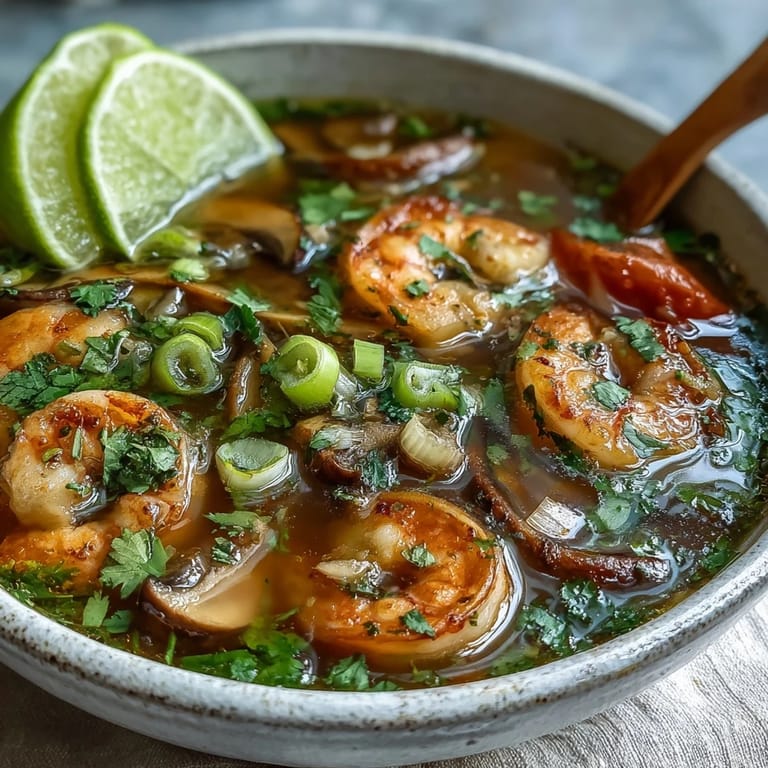 Save
Save Once you make Tom Yum even once, you'll understand why it's become such a beloved soup across the world. It's bold enough to feel special but simple enough that anyone can make it feel homemade.
Recipe Guide
- → Can I make Tom Yum vegetarian?
Yes, substitute vegetable stock for chicken stock, use tofu instead of shrimp, and replace fish sauce with soy sauce. The flavors remain vibrant and satisfying.
- → How spicy is Tom Yum?
The spice level depends on the Thai chiles used. Start with 1-2 chiles and adjust to your preference. Remove seeds for milder heat or leave them in for more intensity.
- → What makes Tom Yum sour?
Fresh lime juice provides the signature sour element. Adjust the amount to achieve your preferred balance between sour, spicy, and savory notes.
- → Can I prepare Tom Yum in advance?
The broth base can be made ahead and refrigerated for 2-3 days. Add fresh protein and vegetables when reheating, and finish with lime juice just before serving.
- → What proteins work best in Tom Yum?
Shrimp is traditional and cooks quickly. Alternatively, use firm tofu, chicken slices, or seafood like fish fillets. Adjust cooking time accordingly to avoid overcooking.
- → Is galangal essential?
Galangal provides authentic Thai flavor, but fresh ginger makes an acceptable substitute if unavailable. Both add aromatic depth and subtle warmth to the broth.