 Save
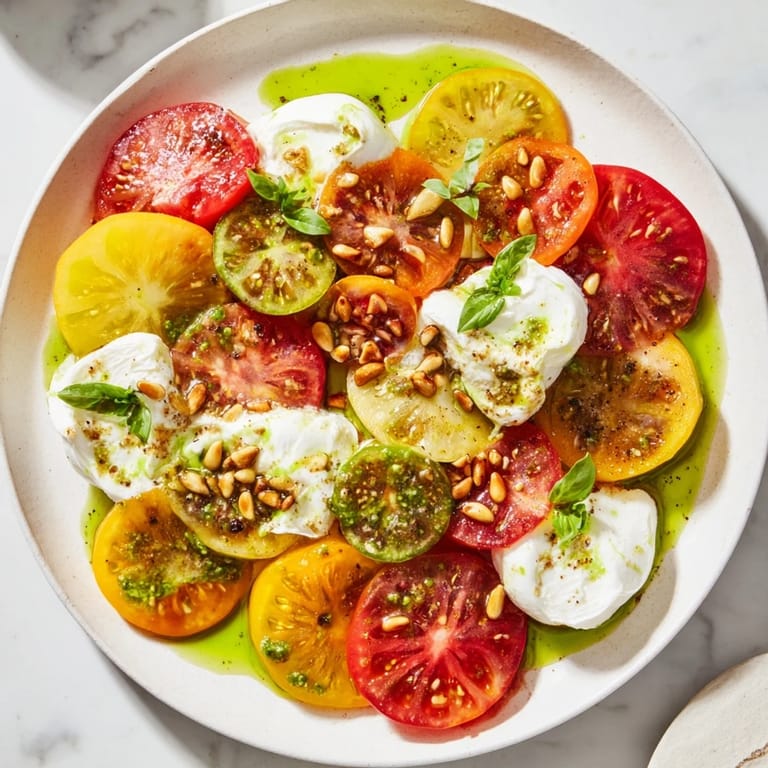
Save There's something about summer that makes you want to stop cooking entirely. One July afternoon, my neighbor appeared with a basket of heirloom tomatoes so beautiful I almost didn't want to cut them, but that moment of hesitation passed the second I realized what they deserved: burrata, good oil, and nothing else pretending to be complicated. The salad board became less about feeding people and more about letting those tomatoes be the star they already were.
I served this at a potluck once where everyone else brought casseroles, and I watched someone's face when they bit into a warm tomato with that cool, flowing burrata center. They closed their eyes. No words. That's when I understood this wasn't just a salad—it was permission to let simple things be enough.
Ingredients
- Assorted heirloom tomatoes (800 g, about 1.75 lbs): Buy whatever colors catch your eye at the market—they don't need to be perfect. Slight cracks and odd shapes are where the flavor lives, honestly.
- Fresh burrata cheese (2 balls, 250 g total): This is the whole point, so don't skip it or swap it for regular mozzarella. Burrata has that creamy, almost liquid center that makes everything magic.
- Fresh basil leaves, packed (1 cup): Basil oil is what elevates this from nice to unforgettable, so use leaves that smell vibrant and green, not bruised or dark.
- Extra-virgin olive oil (100 ml, about 1/3 cup plus 1 tablespoon): This is tasted raw, so spend a little here on oil you actually like. Your palate will know the difference.
- Small garlic clove (1): Just a whisper of garlic in the basil oil—too much and it bullies the delicate flavors.
- Salt: Pinch for the oil, plus flaky sea salt for finishing. Flaky salt tastes better sprinkled on at the end than fine salt mixed in.
- Freshly ground black pepper, to taste: Grind it yourself if you can. It makes a small but real difference.
- Toasted pine nuts (1 tablespoon, optional): If you use them, toast them yourself—they go from perfect to bitter fast, so watch them like a hawk.
- Fresh basil leaves for garnish: A few whole leaves scattered at the end look better than what went into the oil.
- Crusty bread or crostini, for serving (optional): Honestly optional, but it gives people something to do with their hands and soaks up the good oil that pools at the bottom.
Tired of Takeout? 🥡
Get 10 meals you can make faster than delivery arrives. Seriously.
One email. No spam. Unsubscribe anytime.
Instructions
- Make the basil oil:
- Combine basil, olive oil, garlic, and a small pinch of salt in a blender, then blend until it's bright green and smooth. If you want it silky, strain it through a fine sieve into a bowl—this step feels fussy but it's worth it for the presentation.
- Set up your canvas:
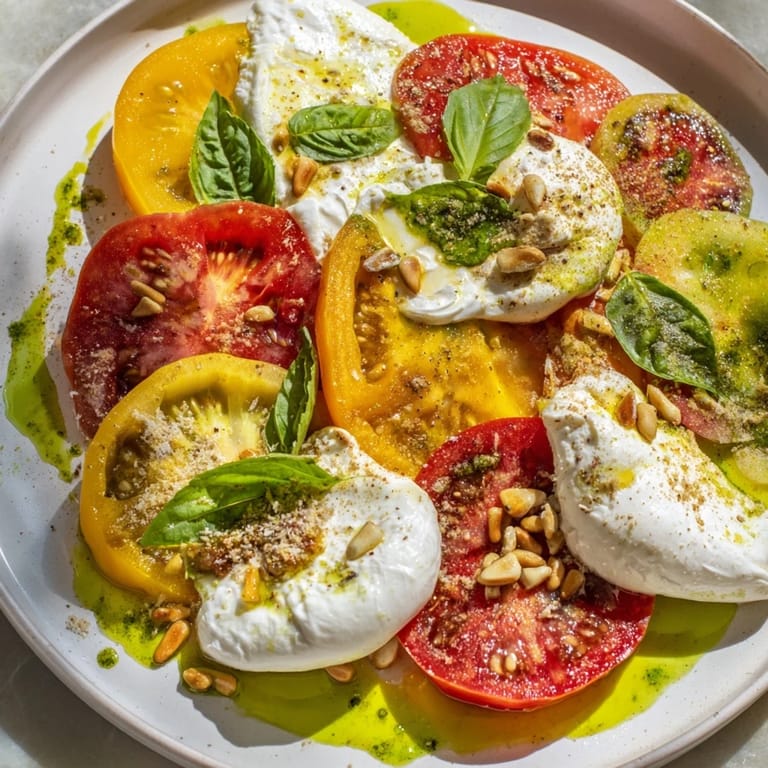
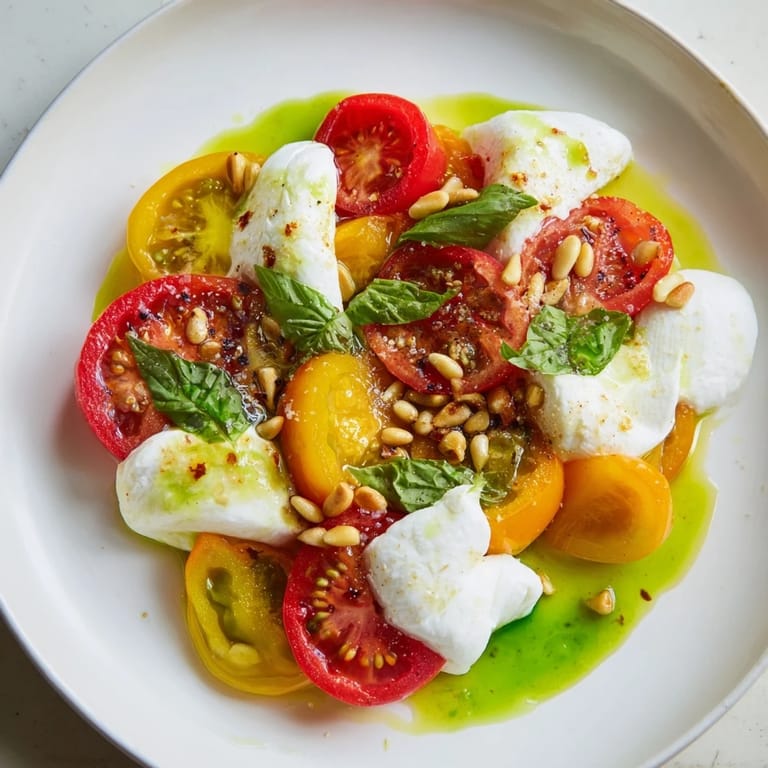
- Choose a board or platter large enough that things don't look cramped. Arrange tomato slices and halves across it, overlapping them slightly to show off the colors and let people see what they're choosing.
- Welcome the burrata:
- Tear burrata into large, generous pieces and scatter them among the tomatoes. Don't try to be neat—the imperfect arrangement is where the charm lives.
- Drizzle with intention:
- Pour that basil oil over everything in a generous, meandering pattern. This isn't just about flavor—it's about making the board look alive.
- Season with confidence:
- Sprinkle flaky salt and black pepper across the whole thing. If using them, scatter toasted pine nuts and fresh basil leaves as final touches.
- Bring it to the table:
- Serve immediately while the tomatoes are still slightly warm and the burrata is soft. Bread or crostini goes on the side for anyone who wants it.
 Save
Save I made this for my dad last summer when he was going through something heavy, and he sat quietly at the table for a long time, just eating tomatoes and burrata with good bread. Later he told me it was the first time in weeks he'd stopped thinking about his problems. Food doesn't need to be complicated to do that.
How to Pick Perfect Tomatoes
The moment I stopped choosing tomatoes by how they looked and started choosing them by how they smelled, everything changed. A good heirloom tomato should smell like summer itself, sweet and deep, even at the stem end. Don't be shy about squeezing them gently—you want ones that give just slightly under pressure, not rock hard or mushy. Colors matter less than you'd think; a dusty-looking green or purple tomato can taste better than a picture-perfect red one.
Building a Board People Actually Want to Eat From
The secret to a board that disappears isn't the ingredients, it's the arrangement. Overlapping tomatoes creates a natural path for the eye and the hand, so people pick things up instead of standing awkwardly wondering what to do. Leave some gaps between the burrata pieces so the basil oil pools in interesting spots. Think of it like you're composing a painting where every brushstroke is edible. The slight imperfection—a tomato slice that doesn't line up perfectly, a burrata tear that's slightly uneven—is actually what makes it look homemade and appealing instead of professionally styled.
Timing and Temperature Matters More Than You Think
This is a dish that lives in a narrow window of perfection. Serve it within 30 minutes of assembly so the tomatoes stay slightly warm and hold their juice, while the basil oil is still vivid and fragrant. If you make it hours ahead, the tomatoes weep all over the board and everything gets soggy and sad. On the flip side, if the tomatoes are ice cold from the fridge, they taste like nothing—give them an hour on the counter before you slice them and the flavor wakes up completely.
- Room-temperature tomatoes taste significantly better than cold ones, even if it means they're not crisp.
- Burrata should never be ice-cold when eaten; take it out of the fridge about 15 minutes before serving.
- Make the basil oil while the tomatoes come to room temperature so everything finishes at the same moment.
 Save
Save Some of the best meals I've shared have been the simplest ones, and this board proves it. When you stop trying to impress people and just let good tomatoes, creamy cheese, and honest oil do their thing, that's when the actual magic happens.
Recipe Guide
- → What types of tomatoes work best?
Assorted heirloom tomatoes with different colors and sizes provide the best visual appeal and flavor variety.
- → Can I substitute burrata cheese?
Yes, fresh mozzarella or vegan cheese alternatives can be used if preferred.
- → How is the basil oil made?
Blend fresh basil leaves with extra-virgin olive oil, garlic, and a pinch of salt until smooth, then strain if desired.
- → Are pine nuts necessary?
Pine nuts add texture and flavor but are optional and can be omitted if desired.
- → What should I serve alongside this salad?
Crusty bread or crostini pairs well, perfect for scooping up the tomatoes and burrata.