 Save
Save I discovered the magic of the marble swirl at a gallery opening where the appetizer table was somehow more memorable than the actual paintings. A friend had arranged these impossibly colorful dips on a single platter, and watching people gravitate toward it before even glancing at the art made me realize something: food as visual art hits differently when it tastes as good as it looks. That night, I asked her exactly how she made it, expecting some intricate technique, and she laughed—"Just dollop and swirl," she said. I've been recreating that moment ever since.
The first time I made this for my book club, someone actually stopped mid-sentence to photograph it. That's when I knew I'd stumbled onto something special—not just because the colors popped, but because it gave permission for people to linger at the food table longer without feeling awkward. A simple platter became the reason everyone stayed late.
Ingredients
- Classic hummus: The neutral anchor that lets other colors shine without competing for attention.
- Beet hummus: Creates that deep magenta shock of color; use good quality or make your own for richer hue.
- Spinach or basil pesto hummus: Adds an earthy, almost sophisticated green that keeps the whole thing from feeling too sweet.
- Roasted red pepper dip: Brings warmth and brightness that ties the whole palette together beautifully.
- Greek yogurt: The secret weapon for creating those extra marble veins that catch the light.
- Black sesame rice crackers: Sound fancier than they are, pair visually with beet hummus, and have an almost nutty finish.
- Beetroot crisps: Naturally gluten-free, impossibly crispy, and their color echoes the beet dip without being redundant.
- Spinach or kale crackers: Green to match the pesto, sturdy enough to hold generous scoops without breaking.
- Classic water crackers: The bridge between all the bold flavors, neutral enough to let each dip taste like itself.
Tired of Takeout? 🥡
Get 10 meals you can make faster than delivery arrives. Seriously.
One email. No spam. Unsubscribe anytime.
Instructions
- Gather your palette:
- Arrange all five dips in small bowls around your work surface so you can reach them easily. This is when I always step back and look at the colors together—it's the moment you realize how beautiful they are before anything gets mixed.
- Create your base:
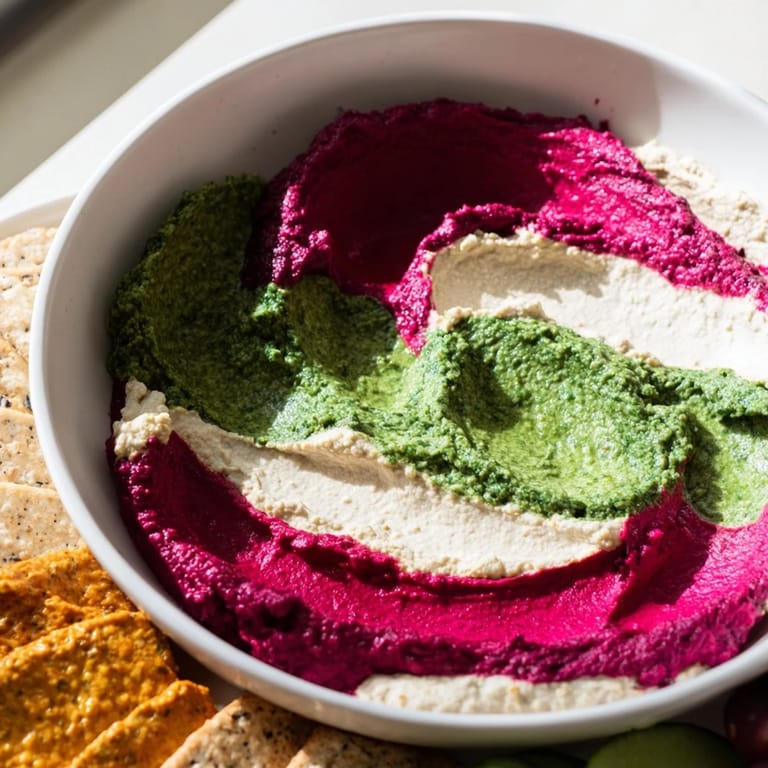
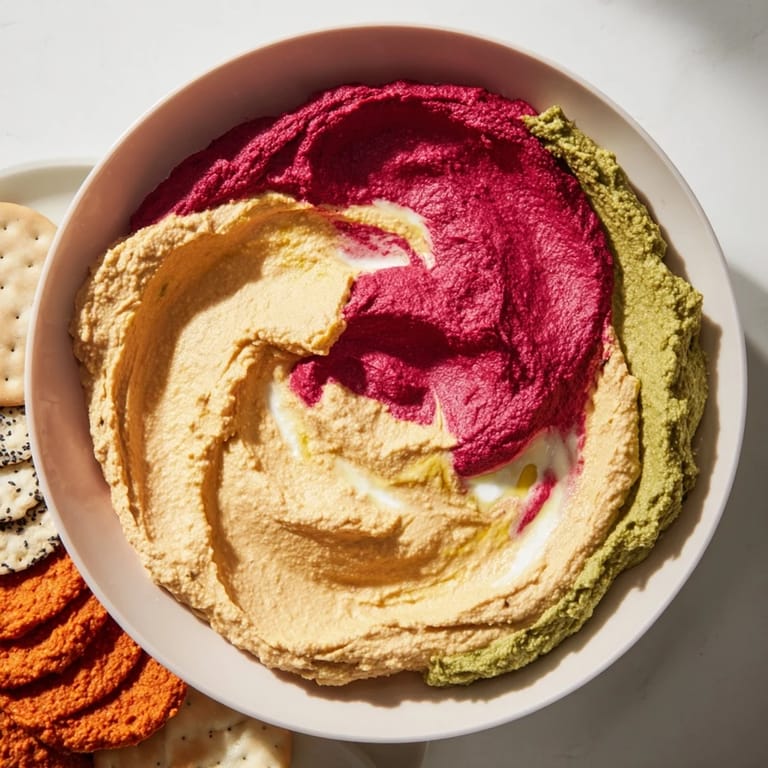
- On your serving platter, dollop spoonfuls of each dip in a loose, random pattern, alternating colors as you go. Think less "organized" and more "intentional chaos"—your aim is visual interest, not mathematical precision.
- Swirl with intention:
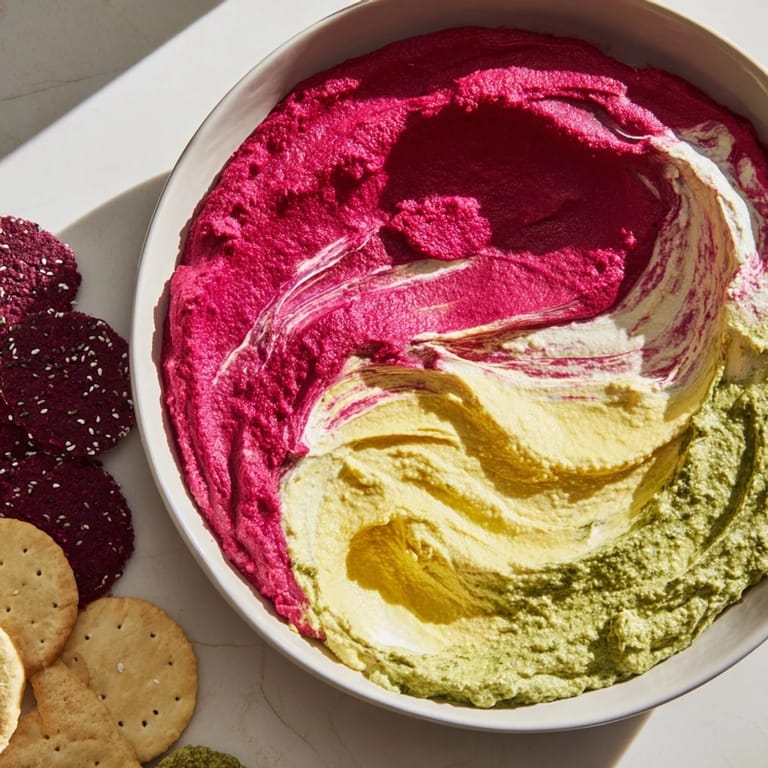
- Take a butter knife or the back of a spoon and gently drag it through the dips in loose, curved motions to create those distinctive marble lines. Pull from one color toward another without fully blending them; the streaks are what make this work.
- Add the yogurt accent:
- Drizzle spoonfuls of plain Greek yogurt across the surface and make a few gentle swirls to create additional white marble veins. This step feels almost meditative—it's where you can step back and admire what's happening before you finish.
- Frame with crackers:
- Arrange crackers in small grouped clusters around the edges of the platter, positioning each type near its complementary dip color. Leave the center feeling open so the marble pattern breathes.
 Save
Save I learned something unexpected watching my sister serve this at her daughter's birthday party—three-year-olds don't care about the marble effect at all. But their parents did, lingering long enough to actually talk to each other while their kids snacked happily. Sometimes the best recipes are the ones that create space for connection, not just for eating.
The Art of the Swirl
The actual technique is simpler than it sounds, but there's a rhythm to it that takes maybe three attempts to find. You're not creating a Jackson Pollock painting; you're making elegant, organic-looking curves that suggest depth and intentionality. I usually think of ocean waves or the rings inside a geode—natural patterns that developed without overthinking. The knife should move slowly enough that you can see the colors separating but confidently enough that you're not tentatively poking at your work.
Building Your Color Palette
The beauty of this recipe is how adaptable it is to whatever dips and crackers call to you in the market that day. I've made versions with turmeric hummus for golden tones, white bean dip for creaminess, or even a smoky eggplant dip for deeper complexity. The crackers don't have to match perfectly either—they just need to echo the general color family so the whole thing feels intentional rather than random.
Timing and Serving
This is a recipe that rewards you for being slightly lazy about timing. You can assemble it up to four hours ahead and let it sit in the refrigerator; the dips actually firm up slightly, making swirling even easier. Bring it out fifteen minutes before guests arrive so nothing tastes cold and distant. Small spoons matter more than you'd expect—they give people permission to take generous scoops and try every color without commitment.
- Make this no more than a few hours ahead to keep the marble pattern looking intentional and fresh.
- If you're nervous about the swirling, practice one quick pass with the knife before you're watching an audience.
- Have extra crackers nearby because people will always eat more than you predicted.
 Save
Save There's something deeply satisfying about serving food that looks like it belongs in a design magazine but tastes like something you'd crave on a random Tuesday. This marble swirl has taught me that the best entertaining happens when you stop trying so hard and let simple ingredients do their quiet magic.
Recipe Guide
- → How do I achieve the marbled swirl effect?
Dollop each dip randomly on the serving platter, then gently swirl together using a butter knife or spoon's back, being careful not to overmix to keep distinct colors visible.
- → Can I use vegan alternatives for the yogurt?
Yes, substitute plain Greek yogurt with coconut yogurt or another plant-based option to maintain the swirl effect and accommodate vegan preferences.
- → What crackers pair best with these dips?
Use a variety such as black sesame rice crackers, beetroot crisps, spinach or kale crackers, and classic water crackers to complement the flavors and colors of the dips.
- → Is this dish suitable for gluten-free diets?
Yes, by selecting gluten-free crackers and checking ingredient labels, you can make this an accessible option for gluten-sensitive guests.
- → How long can leftovers be stored?
Store leftovers in an airtight container in the refrigerator and consume within 2-3 days for best freshness and flavor.
- → Any tips for presentation enhancements?
Garnish with edible flowers or fresh herbs to add visual interest and complement the natural colors of the dips and crackers.