 Save
Save I stumbled onto jar meals during a chaotic Monday when I'd promised myself I'd stop buying expensive lunch salads. Standing in my kitchen at 6 AM, half-asleep and staring at leftover rotisserie chicken, I remembered reading about layering noodles in mason jars. What started as pure desperation became a quiet obsession—suddenly I had four jars lined up on my fridge, waiting like little edible puzzles. Each one felt like a tiny promise to myself that this week, I'd actually eat well.
I made these for my sister's work trip and she texted me from the airport that she'd just opened one of the jars while sitting gate-side, and people kept asking her what smelled so incredible. That's when I knew I'd accidentally created something small but genuinely good—not fancy, just thoughtful enough that someone wanted to eat it even when rushed.
Ingredients
- Dried ramen or rice noodles (200 g): Cook them until they're tender but still have a tiny bit of spring to them—oversoftness is the enemy of leftovers.
- Cooked chicken breast, tofu, or shrimp (200 g, diced): Cold protein keeps the layers intact and gives you something substantial to bite into.
- Shredded carrots (1 cup): Their sweetness balances the sauce and they hold texture beautifully all week.
- Thinly sliced bell peppers (1 cup, red or yellow): Raw vegetables stay crisp because they're layered above the warm elements.
- Baby spinach or kale (1 cup): Kale is tougher and lasts longer if you're eating on day four.
- Thinly sliced scallions (1/2 cup): The fresher you slice them, the more their onion bite cuts through the richness of the sauce.
- Bean sprouts (1/2 cup): Add these last if you love crunch, or pack them separately if you prefer them softer.
- Soy sauce (4 tbsp, or tamari for gluten-free): This is your base—don't skimp on quality or the whole thing tastes muted.
- Rice vinegar (2 tbsp): It keeps everything bright and prevents the jar from tasting flat by day three.
- Sesame oil (2 tbsp): Use the toasted kind and go easy—a little goes impossibly far.
- Honey or maple syrup (1 tbsp): Just enough sweetness to round out the corners of the sauce.
- Sriracha or chili sauce (2 tsp, optional): I learned the hard way that people have very different spice thresholds, so keep it as an optional finisher.
- Minced garlic (1 clove) and grated ginger (1 tsp): Fresh is crucial here—jarred garlic tastes tired by day two.
Tired of Takeout? 🥡
Get 10 meals you can make faster than delivery arrives. Seriously.
One email. No spam. Unsubscribe anytime.
Instructions
- Cook the noodles until just tender:
- Follow the package timing but subtract 30 seconds—you want them soft enough to eat but firm enough to stand up to a week in liquid. Drain and run them under cold water until they're completely cool, then pat them dry with a clean kitchen towel so they don't turn into mush.
- Build your sauce with confidence:
- Whisk soy sauce, rice vinegar, sesame oil, honey, garlic, ginger, and Sriracha (if using) in a bowl until the honey dissolves and everything smells like you're about to make something really good. Taste it before dividing it up—this is your one chance to adjust heat or saltiness.
- Divide the sauce evenly:
- Pour about 3 to 4 tablespoons of sauce into each mason jar—this is the foundation that keeps everything from drying out all week. Eyeballing it works fine, but consistency across jars means every lunch hits the same.
- Layer with intention, starting from the bottom:
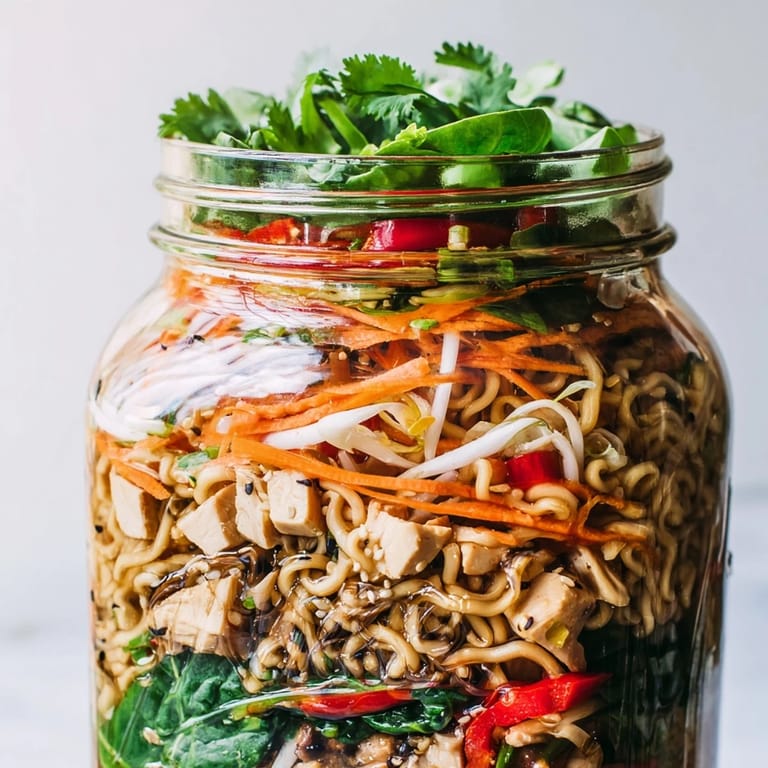
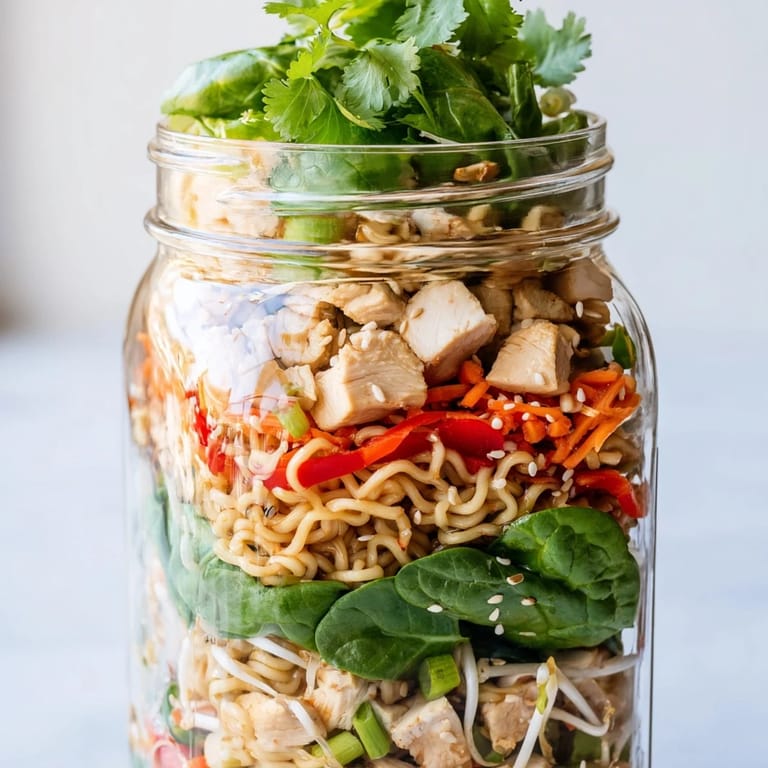
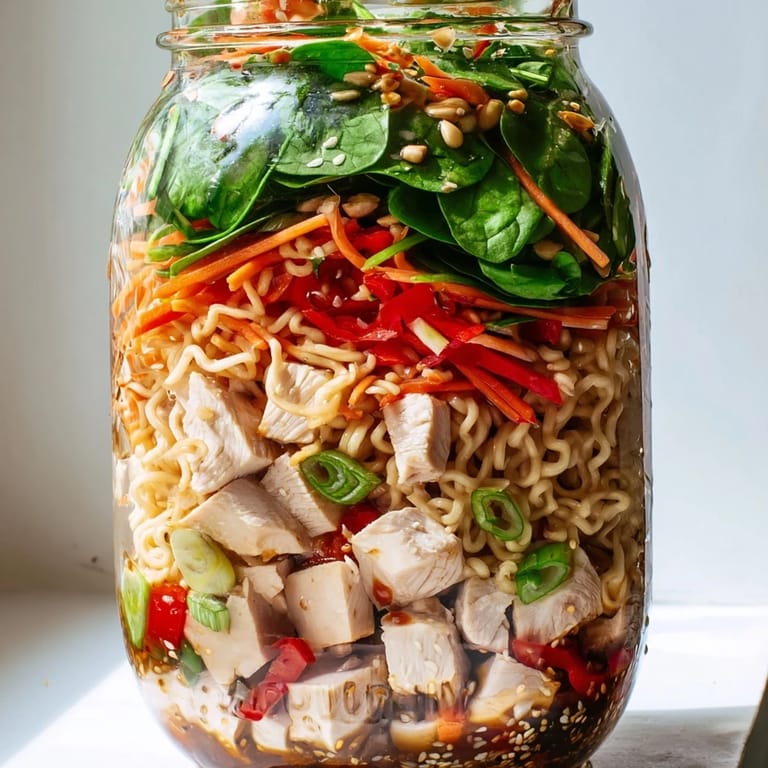
- Protein first (it can handle sitting in liquid), then your raw vegetables in whatever order feels natural, then noodles crowning the top so they don't get waterlogged. The key is that denser, sturdier items go deeper and delicate things stay on top.
- Seal and refrigerate until hunger calls:
- Make sure the lids are tight so nothing spills when you're shoving the jar into a bag. They'll keep perfectly for four days, and on day five they're still technically fine but the noodles start getting a little too soft.
- When you're ready to eat, pour hot water and wait:
- Remove the lid, add whatever toppings feel right today, and pour in about half a cup of hot (not boiling) water—it rehydrates the noodles and warms everything without cooking the delicate vegetables. Let it sit for two minutes so the heat reaches the bottom, then stir and enjoy straight from the jar or transfer to a bowl if you're being civilized.
 Save
Save There's something almost meditative about assembling four of these in a row—the repetitive rhythm of dicing, layering, sealing. I've made them when I was frustrated, when I was organized, when I was running late, and somehow they always turn out. It's the kind of meal that doesn't ask for much but delivers quietly, every single time.
The Art of Customization
The beauty of these jars is that they're a template, not a rule book. I've made versions with peanut butter sauce when I wanted something richer, swapped the spinach for broccoli slaw when that's what I had, used leftover shrimp from takeout when I was feeling resourceful. The only thing that truly matters is respecting the layering logic and not skipping the sauce. Everything else is negotiable based on what's in your fridge and what your body's actually craving that week.
Timing and Storage Reality
Twenty minutes of actual hands-on time means these fit into real life, not some fantasy version where you're always prepared. I usually make them on Sunday evening while listening to a podcast, which means Monday through Thursday I have one less decision to make. The jars stack neatly on a shelf, and they become this quiet backup plan that makes getting through a busy week feel slightly more manageable, like someone's looking out for you.
Making It Your Own
The variations are honestly endless once you understand the foundation. Some days I add a drizzle of peanut butter to the sauce for richness, other times I layer in crispy tofu instead of chicken, or swap the rice vinegar for lime juice. The noodles can be ramen, rice noodles, or even spiralized zucchini if you're going low-carb. Top with crushed peanuts for crunch, fresh cilantro for brightness, sesame seeds because they taste and look good, or just a squeeze of lime. The structure stays the same, but the story changes every time you make them.
- Try swapping tamari for regular soy sauce if you're avoiding gluten and want peace of mind on labels.
- Pack crunchy toppings separately if you're eating on day four and want them to stay crispy.
- Use shirataki noodles or spiralized vegetables for a lower-carb version that still feels completely satisfying.
 Save
Save These jars have become my quiet way of taking care of myself on busy weeks, a small ritual that says I'm worth feeding well even when life gets loud. There's a lot of peace in opening the fridge and seeing them waiting.
Recipe Guide
- → What noodles work best for this mason jar meal?
Dried ramen or rice noodles are ideal because they cook quickly and rehydrate well when hot water is added. Alternatives like spiralized zucchini can be used for low-carb options.
- → Can I substitute the protein used in this meal?
Absolutely. Cooked chicken breast, tofu, shrimp, or edamame all work well, allowing you to tailor the meal to your dietary preferences.
- → How should the jars be prepared and stored?
Layer all ingredients in large mason jars with sauce at the bottom and noodles on top. Seal tightly and store in the refrigerator for up to four days.
- → Is the sauce spicy and can it be adjusted?
The sauce includes optional sriracha for heat, which can be omitted or increased according to taste preferences.
- → How do I serve the meal from the jar?
Remove the lid, add desired toppings, pour about half a cup of hot water into the jar, let it sit for 2-3 minutes, then mix thoroughly before eating straight from the jar or transferring to a bowl.
- → Are there any common allergens to be aware of?
This meal contains soy in the sauce, and may contain nuts if toppings like peanuts or cashews are added. Gluten presence depends on the soy sauce and noodles used.