 Save
Save I stumbled onto this dish at a market in Barcelona, watching a vendor build towering appetizers with such playful precision that I thought, 'That's not just food, that's architecture.' The way crackers caught the light against the hummus reminded me of canyon walls I'd seen in Utah, and that's when it clicked—I could recreate that landscape on a platter at home. What started as a visual whim became something I reach for whenever I want to impress people without the stress of actual cooking.
My sister brought her new boyfriend to dinner, and I set this out as an appetizer without explanation. He stared at it for a full thirty seconds before gently breaking apart a cracker-and-hummus piece, and the way his face lit up—like he'd discovered something—made me realize this dish is less about feeding people and more about giving them a small moment of joy before the meal even begins.
Ingredients
- Classic hummus: Buy it if you're short on time, make it if you love the ritual; either way, this creamy base is everything, so don't skimp on quality.
- Smoked paprika: This is the secret note that makes people ask what's different about the hummus—use it generously.
- Extra-virgin olive oil: The good stuff matters here because it's one of only five real flavors in the dish.
- Ground cumin: A pinch of warmth that ties the whole Mediterranean feeling together.
- Cayenne pepper: Optional, but a whisper of it adds a barely-there heat that keeps things interesting.
- Beige crackers: Whole wheat, sesame, or water crackers work—pick whatever color actually looks like canyon stone to you.
- Toasted sesame seeds: These add crunch and a nutty finish that elevates the whole thing.
- Fresh parsley: Chopped fine, it gives a bright pop of color and a clean taste that cuts through the richness.
- Lemon wedges: Squeeze them over a bite and suddenly everything tastes lighter and more alive.
Tired of Takeout? 🥡
Get 10 meals you can make faster than delivery arrives. Seriously.
One email. No spam. Unsubscribe anytime.
Instructions
- Season the hummus:
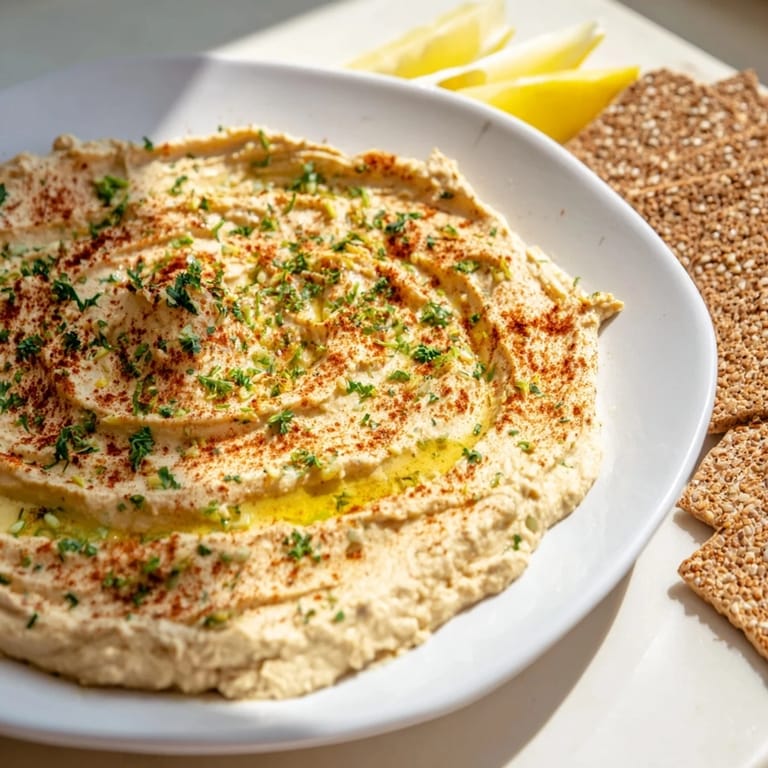
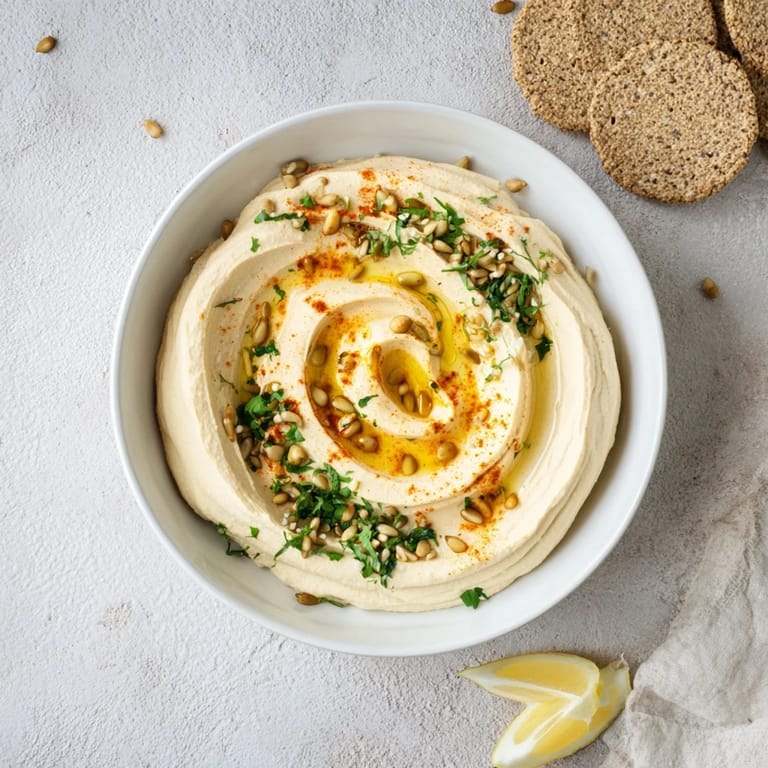
- Mix your hummus with smoked paprika, olive oil, cumin, and cayenne in a bowl until the spices are fully absorbed and the whole thing is a warm, inviting beige. Taste it—you should be excited to eat it straight from the bowl.
- Spread the first canyon floor:
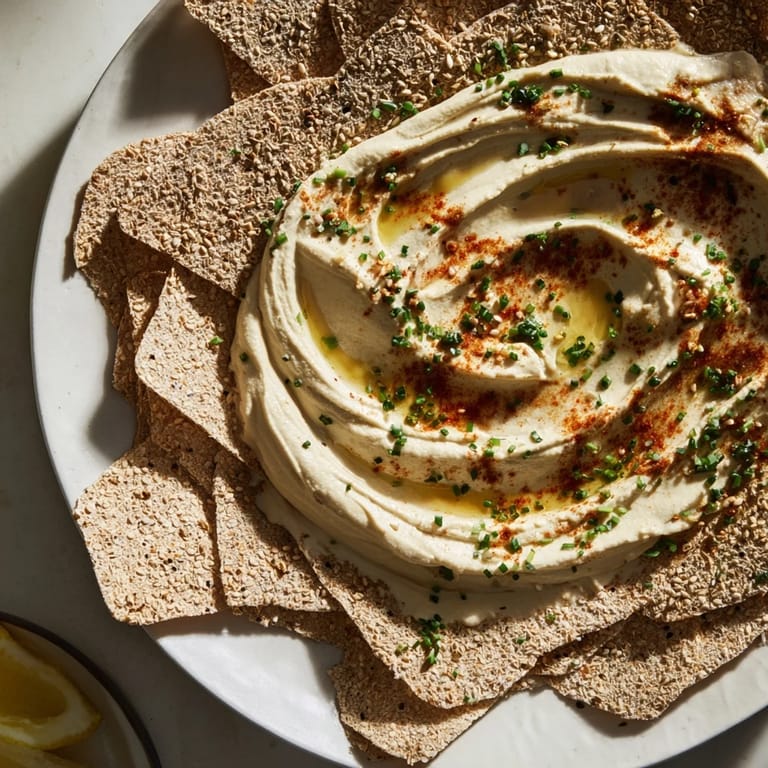
- Spread a thin layer of hummus across your platter in gentle, deliberate waves using a spatula, like you're sculpting something. The ridges and valleys are what make this work, so lean into the imperfection.
- Plant the first wall of crackers:
- Stand crackers upright along the hummus contours, overlapping them slightly so they lean on each other like real canyon walls. This is where the thing starts to look intentional instead of random.
- Build in layers:
- Spread another layer of hummus, then stand more crackers, then repeat two or three times total. The visual depth is what people remember, so make sure you're actually layering, not just stacking.
- Crown it with flavor:
- Sprinkle toasted sesame seeds and fresh parsley across the top, focusing on the higher points where they'll catch light and make the whole thing glow a little.
- Finish and serve:
- Set lemon wedges around the platter for people to squeeze over bites. Serve immediately so the crackers stay crisp and the hummus stays cool.
 Save
Save A friend once told me that the best appetizers are the ones that make people pause before eating because they're genuinely unsure if they're supposed to admire it or devour it. That's exactly what this dish does, and I've learned that giving people that moment of wonder is sometimes more valuable than any flavor.
Playing with Texture
The contrast between smooth hummus and crisp crackers is the whole point, so protect it fiercely. I learned this the hard way when I made this for a party and it sat out for two hours—the crackers went from satisfying crunch to disappointing mush. Now I serve it within an hour, and people get that genuine textural experience that makes them go back for more.
Flavor Layers You Can Play With
Once you nail the basic version, the fun begins. I've swirled roasted red pepper hummus between layers, scattered pomegranate seeds on top, even drizzled a tiny bit of pomegranate molasses for a sweet-tart note that surprised everyone. The beauty of this dish is that it's a canvas—the Mediterranean base is strong enough to handle experimentation without falling apart.
Serving and Storage Wisdom
Make the hummus mixture up to a day ahead and store it covered in the fridge, then assemble everything right before guests arrive. This way you get the stress-free prep advantage without sacrificing the visual impact or that crucial cracker crunch.
- If you're making this gluten-free, most specialty crackers work just as well and actually have more interesting textures.
- For a vegan version, confirm your hummus and crackers are plant-based, and suddenly this works for almost any dietary restriction.
- Leftovers (if there are any) are best eaten within a couple hours, hummus and crackers separate.
 Save
Save This dish taught me that sometimes the most memorable meals start with something completely unpretentious that just happens to look like art. Serve it with confidence and watch people's faces.
Recipe Guide
- → What spices enhance the hummus layers?
Smoked paprika, ground cumin, and a touch of cayenne pepper add warmth and depth to the hummus layers.
- → Can this be made vegan-friendly?
Yes, by choosing vegan-friendly crackers, this layered hummus and cracker arrangement suits vegan diets.
- → What types of crackers work best?
Whole wheat, sesame, or water crackers with a beige tone complement the hummus and create the canyon effect well.
- → How do I create the canyon effect with the layers?
Spread hummus in wavy ridges on a serving platter, then stand crackers upright following the contours, layering multiple times for depth.
- → What garnishes add visual and flavor appeal?
Toasted sesame seeds and chopped fresh parsley provide texture and color, while lemon wedges add a zesty finish.