 Save
Save There's something about the moment when day-old sourdough hits hot oil and transforms into something entirely new—crispy on the outside, still tender within. My neighbor brought over a half-eaten loaf one afternoon, apologizing for the overbake, and I realized it was actually perfect for this. That's when I learned that yesterday's bread isn't a consolation prize; it's exactly what croutons demand.
Last winter, I made this for a dinner party where everyone was glued to their phones between courses. Then the soup arrived with these golden croutons floating on top, and suddenly there was actual conversation—people were genuinely fighting over who got the biggest pieces. That's when I knew these weren't just a topping; they were the whole reason someone would come back to your table.
Ingredients
- Sourdough bread: Day-old is non-negotiable; fresh bread will turn to mush instead of crisping up, so plan ahead or slice it and let it sit overnight on the counter.
- Olive oil or melted butter: Olive oil keeps things lighter and lets the sourdough tang shine through, but butter adds a richness that makes them almost indulgent.
- Garlic clove, minced: One clove is enough to perfume everything without overpowering, but if you love garlic like I do, don't be shy about adding a second.
- Sea salt and freshly ground black pepper: Freshly cracked pepper makes all the difference—pre-ground tastes stale in comparison and dulls the whole experience.
- Dried thyme or herbes de Provence: Optional, but a light dusting brings this closer to authentic French bistro flavors without feeling heavy.
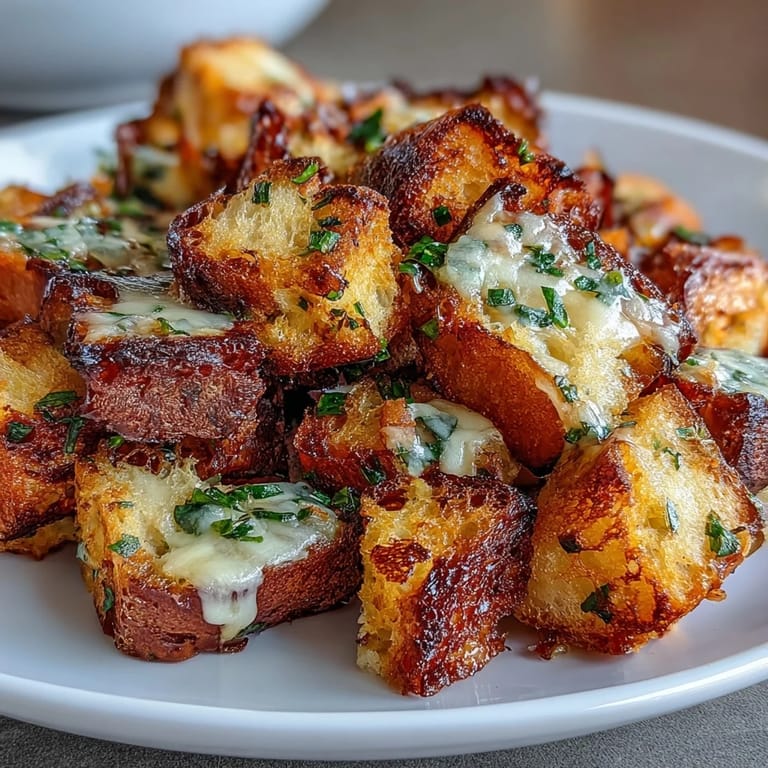
- Grated Gruyère or Emmental cheese: The optional cheese step transforms these from crispy to luxurious; the moment it melts into the gaps creates little pockets of salty goodness.
Tired of Takeout? 🥡
Get 10 meals you can make faster than delivery arrives. Seriously.
One email. No spam. Unsubscribe anytime.
Instructions
- Warm your oven:
- Preheat to 375°F (190°C) and line a baking sheet with parchment paper. This matters more than you'd think because cold pans lead to soggy bottoms.
- Build your seasoning mixture:
- In a large bowl, whisk together the oil or melted butter with minced garlic, salt, pepper, and herbs if you're using them. Take a moment to smell this—it's already telling you the direction this is heading.
- Coat every piece:
- Add your bread cubes and toss until every single one is touched by the oil mixture. Don't leave any naked edges; they'll stay soft and disappoint you.
- Spread in a single layer:
- Transfer to your baking sheet without crowding—they need room to breathe and crisp up evenly. Overlapping pieces will steam instead of roast.
- Toast until golden:
- Bake for 15–18 minutes, stirring once halfway through. You'll know they're ready when they sound hollow and look deeply golden at the corners.
- Add cheese if you're feeling it:
- Sprinkle Gruyère over the hot croutons and return to the oven for 2–3 minutes until it melts into rivers between the cubes. Skip this step if you want to store them, since cheese makes that impossible.
- Cool before serving:
- Let them rest for a few minutes so they firm up completely and won't immediately soften in the soup's heat.
 Save
Save These croutons have a way of making soup feel like an occasion instead of just dinner. My daughter once said they were the only reason she'd eat onion soup, and I took that as a compliment to this recipe, not the soup itself.
The Sourdough Advantage
Regular bread will work, but sourdough has a natural tang that echoes through the buttery, cheesy richness of French onion soup. The fermentation also creates a structure that holds up better during toasting, staying crisp longer instead of softening midway through your meal. Every time I use a plain baguette by accident, I'm reminded why sourdough matters here.
Storage and Make-Ahead Strategy
These keep beautifully in an airtight container for three days, which means you can make them the morning of a dinner party and have one less thing to worry about. Don't add cheese if you're storing them—it gets sticky and weird after a day. They're best added to soup right before serving so they stay crispy, and if they've gone soft from steam, popping them back in a 300°F oven for five minutes revives them completely.
Flavor Variations Worth Trying
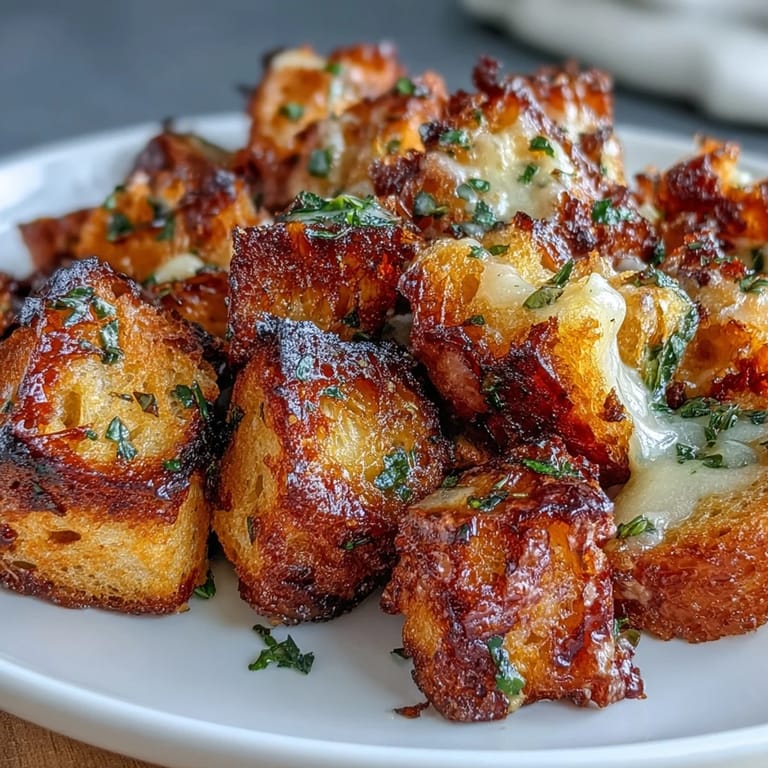
Once you've mastered the basic version, the door opens to endless experimentation. I've topped these with Comté instead of Gruyère and noticed a nuttier finish, or swapped thyme for rosemary when I had a bunch getting leggy in the garden. You could even dust them with smoked paprika for depth, or finish with a whisper of Dijon powder if you want a sharper edge that cuts through the soup's sweetness.
- Toss in grated Parmesan for a sharper, more assertive cheese flavor that stands up better to strong broths.
- Rub raw garlic directly on the bread cubes before oiling for a bolder, almost aggressive garlic presence.
- Make them the day before and store in an airtight container to free up oven space on dinner day.
 Save
Save Croutons are proof that the smallest components can steal the show. Float these on French onion soup and watch people forget they even came for the soup.
Recipe Guide
- → What type of bread works best for these croutons?
Day-old sourdough bread cut into 1-inch cubes provides the best texture and flavor for these croutons.
- → Can I use butter instead of olive oil?
Yes, melted unsalted butter can replace olive oil to add a richer taste and crisp finish.
- → How do I get croutons extra crispy?
Bake the bread cubes evenly spread on parchment at 375°F, stirring halfway, until golden and crisp.
- → What cheeses pair well if I want to add some?
Gruyère or Emmental melt beautifully over the croutons, adding savory richness and a bubbly top layer.
- → How can these croutons be stored?
Keep cooled croutons in an airtight container for up to 3 days to maintain their crunch and flavor.