 Save
Save I discovered this salad by accident on a Tuesday when I had nothing in the pantry but canned tuna, chickpeas, and a lemon that had been sitting in my fruit bowl too long. I threw it together in fifteen minutes out of pure necessity, expecting something forgettable, but the brightness of that lemon dressing and the way the chickpeas added real substance changed everything. My partner came home, took one bite, and asked when I'd learned to cook like this. I laughed because I hadn't—I'd just stopped overthinking lunch.
I made this for a potluck once, worried it would get lost among the casseroles and pasta salads, but people kept coming back to the bowl. Someone asked for the recipe while actually eating it, phone in hand, which felt like the highest compliment. That's when I realized this wasn't just convenient—it was genuinely delicious in a way that made people slow down and pay attention.
Ingredients
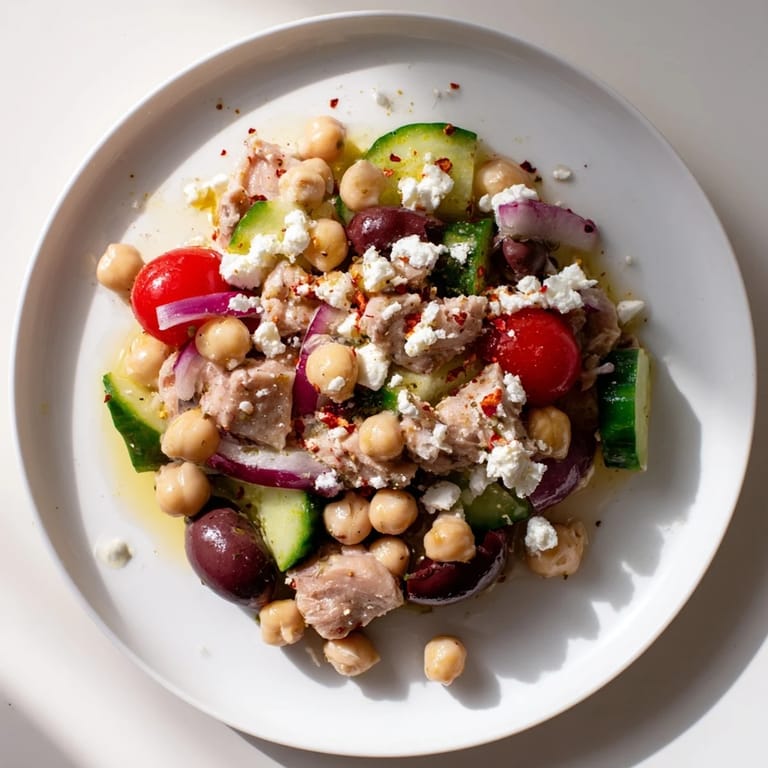
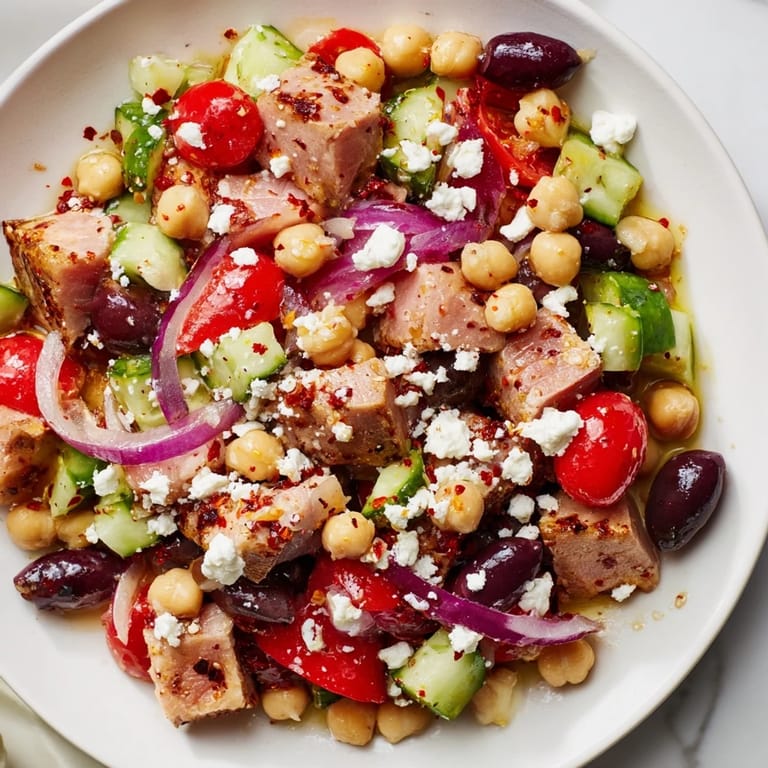
- Chickpeas (one 15 oz can, drained and rinsed): These aren't just filler—they add a creamy texture and enough fiber that you won't feel hungry an hour later, plus they absorb the dressing beautifully if you let them sit.
- Tuna (two 5 oz cans in water, drained): The backbone of your protein, and honestly the drained water version works better here because you want the dressing to coat everything, not compete with extra liquid.
- Cherry tomatoes (1 cup, halved): Their sweetness balances the briny olives and sharp lemon, and halving them instead of quartering means they don't get lost in a forkful.
- Cucumber (1 small, diced): Adds the crunch that makes this feel fresh rather than mushy, and it keeps for days without getting soggy if you dice it right before serving.
- Red onion (1/4, finely chopped): A little goes a long way—this amount gives you bite without overwhelming, and it mellows slightly as it sits with the dressing.
- Fresh parsley (1/4 cup, chopped): Don't skip this thinking it's just decoration; it actually brightens everything and adds a peppery note that makes the whole bowl taste more alive.
- Kalamata olives (1/4 cup, sliced, optional): If you use them, they're worth the trip—they add saltiness and richness that makes the whole thing taste less like health food and more like something you actually want to eat.
- Extra virgin olive oil (3 tbsp): This is where flavor lives; cheap oil will taste cheap, and you notice it in something this simple.
- Fresh lemon juice (2 tbsp): Bottled won't cut it here—fresh lemon is the entire personality of this dressing, so squeeze it yourself.
- Dijon mustard (1 tsp): A tiny amount acts like an emulsifier and adds a subtle tang that keeps the dressing from tasting flat.
- Garlic (1 clove, minced): Raw garlic has bite here, which is exactly what you want, but mince it fine so you don't end up with big chunks.
- Salt and pepper (1/2 tsp salt, 1/4 tsp black pepper): Season to taste; the olives and tuna already bring salt, so taste before you add more.
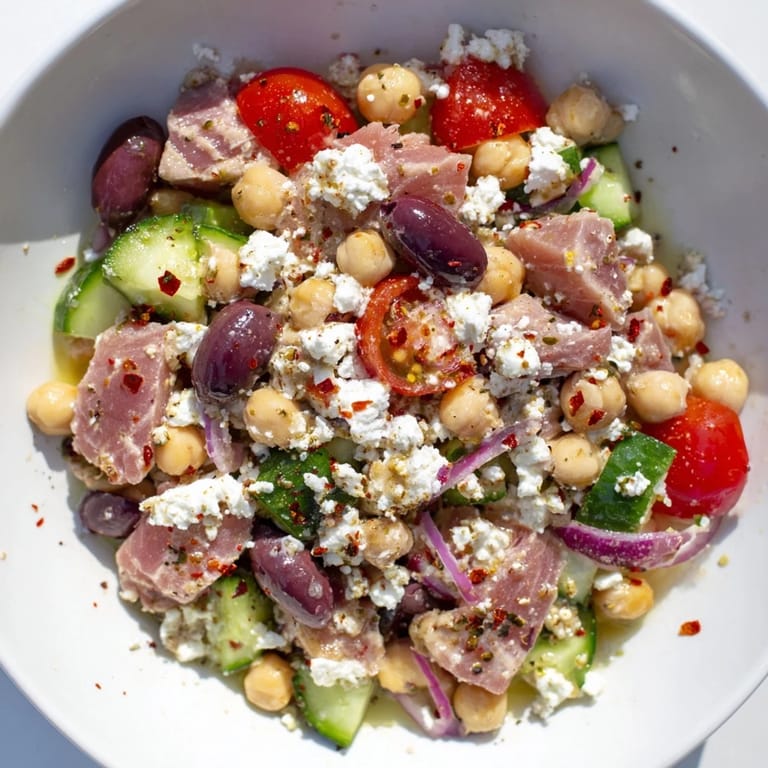
- Feta cheese (1/4 cup crumbled, optional): If you're adding this, crumble it fresh rather than using pre-crumbled, and add it right before serving so it stays dry and distinct.
- Red pepper flakes (a pinch, optional): A tiny amount adds warmth without heat—just enough to make you notice something is there.
Tired of Takeout? 🥡
Get 10 meals you can make faster than delivery arrives. Seriously.
One email. No spam. Unsubscribe anytime.
Instructions
- Build your base:
- Empty your drained chickpeas and tuna into a big bowl, then add the tomatoes, cucumber, red onion, parsley, and olives if you're using them. This takes two minutes and you don't need to overthink the proportions—it all gets tossed anyway.
- Make the dressing:
- Whisk together the oil, lemon juice, mustard, and minced garlic in a smaller bowl until it looks slightly creamy and emulsified, which means the oil and lemon have actually become friends instead of separating. Add salt and pepper, taste it straight from the spoon, and adjust—this is your only chance to get it right before it hits everything else.
- Bring it together:
- Pour the dressing over your salad and toss gently but thoroughly, making sure every chickpea and piece of tuna gets coated. The point is not to make everything uniform but to make sure the dressing reaches everything.
- Finish and serve:
- If you're using feta, crumble it over the top now along with a pinch of red pepper flakes, and eat it right away while the vegetables are still crisp. If you need to hold it, cover and refrigerate—the flavors actually get better after a few hours as everything relaxes into the dressing.
 Save
Save The first time someone told me this salad changed their meal prep routine, I realized it wasn't about being fancy or impressive—it was about tasting good enough that they actually wanted to eat the leftovers instead of ordering takeout. That feeling, knowing something simple you made solved a problem for someone, is what keeps me making it.
Why This Works as Meal Prep
This salad is designed to sit in the fridge without falling apart, which is basically the dream for anyone trying to have actual food ready on busy days. The acid from the lemon dressing actually keeps the vegetables from oxidizing and browning, and the chickpeas and tuna don't get weird or mushy. Make it on Sunday, portion it into containers, and you've got four lunches that taste like you put in effort, even though you really didn't.
Customization Without Losing the Plot
The beauty of this salad is that you can swap things around based on what you have or what you're craving, as long as you keep the basic skeleton intact—the tuna, chickpeas, and that lemon dressing. Bell pepper or celery work if you want more crunch, spinach or arugula underneath changes the vibe entirely, and if dairy isn't your thing, just skip the feta and add an extra handful of olives for the salt. I've even made it with white beans when I was out of chickpeas and it was honestly just as good.
The Small Details That Matter
Somewhere between a recipe and actually cooking it, the little things start to matter—the way you chop an onion, whether you squeeze lemon or pour bottled, if you taste as you go. This salad teaches you that fast food doesn't mean thoughtless food; even fifteen minutes in the kitchen can feel intentional if you pay attention. The satisfying part isn't that you saved time, it's that you made something that actually tastes like it came from caring about what you eat.
- Mince your garlic fine so it distributes evenly rather than showing up as aggressive chunks in random bites.
- Let the finished salad sit for five minutes before eating if you have time; the flavors marry together and everything tastes more cohesive.
- Keep your dressing components separate if you're prepping ahead, then combine right before eating so the lemon doesn't cook the tuna.
 Save
Save This salad has become my answer to the question I used to hate: what's for dinner? It's the kind of recipe that disappears from the bowl because people actually want to eat it, not because they have to. That's all I ever wanted cooking to be.