 Save
Save There's something about the sizzle of a steak hitting a screaming hot pan that instantly transports me back to my uncle's kitchen, where he'd let me watch from the counter while he worked his magic with butter and mushrooms. He never followed a recipe, just moved by instinct, and years later I finally figured out his secret: it wasn't just technique, but that earthy mushroom compound butter melting into every crevice. Now when I make this, I'm channeling that same confidence, the kind that comes from knowing exactly when the pan is ready and how to coax out those deep, caramelized flavors that taste like you've been cooking all day.
I made this for my sister's birthday dinner last spring, and I remember how quiet the table got when everyone took that first bite—the kind of silence that means something just worked perfectly. She looked up from her plate with this expression of pure surprise, like she couldn't believe I'd made it at home, and asked for seconds before anyone else had even finished. That's when I knew this recipe had shifted from something I made to impress people into something that genuinely delivers every single time.
Ingredients
- Boneless ribeye or sirloin steaks (8 oz each, about 1 inch thick): Thicker steaks give you a beautiful window for getting that perfect crust while keeping the inside tender; thin steaks tend to overcook before the butter can work its magic.
- Salt and freshly ground black pepper: Don't be shy here—the seasoning needs to be generous so it sticks to the meat and forms that flavorful crust.
- Olive oil: You'll need it split between sautéing the mushrooms and searing the steaks, so measure it out to avoid guessing mid-cook.
- Mixed wild mushrooms (cremini, shiitake, oyster): Each variety brings its own earthiness to the party; cremini adds depth, shiitake brings smokiness, and oyster gives a delicate texture that melts into the butter.
- Unsalted butter, softened: The foundation of your compound butter, and softened means it blends seamlessly with the other ingredients without becoming greasy.
- Fresh parsley: The bright note that keeps the butter from feeling too heavy, cutting through the richness with fresh, herbaceous flavor.
- Garlic cloves, finely minced: Raw garlic in the compound butter gives it a subtle bite that pairs beautifully with the mushrooms—it's there just enough to be felt, not screaming at you.
- Fresh thyme leaves: A single teaspoon is all you need to add that subtle woodsy undertone that makes people ask what your secret ingredient is.
- Lemon juice: Just a teaspoon brightens everything and prevents the butter from tasting one-dimensional on the palate.
Tired of Takeout? 🥡
Get 10 meals you can make faster than delivery arrives. Seriously.
One email. No spam. Unsubscribe anytime.
Instructions
- Give your steaks time to come to room temperature:
- Pull them from the fridge 30 minutes before cooking—this ensures they cook evenly from edge to center instead of staying cold in the middle while the outside overdoes. Pat them completely dry with paper towels, because moisture is the enemy of a proper crust.
- Build your mushroom foundation:
- Heat olive oil in a skillet over medium-high heat and sauté your chopped mushrooms with just a pinch of salt until they're golden and any liquid has completely evaporated, about 5 to 7 minutes. This step matters more than it sounds—wet mushrooms will steam your steak's crust, so let them get jammy and concentrated before moving on.
- Mix your compound butter while mushrooms cool:
- Combine the softened butter with cooled mushrooms, minced garlic, parsley, thyme, lemon juice, salt, and pepper in a bowl, stirring until everything is evenly distributed and looks like a beautiful paste. This can sit in the fridge while you sear the steaks if you're worried about it melting too quickly.
- Get your pan screaming hot:
- Use a heavy skillet or cast-iron pan and let it preheat over high heat until you can barely hold your hand above it—this is non-negotiable for the crust. Add the remaining tablespoon of olive oil right before the steaks hit the pan so it's just beginning to shimmer.
- Sear with confidence:
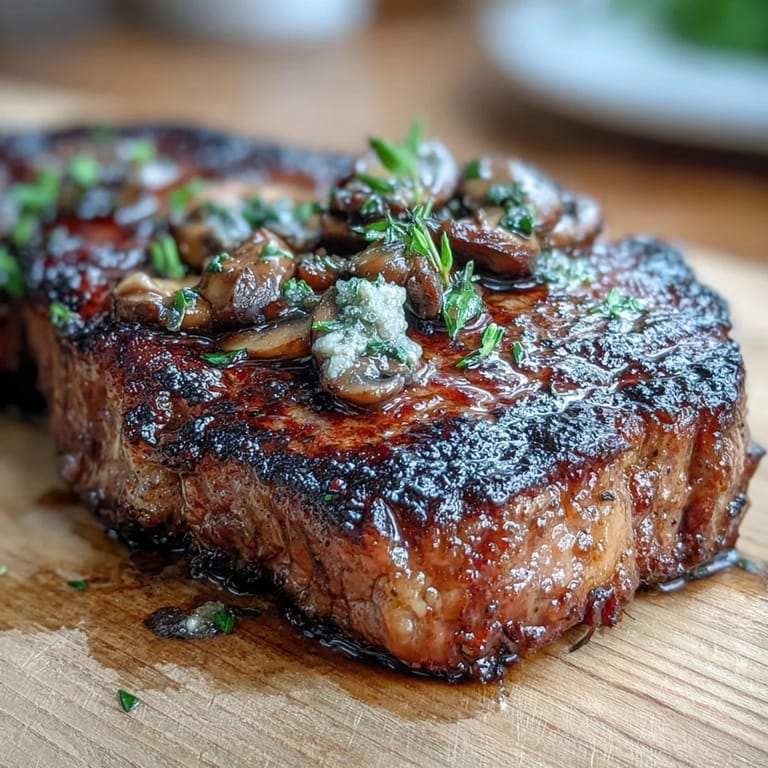
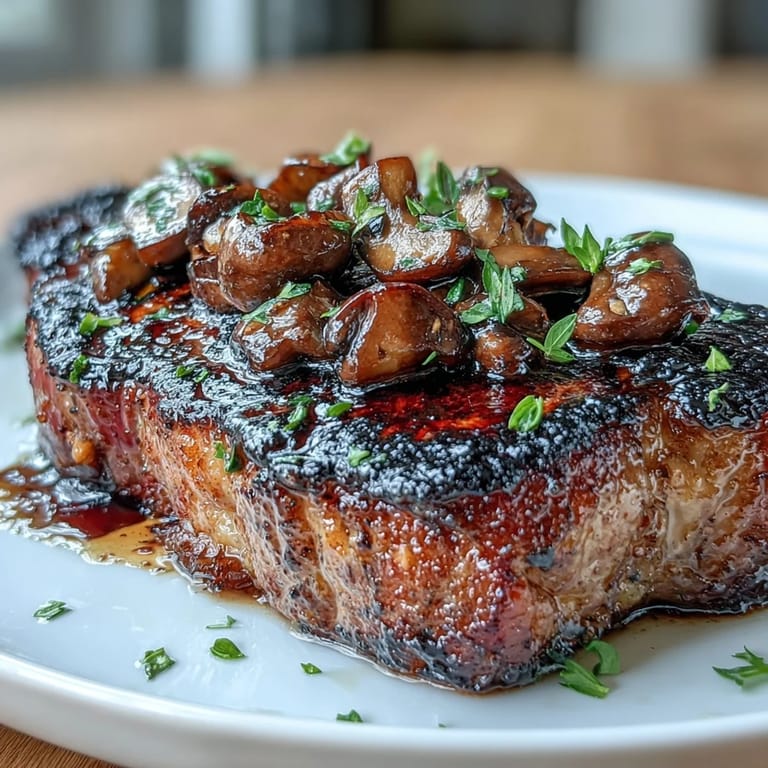
- Place steaks in the pan and resist the urge to move them—let them sit undisturbed for 2 to 3 minutes per side for medium-rare, depending on thickness. You're looking for that mahogany crust that means real flavor development has happened.
- Top with butter in the final minute:
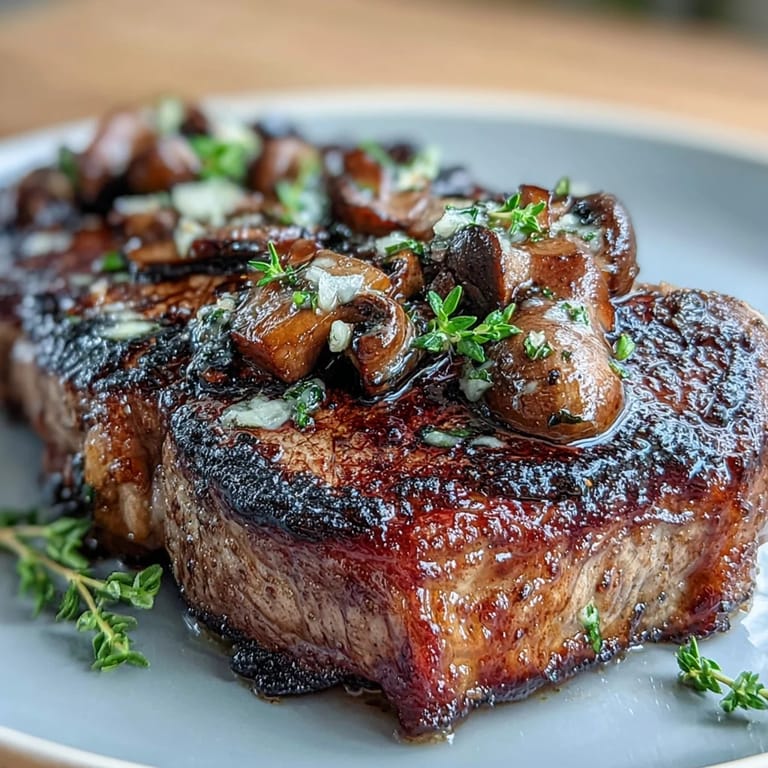
- When the steaks are almost done, place a generous spoonful of the mushroom and garlic butter on top of each one and watch it melt into a savory crust that seals in all those earthy flavors. The residual heat from the steak is just enough to let the butter work without burning.
- Rest and let the magic settle:
- Remove the steaks from the pan and tent loosely with foil for 5 minutes—this allows the juices to redistribute throughout the meat instead of running all over your plate when you cut into it. These few minutes of patience make the difference between a good steak and one people remember.
 Save
Save My neighbor still talks about the time I brought a plate over to her place, still steaming with that melting butter pooling around the edges. She called it the best steak she'd ever eaten outside of a steakhouse, and for some reason that compliment stuck with me more than any restaurant review ever could—because it meant I'd figured out how to recreate something that felt genuinely special in an ordinary kitchen.
The Art of the Compound Butter
Compound butter isn't just a fancy restaurant trick—it's actually the most forgiving way to elevate a steak because you're essentially building a flavor layer that melts exactly when you need it most. I learned this the hard way after years of trying to create complex flavors on the fly, wondering why my steaks never tasted as nuanced as the ones I remembered from restaurants. The truth is simpler: a good compound butter does the thinking for you, sitting quietly in the background until that final minute when the heat activates all those careful flavor combinations.
Timing Your Sear for Maximum Crust
The sear is where rookies and pros separate—and it all comes down to respecting the heat and not fussing with your steaks once they hit the pan. I used to flip constantly, worried I was burning them, only to end up with a pale, unappetizing surface that tasted like missed opportunity. Now I set a mental timer, trust the process, and give the meat those undisturbed minutes it needs to develop that restaurant-quality crust that locks in all the juices and flavor.
Why Mushroom Varieties Matter
You could use just cremini mushrooms and be fine, but mixing your varieties is where this dish starts to feel intentional rather than routine. Each type brings its own character—cremini adds earthiness, shiitake brings a subtle smokiness, and oyster mushrooms contribute a delicate tenderness that practically dissolves into the butter. Think of them like a flavor choir where different voices blend together to create something fuller and more interesting than any single ingredient could achieve alone.
- Don't skip cleaning your mushrooms with a damp cloth or soft brush—soaking them in water makes them absorb liquid like tiny sponges.
- Chop them into roughly equal pieces so they cook evenly and release their moisture at the same rate.
- If you can't find a good variety, cremini and oyster together create a balanced flavor that works beautifully.
 Save
Save This steak has become my go-to move for impressing people who think I'm a better cook than I actually am, and honestly, I'm okay with that secret. When someone walks away from your table talking about how good dinner was, that's what cooking is really about.
Recipe Guide
- → What type of mushrooms work best?
A mix of cremini, shiitake, and oyster mushrooms provides a balanced earthy flavor and ideal texture.
- → How should the steak be cooked for best results?
Sear the steak over high heat for 2–3 minutes per side for medium-rare, adjusting time based on thickness.
- → Can I prepare the mushroom garlic butter ahead of time?
Yes, the compound butter can be made in advance and refrigerated up to 3 days without losing freshness.
- → What sides complement this steak well?
Roasted potatoes or a crisp green salad are excellent companions, balancing the rich flavors of the butter crust.
- → Is this dish suitable for gluten-free diets?
Yes, all ingredients used are naturally gluten-free, making it appropriate for gluten-sensitive individuals.