 Save
Save I discovered the magic of gilded cheese at a friend's rooftop dinner party where everything felt a little too precious, a little too planned—until someone pointed out that the fancy spread was just good cheese with a few gold flakes and flowers scattered on top. That realization stuck with me: you don't need complicated techniques or obscure ingredients to create something that makes people pause and take a photograph. Sometimes elegance is just about understanding that creamy, tangy cheeses speak for themselves, and a touch of gold is simply permission to celebrate that.
My neighbor brought a version of this to a winter potluck, and I watched it disappear in twenty minutes while everyone else's elaborate hot dishes sat untouched. She later admitted she'd made it on a Tuesday evening with ingredients from the regular grocery store, and that honesty—that you don't need specialty shops or hours of prep to impress—has stuck with me ever since.
Ingredients
- Goat cheese log (chèvre), 150 g: Tangy and cloud-like, this is the personality cheese that makes people lean in closer and taste again.
- Triple-cream brie, 150 g: Butter-soft and almost melting before you bite it, this is what makes the platter feel indulgent.
- Fresh ricotta, 150 g: Milder and slightly grainy in texture, it catches the eye and adds visual contrast to the whites and creams.
- Feta (block-style, drained), 150 g: The salty anchor that keeps people coming back for another cracker.
- Edible gold leaf, 1–2 sheets: Buy the kind labeled explicitly for food; it's inert and flavorless, purely visual theater.
- Yellow edible flower petals, 2 tbsp: Marigold and calendula petals have a subtle peppery note that surprises people in the best way.
- Honey (optional), 2 tbsp: A drizzle adds shine and a touch of sweetness that plays beautifully against salty feta.
- Fresh microgreens or herbs: These add a final whisper of freshness and color.
- Baguette, 1, thinly sliced: Use gluten-free if needed; the bread is just a vehicle for the cheese.
- Assorted crackers: Choose a mix of textures—some thin and crispy, some seeded or hearty.
Tired of Takeout? 🥡
Get 10 meals you can make faster than delivery arrives. Seriously.
One email. No spam. Unsubscribe anytime.
Instructions
- Arrange your canvas:
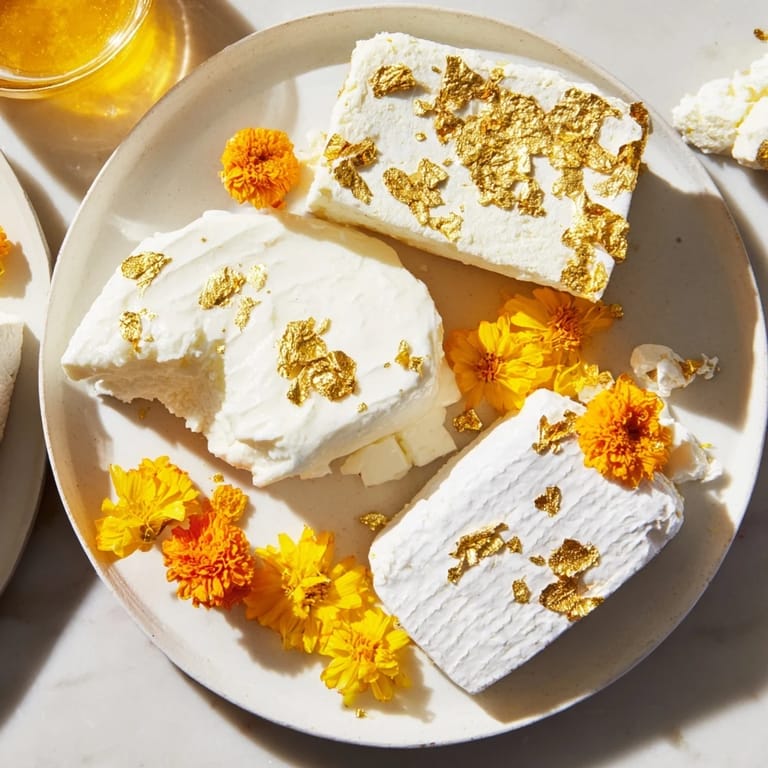
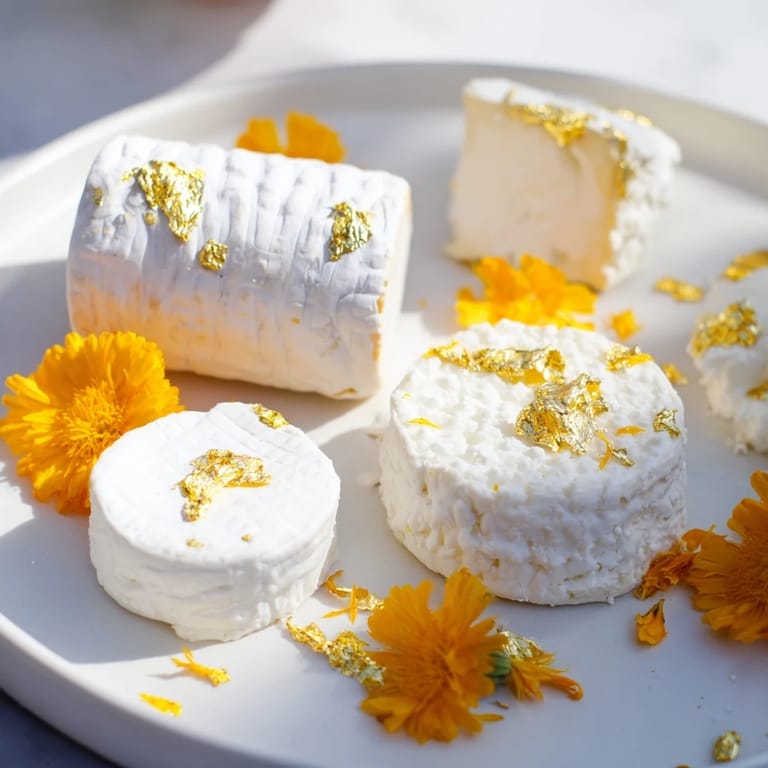
- Place each cheese variety on the platter with breathing room between them, almost like you're creating a cheese landscape rather than crowding them together. This gives each one its moment.
- Apply gold with intention:
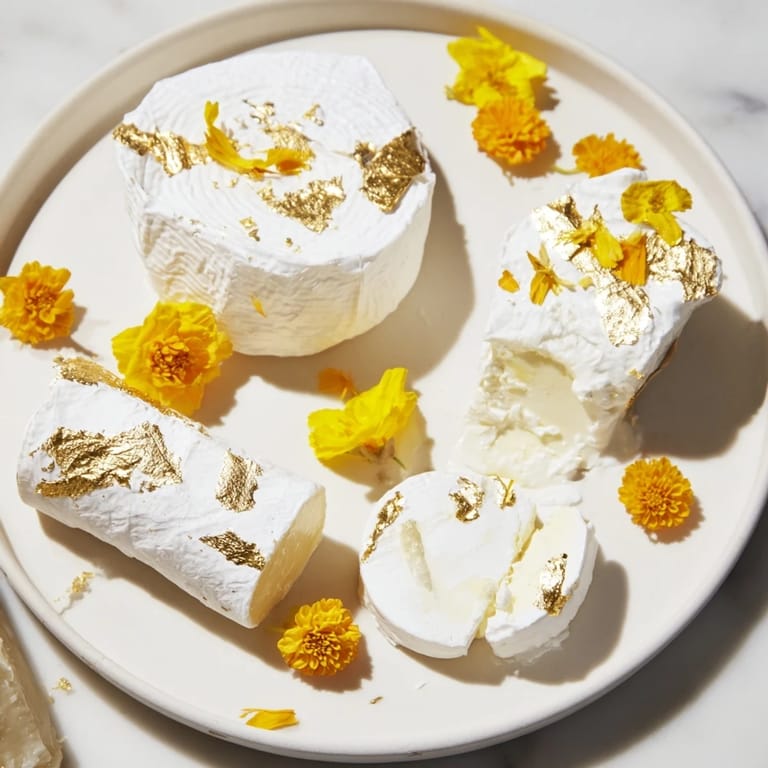
- Using tweezers or a soft brush, place small, gossamer pieces of gold leaf directly onto the soft cheeses—goat cheese and brie take it beautifully. Your hands should be clean and dry, or the delicate leaf will stick to your fingers instead of the cheese.
- Scatter the flowers:
- Gently distribute the yellow petals in a way that feels natural, not fussy. Tuck some between cheeses, rest others on the baguette slices nearby.
- Finish with honey (if using):
- A light drizzle over the brie and ricotta adds visual shine and a subtle sweetness. Less is more—you're highlighting, not drowning.
- Add greens and serve:
- A final scatter of microgreens or fresh herbs brings everything to life and signals that this is something special.
 Save
Save The moment that sold me on cheese platters forever was when my partner, someone who claims not to care about food presentation, stopped mid-conversation to ask why the ricotta tasted different when it had a gold leaf on top. It didn't, of course—but the beauty had primed his senses to notice the flavor more deeply. That's when I understood this isn't about pretension; it's about permission to slow down and actually taste.
Why Gold and Flowers Work
There's something about introducing non-edible-feeling elements to a cheese board that makes people see the familiar in a new light. Gold leaf catches light and suggests occasion without tasting like anything at all. The flowers add color and a whisper of botanical interest, turning a simple serving platter into something you'd see in a magazine. But here's the secret: nobody cares if you spent an hour or ten minutes assembling it, as long as it looks intentional.
Playing with the Cheeses
Each cheese here brings its own personality, and that variety is what makes the platter work. The goat cheese is tart and bright, brie is buttery and rich, ricotta is creamy and mild, and feta is salty and structured. Your guests will naturally find their favorite, and that conversation—which cheese speaks to them—often becomes the real event. You can swap in different varieties if you prefer; just aim for a mix of soft, semi-soft, and crumbly textures.
Timing and Serving Secrets
The beauty of this recipe is that there's almost nothing that can go wrong, which means you can prepare it at the last possible moment if you need to. Cheeses are happiest when they've had a few minutes to come to room temperature, so if you're pulling them from the fridge just before guests arrive, give them five to ten minutes to breathe. The baguette will stay crispest if you slice it close to serving time, and the whole platter glows best in soft, indirect light—set it on a side table rather than under bright overhead fixtures, and watch people gather.
- Keep extra crackers and bread nearby; guests will eat more than you expect.
- If you're serving this at a party, position it somewhere accessible but not in the direct path of traffic, so people stop to admire it rather than just grab and go.
- A cheese board is meant to linger, so don't rush it onto the table—let it be the opening act, not the warm-up.
 Save
Save A gilded cheese platter is proof that food doesn't have to be complicated to feel special—sometimes it just needs permission to shine. Make this whenever you want to turn an ordinary gathering into something memorable, and let the cheeses do most of the talking.
Recipe Guide
- → What cheeses are featured in this platter?
The platter includes goat cheese (chèvre), triple-cream brie, fresh ricotta, and block-style feta.
- → How is the edible gold leaf applied to the cheeses?
Using clean tweezers or a fine brush, small pieces of edible gold leaf are gently placed onto the cheese surfaces for a luxurious finish.
- → Can this platter accommodate dietary restrictions?
Yes, it suits vegetarian and gluten-free diets when paired with gluten-free bread or crackers and can be adapted with plant-based white cheeses for vegan needs.
- → What garnishes enhance the cheese presentation?
Yellow edible flower petals, optional honey drizzle, and fresh microgreens or herbs add color, flavor, and elegance to the platter.
- → What are ideal accompaniments for serving?
Serve with thinly sliced baguette or assorted crackers; gluten-free options work well to complement the cheeses.
- → How long does preparation take?
The platter takes about 15 minutes to prepare, with no cooking required.