 Save
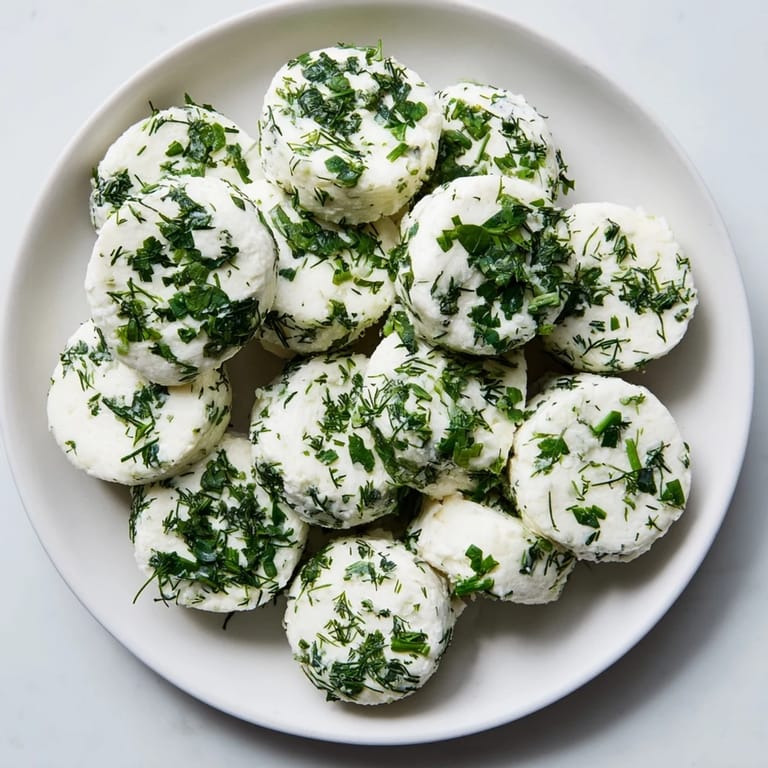
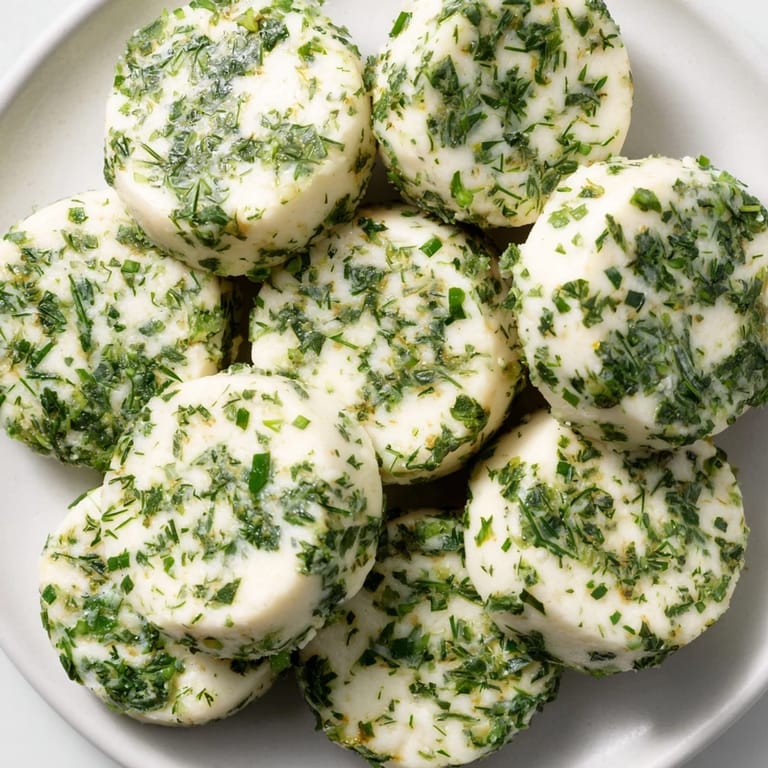
Save I discovered these little gems at a wine tasting in the Provence countryside, where they sat on a slate board like actual stones plucked from a forest floor. The first bite melted on my tongue, and I realized the magic wasn't in some complicated technique—it was pure simplicity, letting fresh herbs do what they do best. That afternoon, I knew I had to recreate them at home, and now they're my go-to when I need something that looks fancier than it actually is.
My sister brought her new partner to dinner once, and I served these alongside some crackers and wine. Watching him pick one up and pause before tasting it—like he was studying an artifact—made me laugh. He ended up eating half the platter while barely noticing, which felt like the highest compliment a quiet cheese could receive.
Ingredients
- Fresh goat cheese medallions: Look for creamy, mild rounds about the size of a golf ball; they need to hold their shape just enough to roll but stay tender inside.
- Fresh parsley: The backbone of your herb coating, giving that earthy woodland feel.
- Fresh dill: Brings brightness and a whisper of anise that makes people pause and guess what they're tasting.
- Fresh chives: Optional but worth it if you want a gentle onion note threading through each bite.
- Edible flowers or microgreens: These aren't just decoration; they complete the forest floor illusion and add a delicate crunch.
Tired of Takeout? 🥡
Get 10 meals you can make faster than delivery arrives. Seriously.
One email. No spam. Unsubscribe anytime.
Instructions
- Prepare your herb bed:
- Pour the chopped parsley, dill, and chives into a shallow bowl and mix them with your fingers so the herbs are loose and ready to cling to the cheese. You want them to feel alive and aromatic.
- Coat each stone:
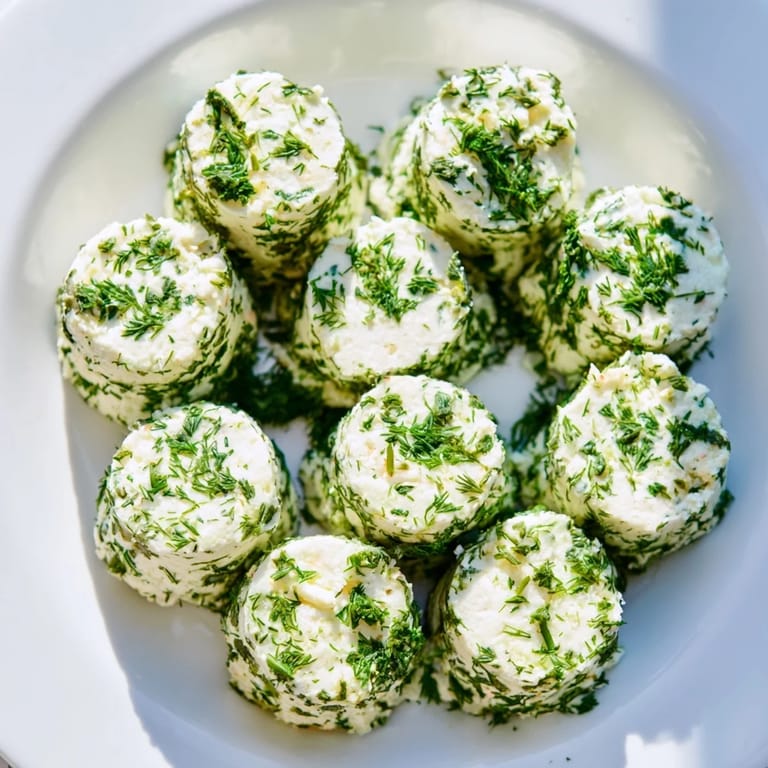
- Take one goat cheese medallion and roll it gently through the herbs, rotating it as you go so every surface gets dressed. Don't press too hard—let the herbs adhere naturally, creating little uneven patches that look authentic.
- Arrange your woodland:
- Place the herbed cheese rounds on your serving platter and tuck edible flowers or microgreens around them like they've just emerged from moss. Step back and admire.
- Chill if needed:
- You can serve these immediately while they're coldest and firmest, or refrigerate them covered for up to two hours if you're preparing ahead.
 Save
Save There's something about watching someone's face light up when they realize these delicate green-and-white bites are actually easy—that moment when food stops being intimidating and becomes fun. That's when appetizers become more than sustenance; they become a small gesture of care.
Choosing Your Cheese
Goat cheese has a tangy bite that lets the herbs shine, but if you find it too strong or want something milder, cream cheese works beautifully and gives a softer, richer result. Baby bocconcini are another lovely option if you spot them at your market—they're slightly firmer and taste like fresh, delicate mozzarella. I've even used a spreadable chèvre once when I couldn't find medallions, simply shaping it into rough balls before rolling them in herbs. Each cheese brings its own personality to the dish.
Serving Suggestions and Pairings
These mossy stones feel right alongside crusty bread for spreading, a scattered handful of crackers, or raw vegetables like cucumbers, radishes, and bell pepper strips for people who want something lighter. Wine-wise, crisp white wines like Sauvignon Blanc or Albariño are natural partners because the acidity cuts through the creaminess and echoes the brightness of the herbs. I've also served them with cider, which surprised me with how well the apple notes played against the herbaceous coating. The key is choosing something refreshing that won't overwhelm the delicate flavors.
Variations and Flavor Twists
Once you understand the basic technique, this becomes a canvas for your own edible creativity. A finely grated lemon zest mixed into the herbs adds a subtle citrus note that some people find transformative, while a small pinch of smoked paprika brings warmth and mystery. I've made a version with toasted breadcrumbs mixed into the herb coating for extra texture, and another time I added crushed pistachios for a surprising earthiness. Even swapping your herbs—maybe basil and mint instead of parsley and dill—creates a completely different mood. The beauty is in how forgiving this recipe is, so don't be afraid to adjust it to match what grows in your garden or what you happen to have.
- Lemon zest lifts the entire dish if you add just a pinch to the herb mixture.
- Edible flowers like pansies or chive blossoms look magical and taste delicately peppery.
- Make these up to two hours ahead so you're not rolling cheese while guests arrive.
 Save
Save These little cheese rounds remind me that sometimes the most memorable dishes arrive through restraint rather than complexity. Serve them with confidence and watch people discover something delightful in the simplest of appetizers.
Recipe Guide
- → What type of cheese works best for the mossy stones?
Fresh goat cheese medallions provide a creamy texture ideal for rolling in herbs, though cream cheese or baby bocconcini can be used as alternatives.
- → Can I prepare the herb coating in advance?
Yes, you can chop the herbs a few hours ahead and store them refrigerated to maintain freshness before coating the cheese.
- → How long can the coated cheese be stored before serving?
Once coated, the cheese medallions can be refrigerated for up to two hours without losing their fresh appearance and flavor.
- → Are there any garnishes recommended for presentation?
Edible flowers or microgreens add a delicate, woodland touch and enhance visual appeal when arranged with the herb-coated cheese.
- → What beverages pair well with this herb-coated cheese?
Crisp white wines such as Sauvignon Blanc complement the fresh herbal flavors and creamy texture perfectly.