 Save
Save My coworker brought a seaweed rice bowl to lunch one Tuesday, and I watched her eat it while I picked at my sad desk sandwich. The way she mixed that nori into the rice, how the sesame seeds scattered across the top—I realized I'd been eating boring for far too long. That evening, I raided my pantry and discovered I already had everything needed, so I made my first bowl right there at my kitchen counter, standing up, barely letting it cool. It was a revelation: crisp, umami-rich, and somehow both simple and sophisticated at once.
I made this for my roommate who'd been stressed about finals, and I remember how quickly her shoulders relaxed when she took that first bite. She kept asking what was in it, convinced something so delicious had to involve butter or cream, and when I told her it was just rice and seaweed, she laughed and asked for the recipe immediately. That bowl became her study fuel, and now whenever I make it, I think of her at the kitchen table with textbooks spread everywhere, taking breaks to enjoy something genuinely nourishing.
Ingredients
- Sushi rice: The foundation of everything—rinsing it properly removes starch and prevents mushiness, so don't skip that step even though it feels tedious.
- Water: Use a 1 to 1.25 ratio for tender, perfectly cooked grains that hold together without being gluey.
- Rice vinegar, sugar, and salt: This trio seasons the rice while it's still warm, so the flavors absorb rather than just sit on the surface.
- Nori sheets: Cut them fresh right before assembling—they stay crispier that way and won't soften from the steam of the warm rice.
- Wakame seaweed: Rehydrate it properly and squeeze out excess water, or it'll make your bowl soggy and overly briny.
- Cucumber: Slice thin and eat the day you make it for maximum crispness and that satisfying snap between your teeth.
- Scallions: The slight sharpness cuts through the richness of the sesame seeds and brings brightness to each bite.
- Toasted sesame seeds: Toast them yourself if you can—the difference between pre-toasted and freshly toasted is the difference between okay and incredible.
- Pickled ginger and soy sauce: These are the seasonings you control at the table, letting everyone adjust to their taste preferences.
Tired of Takeout? 🥡
Get 10 meals you can make faster than delivery arrives. Seriously.
One email. No spam. Unsubscribe anytime.
Instructions
- Rinse and cook your rice:
- Run cold water over the sushi rice in a fine mesh strainer, rubbing the grains gently with your fingers until the water runs nearly clear—this removes excess starch and prevents clumping. Combine the rinsed rice with water in a saucepan, bring it to a boil, then cover and drop the heat to low for exactly 15 minutes; you'll hear the sizzle quiet down once the water absorbs.
- Season while warm:
- Whisk rice vinegar, sugar, and salt together and microwave for 20 seconds to dissolve the sugar completely. Fold this mixture gently into the still-warm rice using a rice paddle or wooden spoon, using a cutting motion rather than stirring—this keeps the grains intact and fluffy.
- Prepare your seaweed:
- Soak the wakame according to package directions (usually just a few minutes in cold water), then drain it thoroughly and squeeze gently with paper towels to remove excess moisture. Cut your nori sheets into thin strips using sharp kitchen scissors, which gives you more control than a knife.
- Build your bowls:
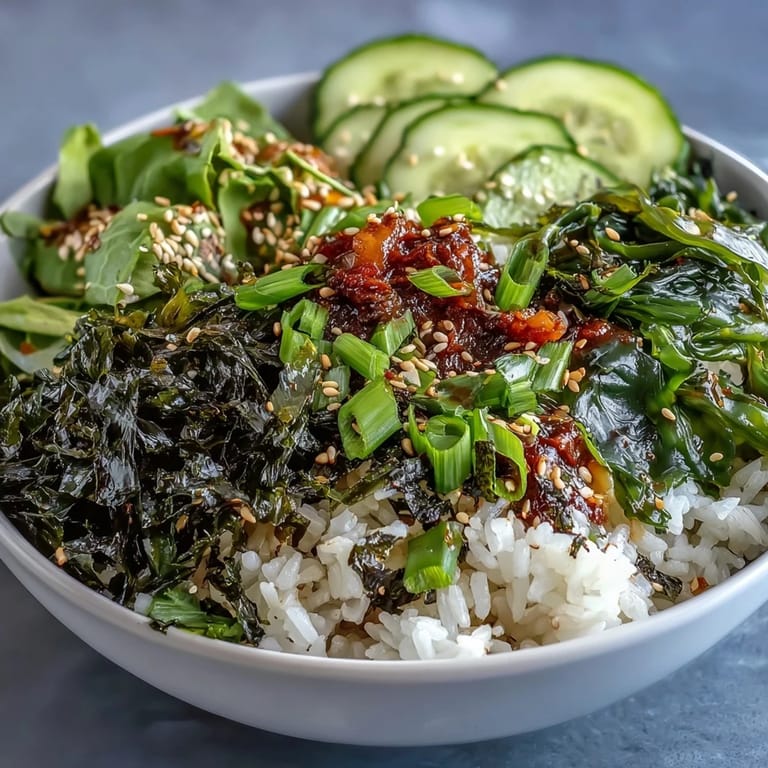
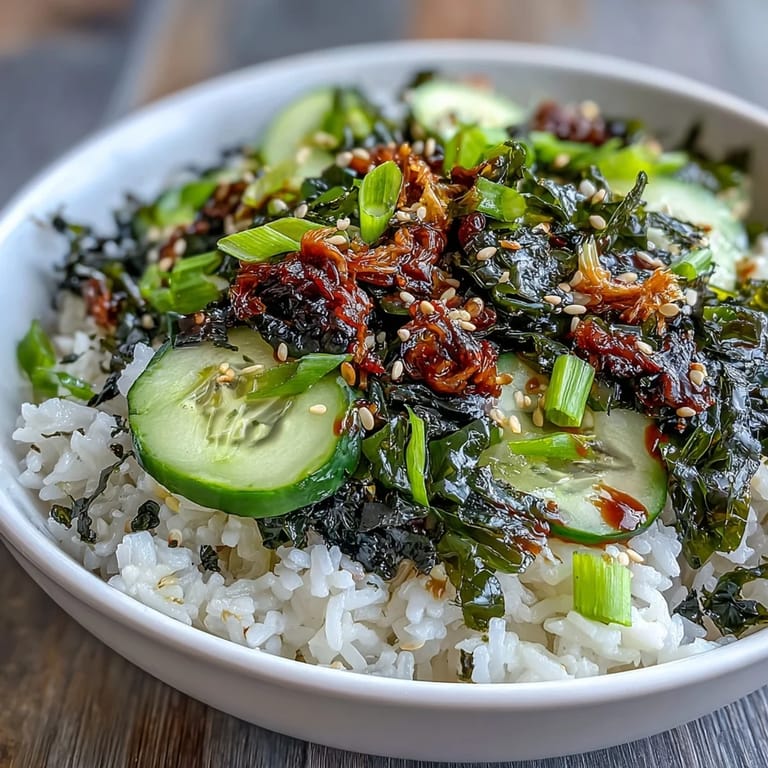
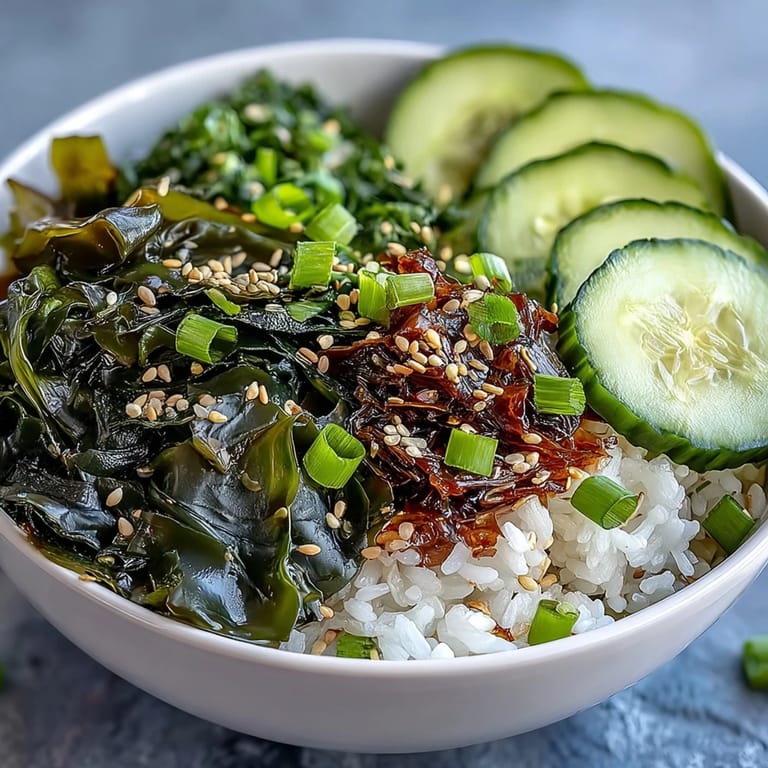
- Divide the cooled sushi rice between two bowls, creating a small well in the center. Layer the wakame, nori strips, cucumber slices, and scallions on top, arranging them so you get a bit of everything in each spoonful.
- Toast and finish:
- Sprinkle the toasted sesame seeds over everything, add furikake if you're using it, and place a small mound of pickled ginger on the side. Serve immediately with soy sauce for drizzling and adjusting to taste.
 Save
Save There's something meditative about making this bowl—the gentle folding of vinegar into rice, the snip of nori scissors, the scatter of sesame seeds like tiny wishes across the top. It's become the meal I make when I need to slow down, when the world feels too loud, and I need to remember that good food doesn't have to be complicated to be nourishing.
Why This Bowl Works So Well
Every element serves a purpose beyond just flavor—the nori provides umami depth and minerals, wakame brings oceanic sweetness, and the cucumber gives you a refreshing contrast that keeps the bowl from feeling heavy. The soy sauce ties everything together while letting you control saltiness, and the sesame seeds add texture and a nutty richness that makes it feel like a complete meal. This is Japanese home cooking at its finest: nothing fancy, nothing pretentious, just thoughtful combinations that make you feel genuinely good.
Customizing Your Bowl
The beauty of this recipe is how flexible it is—I've added shredded carrots for sweetness, tossed in edamame for protein, and once even used leftover roasted mushrooms when I had them. Avocado works beautifully if you want richness, and a soft-boiled egg transforms it into something more filling for days when you're extra hungry. The core stays the same, but you're never eating the exact same bowl twice.
Storage and Make-Ahead Tips
The rice is best served fresh, but you can cook it ahead and store it in an airtight container for up to two days—just let it come to room temperature before seasoning. Prep your vegetables the night before and keep them separate in containers, assembling everything only when you're ready to eat so the nori stays crisp and the cucumber doesn't release water into the rice. If you're meal-prepping, keep all components separate until the moment you want to eat, and the bowl will taste as good on day two as it does fresh-made.
- Toast your sesame seeds fresh if possible, or buy them already toasted and use them within a week of opening the package.
- Double-check your nori and furikake labels if you're avoiding gluten, as some brands include wheat-based additives.
- Serve everything at room temperature or with the rice slightly warm—this is when textures and flavors are most balanced.
 Save
Save This seaweed rice bowl has become my anchor recipe, the thing I reach for when I want to eat well without overthinking it. Every time I make it, I'm reminded that sometimes the most satisfying meals are the ones that respect their ingredients and don't try too hard.
Recipe Guide
- → How should the sushi rice be prepared for this bowl?
Rinse sushi rice thoroughly until water runs clear, then cook with water until absorbed. After cooking, gently fold in a mix of rice vinegar, sugar, and salt for balanced seasoning.
- → What varieties of seaweed are used in the bowl?
The bowl features rehydrated wakame and thin strips of toasted nori, providing layered umami flavors and varied texture.
- → Can I add extra vegetables to the dish?
Yes, adding avocado, shredded carrots, or edamame can add color, nutrition, and additional texture to the bowl.
- → What garnishes enhance the flavor of this bowl?
Toasted sesame seeds, pickled ginger, and optional furikake seasoning add nutty, tangy, and savory notes to elevate the dish.
- → Is this dish suitable for vegan and dairy-free diets?
Yes, it naturally fits vegan and dairy-free diets when using plant-based toppings and avoiding egg or other animal products.
- → What tools are essential for preparing this bowl?
A saucepan with lid for cooking rice, sharp knife for slicing, cutting board, mixing bowls, and a rice paddle or large spoon for folding ingredients are recommended.