 Save
Save The first time I set up a Turkish cheese board, I wasn't thinking about impressing anyone—I just wanted to recreate that feeling from a tiny café in Istanbul where the owner casually arranged cheeses and olives on marble like she was painting a picture. No fuss, no pretense, just the knowledge that good things taste better when they're shared without ceremony. That afternoon, my kitchen smelled like warm pita and honey, and I realized this wasn't a recipe to perfect—it was an invitation to slow down.
I remember my neighbor stopping by unexpectedly, and I threw this together in the time it took her to pour tea. She kept saying "this tastes like a memory" which I think is the highest compliment a board can get. The way the honey catches the light, the slight fizz of the brine on your tongue—it's those small sensory moments that make people feel welcomed.
Ingredients
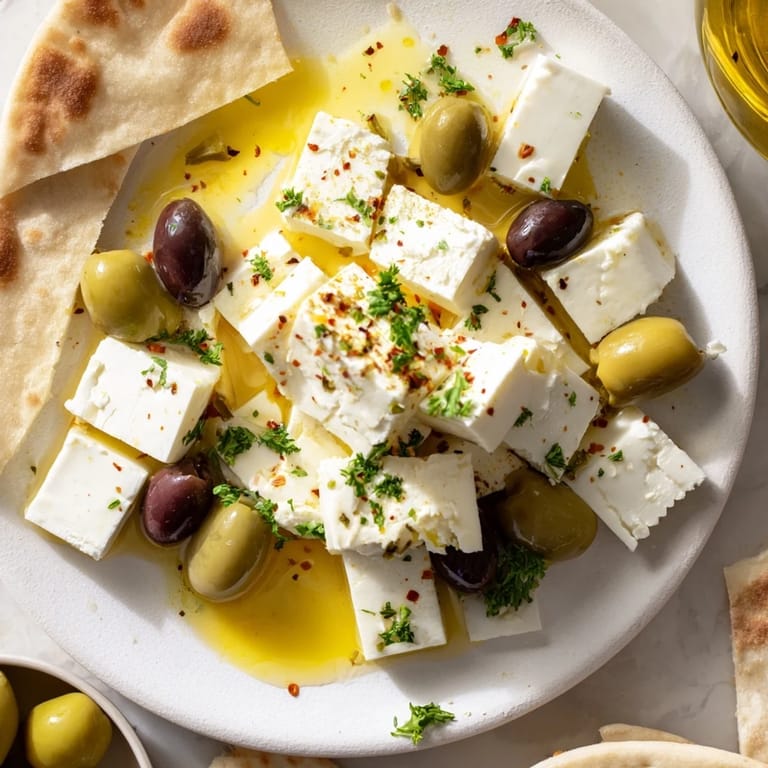
- Feta cheese: The sharp, salty anchor that holds everything together—I cube mine roughly so there's texture variation and they don't all look identical.
- Beyaz peynir (Turkish white cheese): Milder and creamier than feta, this is the gentle counterpoint; if you can't find it, creamy mozzarella works in a pinch but the flavor is different.
- Brined green olives: These are firmer and slightly more tart than their black counterparts, adding brightness to each bite.
- Brined black olives: Darker, earthier, softer—the full flavor spectrum only makes sense when both are there.
- Honey: Use the good stuff if you can; cheap honey tastes thin and sweet, but real honey carries depth that makes people pause.
- Warm pita bread: The vehicle for everything else, and it has to be warm—cold pita is a missed opportunity.
- Fresh dill or parsley: A small handful scattered on top does more for the final look and freshness than you'd expect.
- Extra virgin olive oil: Just a drizzle, nothing more; this isn't about drowning flavors but highlighting them.
- Red pepper flakes: Optional but not really—the slight heat wakes everything up.
Tired of Takeout? 🥡
Get 10 meals you can make faster than delivery arrives. Seriously.
One email. No spam. Unsubscribe anytime.
Instructions
- Arrange your canvas:
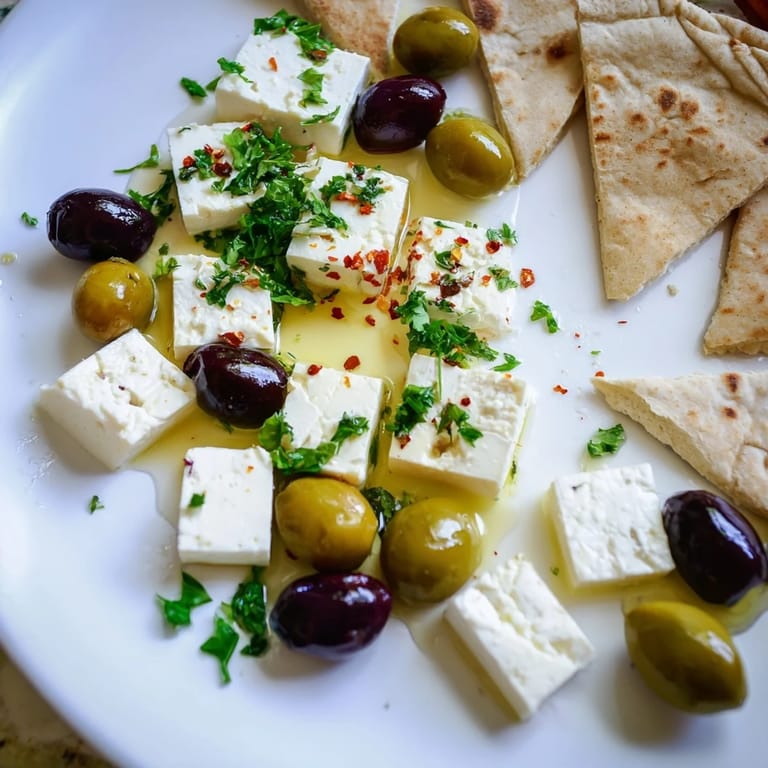
- Start with a large board or platter—something that lets everything have breathing room rather than crowding it all together. I place the feta cubes first, scattering them naturally without thinking too hard about perfect placement; they anchor the board.
- Add the cheeses:
- Slice the beyaz peynir and nestle the slices between and around the feta cubes. You're building layers and pockets, not making a checkerboard.
- Introduce the olives:
- Pour the green and black olives into small bowls if you want a contained look, or scatter them directly onto the board—I like the scattered approach because people interact with the platter more freely.
- Handle the honey:
- Either drizzle it into a small bowl for dipping or pour it loosely over one section of cheese so it pools slightly. Don't be timid; the honey's meant to be found and savored.
- Warm and cut the pita:
- Heat pita in a dry skillet for about 90 seconds per side, or wrap it in foil and warm it in a 350°F oven for a few minutes. Cut into wedges and arrange them standing up around the board so they're visible and inviting.
- Finish with intention:
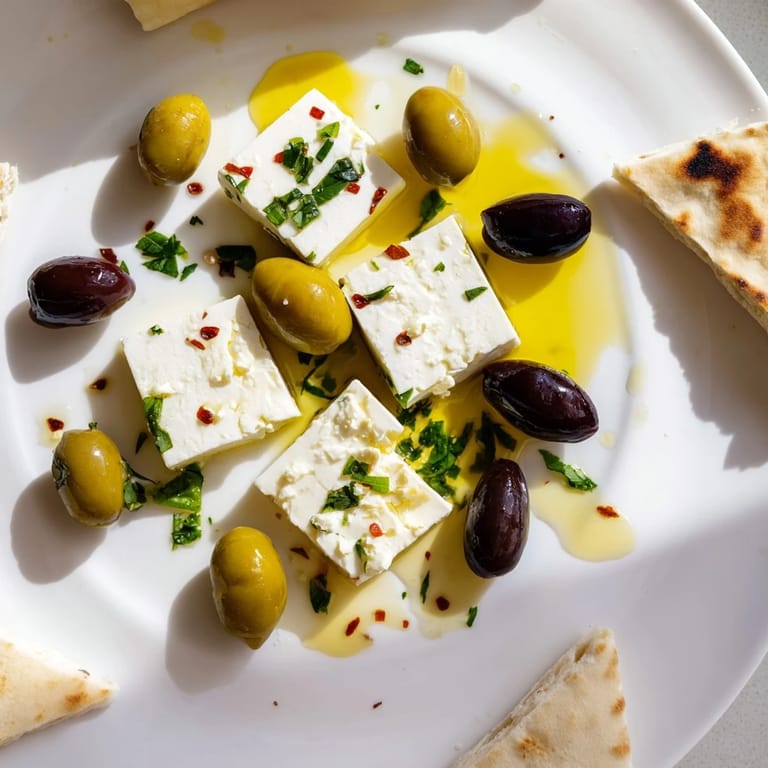
- Scatter fresh herbs across the top, drizzle olive oil in thin streams, and dust with red pepper flakes. Step back and let the colors speak for themselves.
 Save
Save One night, my family gathered around this board after a long day, and nobody talked for the first few minutes—just the sounds of bread tearing and gentle clinks of plates. That's when I knew this wasn't just an appetizer; it was permission to pause together.
Timing Is Everything
The magic happens when everything hits the table at the same temperature—warm bread, room-temperature cheese, cool olives. If you assemble this too early, the pita cools down and becomes chewy instead of tender. If you assemble it too late, guests are standing around watching you fuss. I aim to have everything on the board no more than five minutes before people arrive, so there's still warmth in the bread and intention in the presentation.
Playing with Proportions
These measurements are starting points, not rules. I've made this board with twice as much honey for people who love that sweet-salty contrast, and I've made it with barely any honey for purists who want to taste the cheese's sharpness. The beauty is that you're not baking—there's no chemistry to balance, just flavors to adjust based on who's eating and what you're in the mood for.
When Good Ingredients Matter Most
This is one of those dishes where you can't hide behind technique. There's no sauce to fix a mistake, no cooking to mellow out harsh flavors—it's just good things arranged well. I taste my cheese and olives before I buy them, I smell the honey, and I make sure my pita is actually fresh. It costs a bit more this way, but three good ingredients are better than ten mediocre ones.
- Find a Turkish or Mediterranean market if you can; the beyaz peynir there is always fresher than supermarket versions.
- Buy olives from a barrel if possible rather than jars—they have better texture and you can taste before committing.
- If pita is more than a day old, don't bother warming it; it won't recover the way fresh bread does.
 Save
Save A cheese board is really just an excuse to sit together without the pressure of a full meal. Make this when you want people to feel welcomed and when you want the table to be about connection instead of performance.
Recipe Guide
- → What cheeses are featured on this platter?
The platter includes creamy feta cheese and tangy beyaz peynir, a traditional Turkish white cheese.
- → How should the olives be prepared?
Brined green and black olives are served as is, either scattered around the cheese or placed in small bowls.
- → What is the purpose of drizzling honey?
Honey adds a touch of sweetness that contrasts nicely with the salty cheeses and brined olives.
- → How is the pita bread served?
The pita is warmed briefly, then cut into wedges, making it perfect for dipping or pairing with the cheeses and olives.
- → Are there optional garnishes to enhance the platter?
Fresh dill or parsley, extra virgin olive oil, and a pinch of crushed red pepper flakes can be added for extra flavor and visual appeal.
- → Can this platter be adapted for different tastes?
Yes, cheeses can be substituted with milder varieties like Greek feta or mozzarella, and additional accompaniments like cucumbers or walnuts may be included.