 Save
Save There's something about a one-pot curry that stops me mid-week rush. Years ago, a friend dumped a can of coconut milk into a bubbling pot of spices while I stood in her kitchen, and suddenly everything—the steam, the golden color, the smell—made sense. That moment taught me that the most nourishing dinners don't need complexity, just good ingredients and a willingness to let them speak together. This chickpea curry has become my answer to "what's for dinner" when I want something warm, filling, and undemanding.
I made this for my brother on a quiet Sunday when he mentioned being tired of takeout, and he went back for seconds while talking about how real it tasted. There's something grounding about watching someone's shoulders relax over a bowl of curry, especially when they didn't expect homemade to taste this good.
Ingredients
- Yellow onion: The foundation—diced and sautéed until it turns translucent and sweet, it carries all the other flavors along with it.
- Garlic and ginger: Minced fresh, never powdered; they announce themselves in the best way when they hit the hot oil.
- Red bell pepper: Adds sweetness and body without overwhelming the spices, and stays just tender enough to taste fresh.
- Baby spinach or kale: Roughly chopped and stirred in at the end, it wilts into the sauce while keeping everything light.
- Carrot: Optional but worth including; it softens into little pockets of sweetness throughout the curry.
- Chickpeas: Two drained and rinsed cans give you substance and protein without any fuss; they're forgiving and always work.
- Coconut milk: The full-fat version makes the sauce silky, though light works if that's what you have on hand.
- Vegetable broth: Keeps everything from becoming too thick while building flavor underneath.
- Diced tomatoes: Canned is perfectly fine and adds a gentle tang that balances the sweetness of coconut milk.
- Curry powder: The backbone—use the good stuff if you can, and taste as you go.
- Cumin, turmeric, smoked paprika: Each one matters; together they create warmth and depth without being harsh.
- Chili flakes: Optional, but add them if you want a gentle heat that lingers.
- Coconut oil or olive oil: Either works; coconut oil echoes the milk and feels intentional.
- Fresh cilantro and lime: These aren't garnishes—they're the bright ending that makes everything taste like itself again.
Tired of Takeout? 🥡
Get 10 meals you can make faster than delivery arrives. Seriously.
One email. No spam. Unsubscribe anytime.
Instructions
- Heat your oil and soften the onion:
- In a large pot or Dutch oven, heat the coconut oil over medium heat and add your diced onion. Let it sit for 3-4 minutes, stirring occasionally, until it becomes translucent and smells sweet—this is the moment you know you're building something good.
- Add the aromatics and peppers:
- Stir in the minced garlic, ginger, and red bell pepper. Give it another 2 minutes—you'll smell when it's ready, that unmistakable fragrance that makes you pause.
- Toast the spices:
- Add all your dry spices—curry powder, cumin, turmeric, smoked paprika, and chili flakes if you're using them—and stir constantly for about a minute. The spices will deepen in color and the kitchen will fill with warmth; don't rush this step.
- Build the sauce:
- Pour in your diced tomatoes, coconut milk, vegetable broth, and the drained chickpeas, along with the carrot if you're including it. Stir everything together until it's evenly combined and there are no dry spice pockets hiding at the bottom.
- Simmer and meld:
- Bring the whole thing to a gentle simmer, then lower the heat and cover the pot. Let it bubble quietly for about 15 minutes, stirring now and then—you're not trying to cook it to death, just giving everything time to know each other better.
- Finish with brightness:
- Stir in your chopped spinach or kale and leave the lid off for the last 2-3 minutes. Watch it wilt into the sauce and the whole pot thicken just slightly—that's the signal you're almost done. Taste it now and adjust salt and pepper if it needs it.
- Serve with intention:
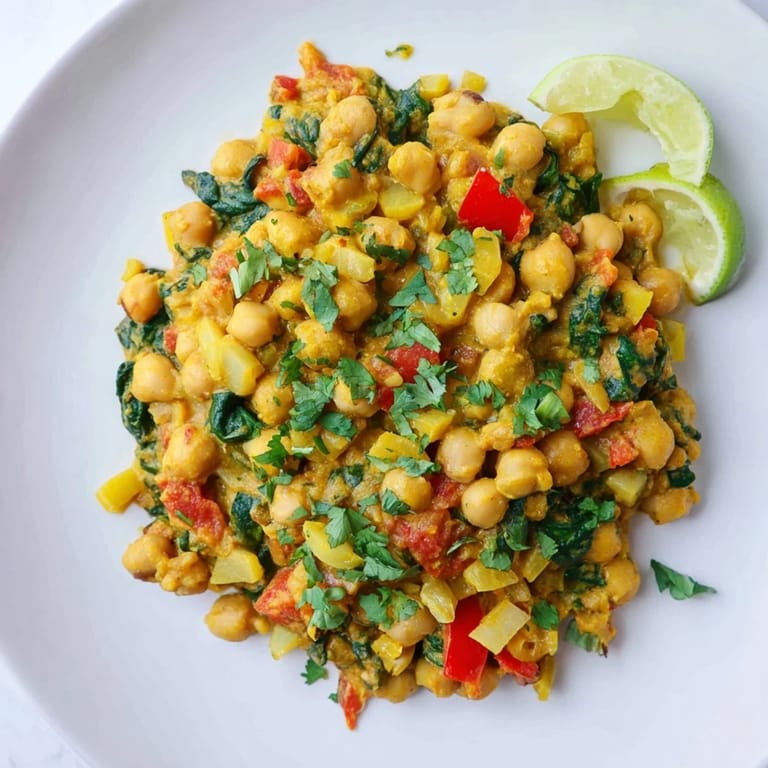
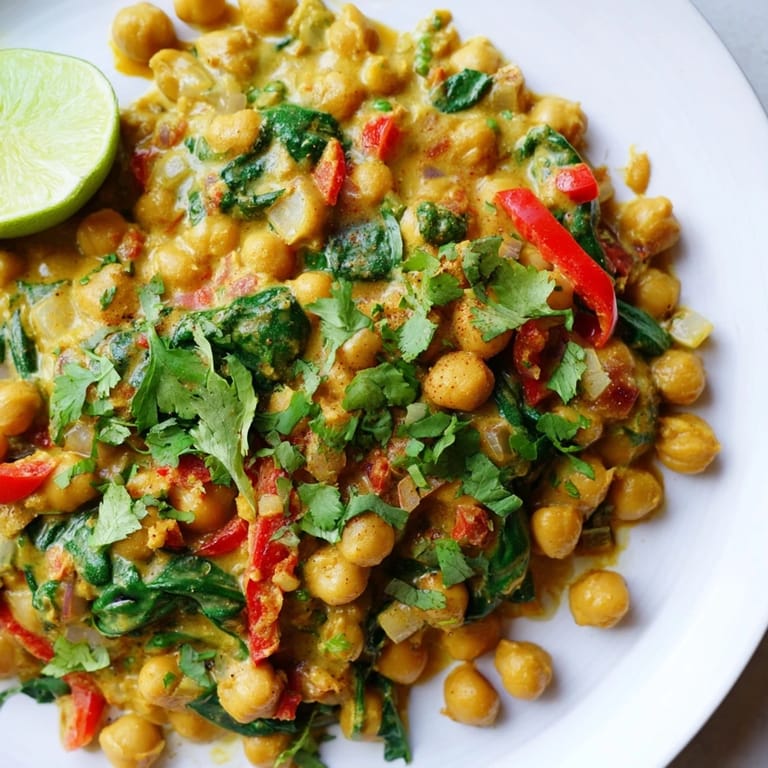
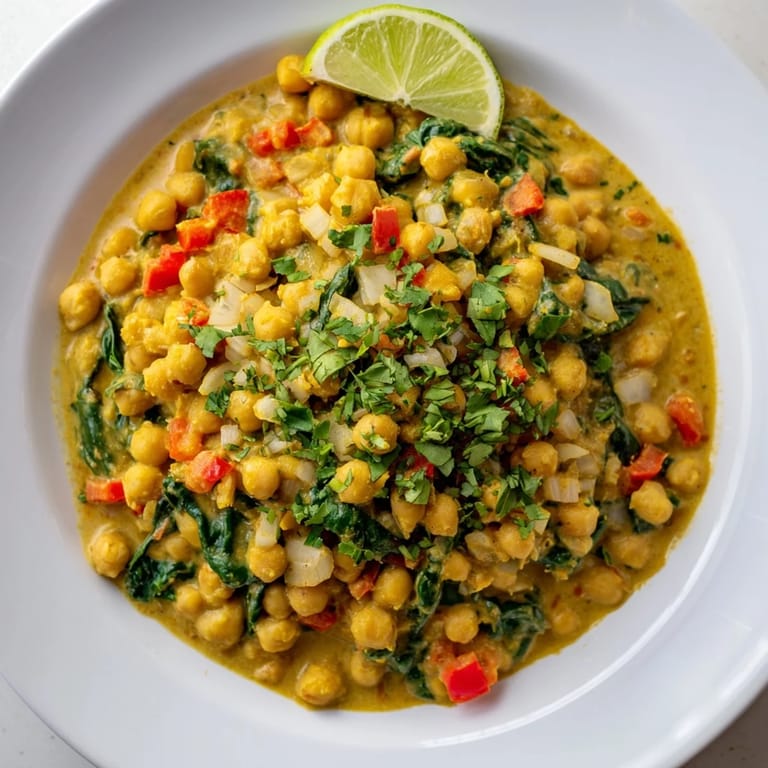
- Ladle it into bowls, scatter cilantro over the top, and set lime wedges on the side. If you have rice or naan, serve it alongside—or don't, and just eat the curry as it is.
 Save
Save A coworker ate leftovers for three days and came back asking for the recipe like I'd kept a secret. That's when I realized this curry isn't just dinner—it's something people actually want to come back to.
Why This Works as a Weeknight Dinner
There's no complicated technique hiding in here, just honest ingredients that work together. You're not babysitting anything, and you're not pretending that five-ingredient cooking is somehow superior to feeding yourself well. The pot does most of the work while you do other things, and the whole meal comes together in the time it takes to unwind from the day.
Playing with the Flavors
This curry is a starting point, not a rulebook. I've made it hotter by doubling the chili flakes, creamier by using extra coconut milk instead of some broth, and greener by adding handfuls of spinach until it borders on excessive. The spices are forgiving—if you prefer less cumin, use less; if you love turmeric, lean into it. Some nights I've stirred in a tablespoon of peanut butter at the end just to see what would happen, and it was exactly what I needed that particular evening.
Beyond the Basics
Leftovers thicken as they sit, so if you make this ahead, add a splash of broth when you reheat. For extra protein without changing the feel of the dish, cubed tofu or tempeh disappear into the sauce and take on all the flavors. I've also added diced zucchini or mushrooms when they were what I had, and nobody noticed they weren't in the original version.
- Serve with jasmine rice if you want something delicate, or naan if you're in the mood to soak up sauce.
- Squeeze lime over everything at the table—it brightens the whole bowl and makes you taste each layer separately.
- Make twice as much as you think you need; it reheats better than anything and tastes even better the next day.
 Save
Save This curry sits at the intersection of easy and genuinely nourishing, which is exactly where weeknight cooking should live. Make it, feed people, and watch how something this simple can become the meal they ask you to repeat.
Recipe Guide
- → What spices give this dish its flavor?
The curry is flavored with curry powder, cumin, turmeric, smoked paprika, and optional chili flakes for heat.
- → Can I replace spinach with other greens?
Yes, kale or Swiss chard can be used as alternatives to spinach, providing a similar texture and nutrition.
- → Is it possible to add protein to this dish?
Additional protein can be added by incorporating cubed tofu or tempeh during cooking.
- → What is the best way to serve this meal?
Serving with rice or naan complements the curry and helps balance the flavors.
- → How can I adjust the spice level?
Spice level can be customized by adding or omitting the chili flakes according to taste.